César Vallejo: Language at the Edge of Human Suffering
César Vallejo transformed modern poetry through radical syntax, ethical urgency, tenderness, exile, and an unrelenting struggle to speak from shared human pain.
- César Vallejo
- Peruvian poetry
- Trilce
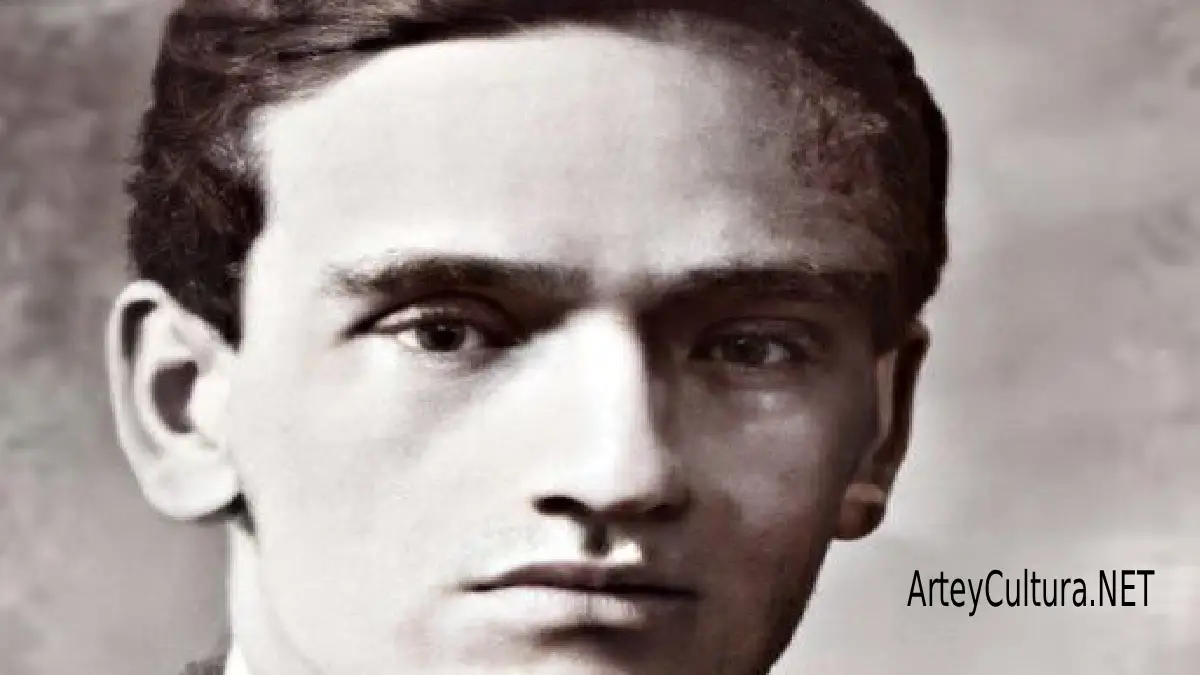
César Abraham Vallejo Mendoza was born in Santiago de Chuco, Peru, on March 16, 1892, and died in Paris on April 15, 1938. Poet, novelist, journalist, and essayist, he changed the possibilities of Spanish through a body of work in which broken language becomes a truthful response to grief, injustice, tenderness, and collective hope.
Santiago de Chuco and Trujillo
Vallejo grew within an Andean town shaped by Catholic ritual, Indigenous and mestizo life, family intimacy, and social hierarchy. In Trujillo he studied, taught, and joined the intellectual circle later called Grupo Norte. Work on a sugar estate exposed him directly to exploitation, deepening the ethical force of his writing.
The Black Heralds
Published in 1919, Los heraldos negros begins within modernist musicality but repeatedly breaks its elegance against experiences that resist consolation. Domestic memory, biblical imagery, Andean sensibility, and inexplicable blows coexist. The book announced a poet for whom suffering was never merely private.
Prison and Trilce
After disturbances in Santiago de Chuco, Vallejo was imprisoned for 112 days, from November 6, 1920, to February 26, 1921, in circumstances long regarded as unjust. Trilce, published in 1922, dismantled normal syntax, spelling, chronology, and arithmetic. Its difficulty is purposeful: familiar grammar proves inadequate to confinement, absence, desire, and fractured time.
Video: Vallejo’s poetry in English
This English-language reading introduces translated poems while preserving attention to cadence and emotional pressure. Hearing Vallejo aloud reveals how repetition and abrupt turns carry meaning beyond paraphrase.
Paris, politics, and prose
Vallejo moved to Paris in 1923 and lived through recurring poverty and illness. He traveled to the Soviet Union, engaged Marxist thought, and reported on European politics. His prose includes the social novel El tungsteno and Paco Yunque, a story about power and humiliation in the classroom.
Spain and the final poems
The Spanish Civil War intensified his sense that another person’s suffering creates a universal obligation. España, aparta de mí este cáliz and the posthumously organized Poemas humanos join bodily fragility to historical catastrophe. “Masa” imagines solidarity so complete that collective love can answer death itself.
Video: The mystery of Vallejo’s autographs
This English academic presentation follows the material traces of Vallejo’s writing. Manuscripts and signatures show that literary history also depends on archives, provenance, and careful study of the objects through which poems survive.
The legacy of César Vallejo
Vallejo’s innovations were inseparable from compassion. He did not make language strange to display virtuosity; he strained it because inherited forms could not contain modern pain. Poets across languages continue to read him as proof that formal experiment and moral seriousness can become the same act.