Fernando Botero: Volume, Memory, and Critique
Fernando Botero made expanded volume into an unmistakable language for humor, sensuality, political power, violence, and Latin American memory.
- Fernando Botero
- Colombian art
- sculpture
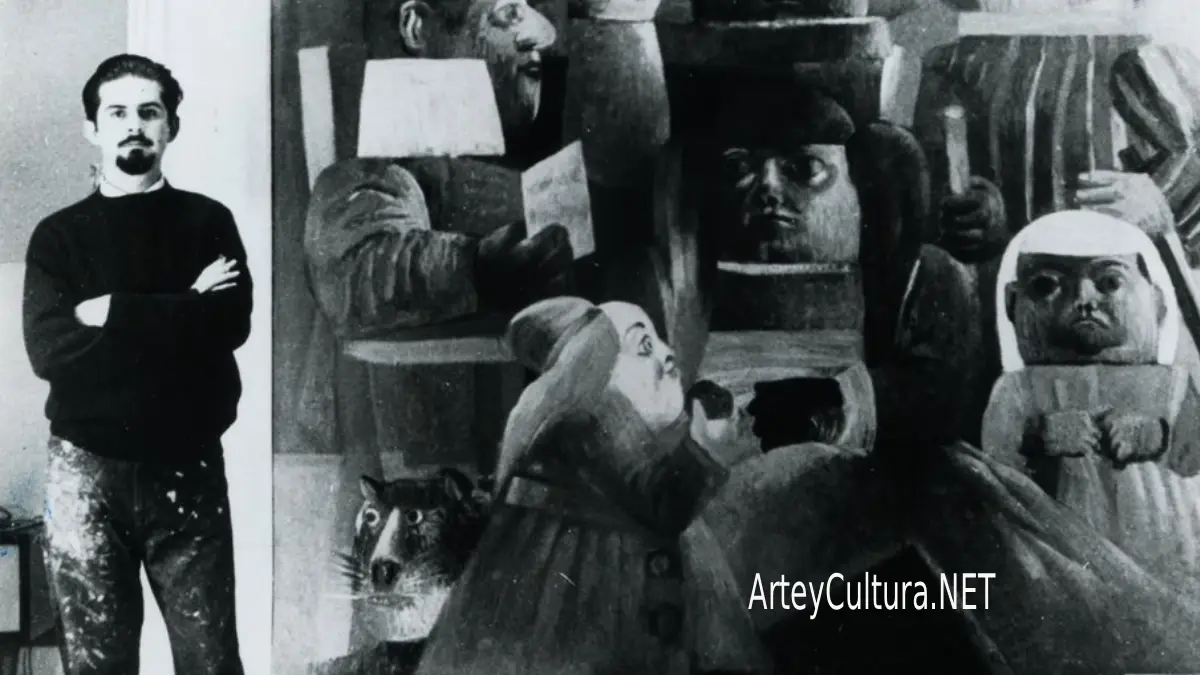
Fernando Botero Angulo was born in Medellín on April 19, 1932, and died in Monaco on September 15, 2023. Painter, draftsman, and sculptor, he created one of modern art’s most recognizable languages through the enlarged volume of bodies, animals, objects, and rooms.
Medellín and an artistic vocation
Botero lost his father while still a child. An uncle introduced him to bullfighting, a recurring subject in his later work. As a teenager he sold drawings of bullring scenes, and his first solo exhibition took place in Bogotá in 1951. Study in Madrid, Paris, and Florence brought direct contact with Velázquez, Goya, and Renaissance painting.
Volume as a language
His figures are not simply “fat.” Botero enlarges people, fruit, instruments, furniture, and architecture to heighten their physical presence. Changed proportion produces stillness, sensuality, humor, ceremony, and sometimes unease. The system applies equally to domestic life, religion, political authority, and violence.
Video: Remembering Botero
This English NBC report surveys his career and explains why a style rooted in Colombia achieved immediate recognition around the world.
Sculpture and the public realm
During the 1970s Botero deepened his work in sculpture. Bronze turned painted volume into an object that viewers could circle and touch. Installations in major cities allowed people outside museums to form direct relationships with monumental art.
Video: Sculpture and expanded form
This English Euronews report uses an exhibition in Spoleto to examine the physical logic and public appeal of Botero’s sculpture.
Power, violence, and testimony
Behind the accessible color lies sustained criticism. Botero depicted Colombian violence, Pablo Escobar’s death, presidents, soldiers, bishops, and the torture of prisoners at Abu Ghraib. Expanded form can suggest authority and vanity or amplify a victim’s vulnerability.
The legacy of Fernando Botero
Botero donated major groups of his art and international collection to Colombian institutions, widening public access in Bogotá and Medellín. His legacy proves that a recognizable style need not be a decorative formula: the same language can hold pleasure, satire, memory, and tragedy.