
Machu Picchu: Inca Engineering, Landscape, and Memory
Machu Picchu integrates architecture, water, agriculture, and mountain ecology in an exceptional fifteenth-century Inca cultural landscape.
- Machu Picchu
- Inca architecture
- Peruvian heritage
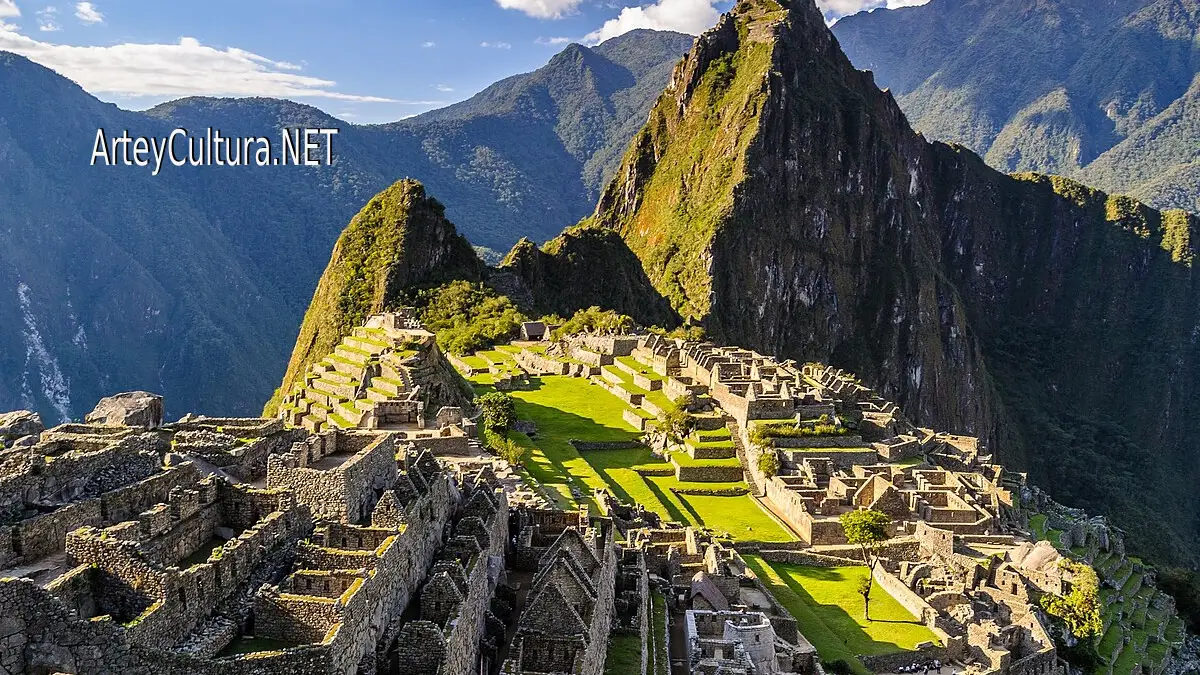
Machu Picchu is a fifteenth-century Inca settlement built on a mountain ridge where the Andes meet the Amazon basin. At more than 2,400 meters above sea level, its buildings and terraces form an integrated cultural landscape rather than an isolated “lost city.”
Construction and possible functions
The principal building campaign is associated with the reign of Pachacútec. Archaeologists interpret the site as a royal estate with ceremonial, agricultural, residential, and administrative uses. Elite compounds, dwellings, plazas, terraces, and ritual spaces suggest changing populations and activities.
Engineering for a wet mountain
Much of the achievement lies below visible walls. Foundations, graded fills, retaining terraces, and drainage channels stabilize steep ground under intense rain. Carefully fitted masonry identifies high-status spaces, while simpler construction served other functions within the same planned settlement.
Video: Machu Picchu in English
This widely viewed National Geographic introduction explains the site’s basic history and engineering, offering a concise visual orientation to the Inca achievement.
Not an empty discovery
After Spanish conquest, the settlement ceased functioning in its earlier form, but local inhabitants continued to know the ruins. Hiram Bingham arrived in 1911 with local guidance and publicized them internationally. Calling this a simple “discovery” erases the families whose knowledge made the visit possible.
Video: The architects’ solutions
This substantial Spanish DW documentary examines stone, water, and terrain in greater depth. The visual reconstructions make its technical evidence useful for English readers despite the language exception.
Cultural and natural heritage
UNESCO inscribed the Historic Sanctuary of Machu Picchu in 1983 for cultural and natural values. Protection therefore extends beyond masonry to mountains, valleys, biodiversity, and communities connected to the territory.
The significance of Machu Picchu
Its importance needs no invented mystery. Inca builders read rock, rainfall, slope, and horizon with extraordinary precision. Current stewardship must balance access with conservation, transport, erosion, landslide risk, and the right of future generations to encounter the whole landscape.