Jacques Prévert: Poetry for the Street, Page, and Screen
Jacques Prévert brought colloquial speech, tenderness, rebellion, and cinematic rhythm into modern French poetry and film.
- Jacques Prévert
- French poetry
- French cinema
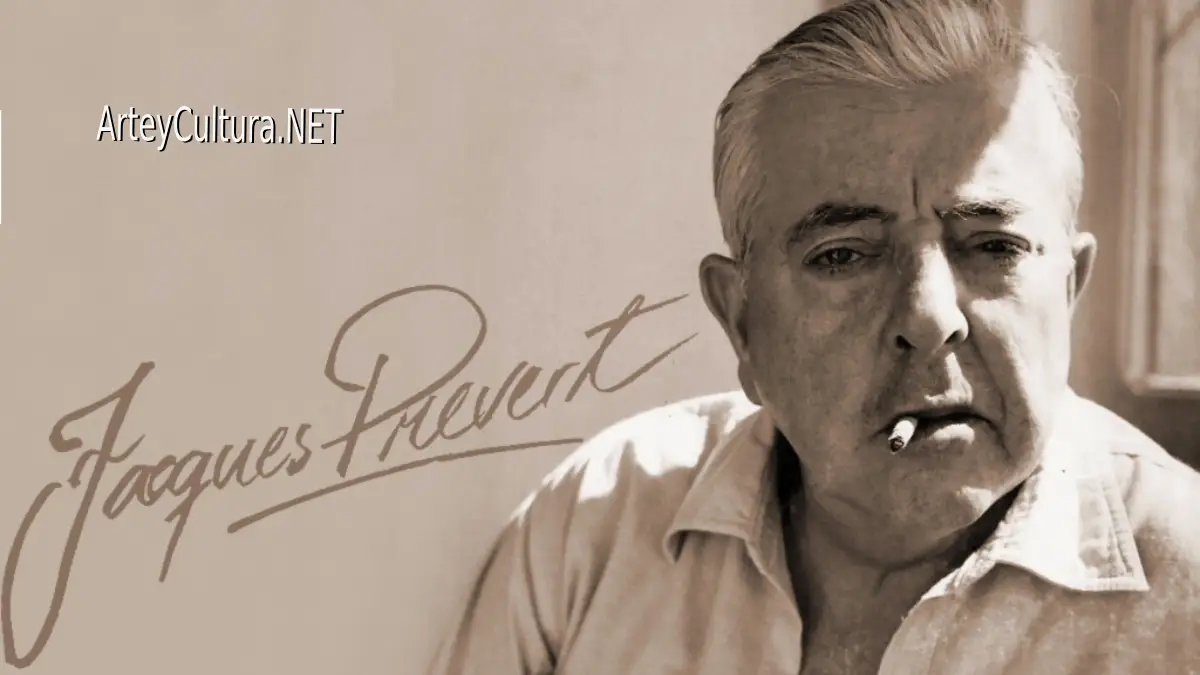
Jacques Prévert was born in Neuilly-sur-Seine on February 4, 1900, and died in Omonville-la-Petite on April 11, 1977. Poet, screenwriter, lyricist, and collage artist, he made everyday French speech a vehicle for affection, humor, protest, and memory.
From Surrealism to popular theater
Prévert took part in the Surrealist circle during the 1920s but resisted lasting allegiance to any doctrine. With the politically engaged Groupe Octobre, he wrote sketches for workers and public audiences. That experience sharpened his ear for dialogue and his distrust of authoritarian language.
Poetry that sounds spoken
The collection Paroles, published in 1946, established his broad readership. Poems such as “Barbara,” “Breakfast,” and “Page of Writing” use repetition, plain vocabulary, and sudden shifts of tone. Their accessibility does not make them simple: love, war, schooling, class, and freedom collide beneath their conversational surface.
A major screenwriter
Prévert’s collaboration with director Marcel Carné was central to poetic realism in French cinema. Port of Shadows, Daybreak, and Children of Paradise combine memorable speech with atmospheric images and characters constrained by society, fate, and desire. His screenwriting helped prove that popular cinema could also sustain literary density.
Songs, images, and resistance
Many of his texts became songs, extending his reach beyond books. His collages similarly rearranged familiar images into playful or disturbing encounters. Across media, he sided with children, lovers, outsiders, and people damaged by war or rigid institutions.
The legacy of Jacques Prévert
Prévert remains widely read and recited because his language invites entry before revealing its deeper tensions. His lasting achievement is a democratic lyricism: poetry attentive to ordinary voices without surrendering formal invention or political conscience.
Video: A concise life of Prévert
This French educational portrait from TV5MONDE traces the settings and collaborations that shaped his work. The images and chronology complement the English account above.
Video: Poetry carried by the voice
Carmelo Fiore reads the Italian translation “Questo amore” of Prévert’s “Cet amour.” This is not the poet’s voice or the French original. It offers an example of his poetry’s reception in another language, with repetition and spoken rhythm carrying the emotional movement.