Leo Tolstoy: The Novel, Conscience and Moral Transformation
Leo Tolstoy joined panoramic history with intimate psychological observation before turning his fame toward education, nonviolence and radical ethical critique.
- Leo Tolstoy
- Russian literature
- War and Peace
- Anna Karenina
- nonviolence
- Russian novel
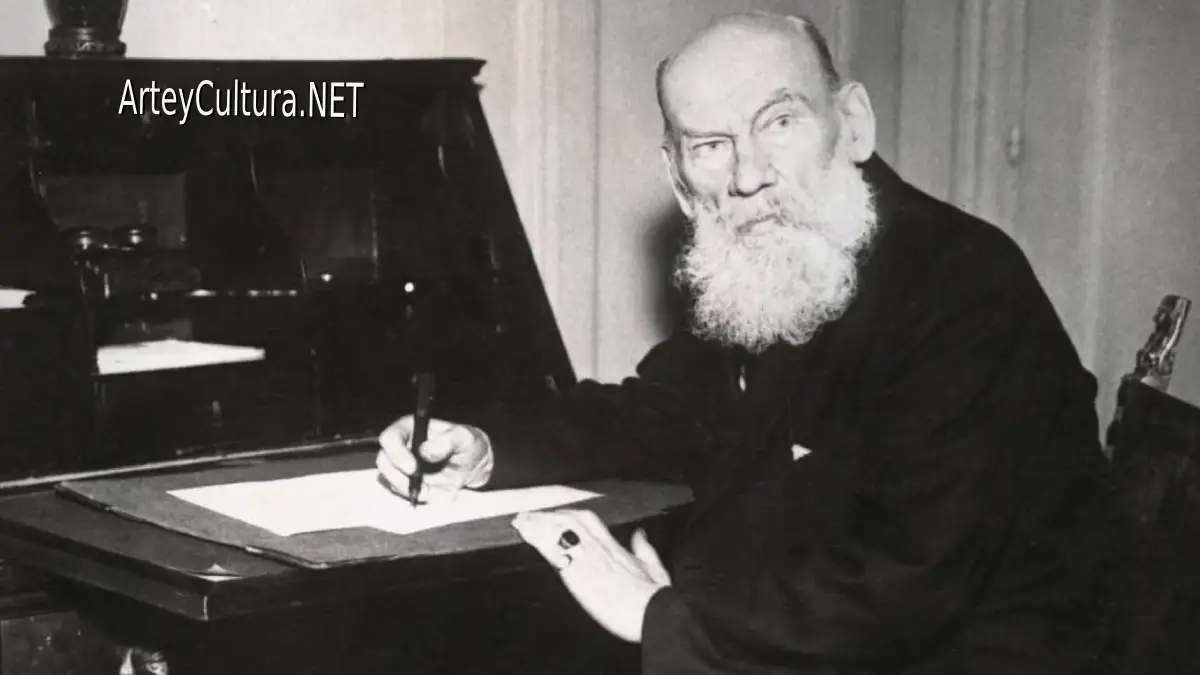
Lev Nikolayevich Tolstoy, known in English as Leo Tolstoy, was born at Yasnaya Polyana on September 9, 1828, and died at Astapovo railway station on November 20, 1910. Novelist, essayist and educator, he combined immense social panoramas with minute attention to thought, gesture and moral choice.
Aristocratic origins and military experience
Orphaned young, Tolstoy studied at Kazan University without completing a degree and struggled to manage his estate and habits. Military service in the Caucasus and during the Crimean War supplied material for early fiction.
The Sevastopol Sketches reject easy military glory. Close observation of fear, vanity and chance anticipated his mature refusal to explain history only through great leaders.
War and Peace
War and Peace intertwines families, battlefields, salons and philosophical reflection during the Napoleonic era. Its characters change through countless ordinary decisions rather than one predetermined heroic arc.
Tolstoy contests the belief that rulers command history. Collective movement, accident and incomplete knowledge make historical causation far more complex.
A life seeking truth
This English Lucasfilm documentary follows Tolstoy’s family life, military past, fiction and spiritual crisis. Archival settings help connect the celebrated author with the estate, labour and conflicts that shaped his moral programme.
Anna Karenina and the art of consciousness
Anna Karenina places intimate desire within family, law, agriculture, religion and public judgement. Anna and Levin follow contrasting searches for a liveable truth, while shifts in viewpoint make readers experience the limits of every character’s knowledge.
Tolstoy’s prose often appears transparent, but its effects depend on exact sequencing. A glance, repeated word or small change in perception can redirect an entire scene.
Why read War and Peace?
This English TED-Ed lesson explains the novel’s scale and accessibility. It shows how historical argument and domestic experience reinforce one another rather than forming separate parts of an intimidating classic.
Spiritual crisis and radical ethics
After his major novels, Tolstoy described a crisis of meaning and developed a noninstitutional reading of Christianity centred on nonviolence, simplicity and resistance to state coercion. The Russian Orthodox Church excommunicated him.
He founded schools, wrote educational materials and criticised property and social privilege. Yet his dependence on an estate and painful conflict with his wife Sophia Tolstaya, who copied and managed manuscripts while raising their family, reveal profound contradictions between doctrine and domestic life.
The legacy of Leo Tolstoy
Tolstoy transformed the novel and influenced thinkers including Mahatma Gandhi through his writing on nonviolent resistance. His authority should not conceal contradiction; it should make the comparison between moral aspiration and lived conduct more exacting. His work endures because it makes consciousness, history and responsibility inseparable.