



Mark Twain: Humour, Travel and the Contradictions of America
Mark Twain forged a vernacular literary voice from river life, journalism and performance, using humour to expose racism, greed, imperialism and self-deception.
- Mark Twain
- American literature
- Huckleberry Finn
- Tom Sawyer
- Mississippi River
- American humour
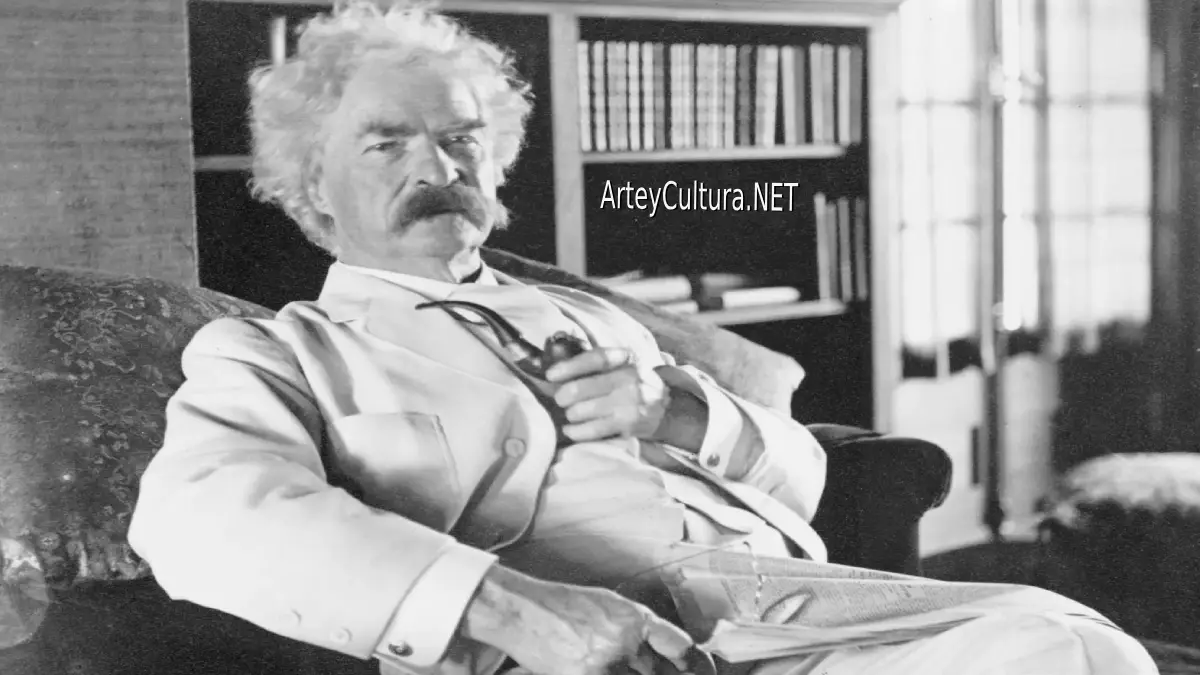
Samuel Langhorne Clemens, known as Mark Twain, was born in Florida, Missouri, on November 30, 1835, and died in Redding, Connecticut, on April 21, 1910. Printer, river pilot, journalist, lecturer and author, he converted American speech and contradiction into a radically influential literary voice.
The Mississippi and a changing nation
Clemens grew up in Hannibal, a river town within a slaveholding society. He worked as a typesetter and travelled before training as a steamboat pilot on the Mississippi. The Civil War ended that career.
The name Mark Twain comes from a riverboat sounding associated with safe depth. It linked his public identity to practical knowledge, danger and the river that later became both setting and moral landscape.
Journalism, travel and performance
In the American West, Clemens worked as a reporter and began signing humorous pieces with his famous pseudonym. The story of the jumping frog brought national attention.
Travel books such as The Innocents Abroad mocked tourists, cultural pretension and the narrator himself. Twain’s public lectures refined timing, persona and an apparently casual style built through meticulous revision.
The father of American literature
This English History overview connects Twain’s occupations and journeys with his writing career. It offers a concise introduction to the experiences behind the carefully constructed voice readers often mistake for effortless conversation.
Tom Sawyer and Huckleberry Finn
The Adventures of Tom Sawyer transforms childhood games and social discipline into comic myth. Adventures of Huckleberry Finn follows Huck and the enslaved Jim down the Mississippi, exposing hypocrisy through a narrator whose moral growth conflicts with the values he has been taught.
The novel’s vernacular achievement and attack on slavery coexist with racist language and minstrel conventions that wound readers and complicate teaching. Historical context is necessary, but it does not cancel critical discussion of form, stereotype and power.
The later years
This English biographical documentary examines Twain’s mature fame, financial disasters and increasingly dark satire. It shows how bereavement and political anger sharpened the pessimism beneath his public humour.
Business failure and political criticism
Twain lost money through investments, especially in an unsuccessful typesetting machine, and entered bankruptcy. An international lecture tour helped him repay creditors even when he had no strict legal obligation to do so.
His later essays attacked imperialism, racial violence, religious cruelty and self-righteous patriotism. Some of the most severe pieces appeared only after his death.
The legacy of Mark Twain
Twain helped establish vernacular speech as a powerful instrument of American fiction and influenced generations of writers. His contradictions are part of that legacy: he criticized injustice while using inherited stereotypes, and he entertained mass audiences while dismantling national myths. Reading him responsibly requires both laughter and resistance.