Teodoro Nunez Ureta: Murals, Watercolours and Peruvian Social Life
Teodoro Nunez Ureta brought workers, landscapes and collective memory into Peruvian murals and watercolours while shaping public art through teaching and criticism.
- Teodoro Nunez Ureta
- Peruvian muralism
- Peruvian watercolour
- Arequipa artists
- social art
- Latin American art
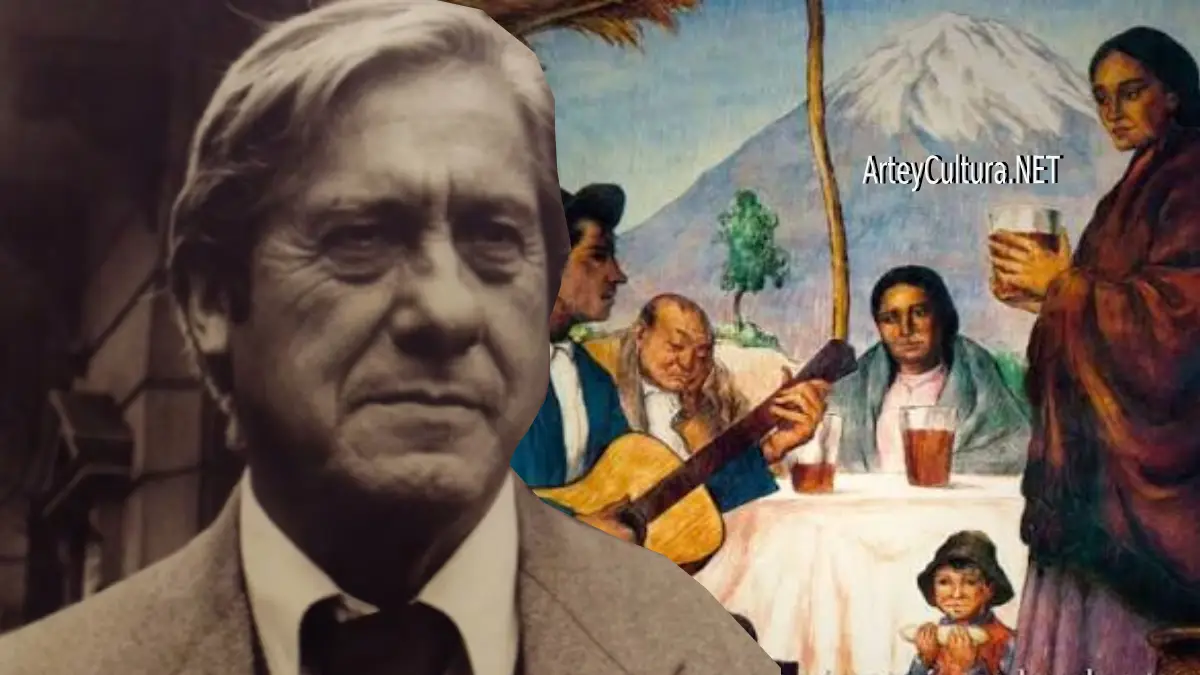
Teodoro Nunez Ureta was born in Arequipa on April 1, 1912, and died in Lima on February 16, 1988. Although the inherited web address carries a different year, the documented birth year is 1912. He became one of Peru’s leading muralists, watercolourists, teachers and writers on art.
Formation in Arequipa
Nunez Ureta studied independently as well as through the intellectual life of his city. Arequipa’s powerful light, volcanic landscape, streets and working population remained central to his visual memory.
He initially studied law, but drawing and painting became his lasting vocation. Caricature, journalism and observation of everyday life sharpened his ability to characterize figures without stripping them of dignity.
Art, society and public walls
His murals gave monumental form to labour, regional history and collective aspiration. Rather than treating public art as decoration, he used architecture to organize groups of bodies, movement and narrative.
Workers, farmers and popular types appear as historical actors. This social commitment connects his work with Latin American mural traditions while retaining a distinct Peruvian identity and a personal command of line.
Documentary portrait, part one
This Spanish-language Peruvian television programme introduces Nunez Ureta’s biography and artistic principles. Original testimony and images of the work make it an essential audiovisual document even for viewers following the English text.
Watercolour and drawing
Nunez Ureta was equally important as a watercolourist. Transparent washes, rapid contours and controlled reserves of paper allowed him to capture both atmosphere and human gesture. His scenes do not merely record customs: they convert observation into rhythm and social presence.
Drawing underlies the murals and watercolours. It enabled him to move between intimate studies and large compositions while preserving clarity of action.
Documentary portrait, part two
The second Spanish-language instalment expands the visual record with further works and discussion. Together, the programmes show how teaching, criticism, mural painting and regional identity formed one coherent cultural project.
Teaching, writing and recognition
As a teacher and university figure, Nunez Ureta encouraged close observation and intellectual responsibility. His essays and criticism argued for an art connected to society rather than isolated from it.
He received Peru’s National Culture Prize and completed major public commissions. Such recognition reflects the breadth of a career that joined artistic practice with education and civic life.
The legacy of Teodoro Nunez Ureta
Nunez Ureta demonstrated that modern Peruvian art could be regional without becoming provincial and socially engaged without sacrificing formal invention. His murals require conservation and public access, while his watercolours continue to reveal an acute, humane witness to twentieth-century Peru.