Juan Gris: Order, Colour and Synthetic Cubism
The Madrid formation, Paris career, collages, still lifes and legacy of Juan Gris, whose measured colour and geometry gave Cubism a distinct architecture.
- Juan Gris
- Cubism
- Spanish art
- synthetic Cubism
- collage
- still life
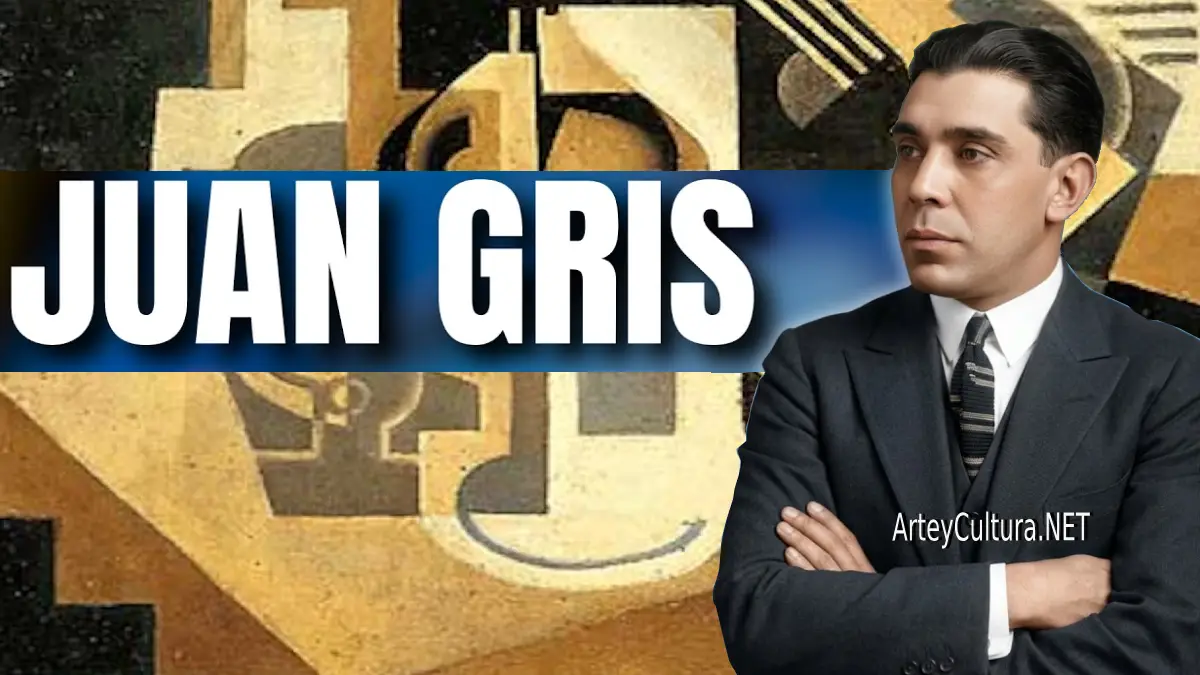
Jose Victoriano Gonzalez-Perez, known as Juan Gris, was born in Madrid on March 23, 1887, and died in Boulogne-sur-Seine on May 11, 1927. His still lifes gave Cubism a distinctive union of calculated structure, luminous colour and visual wit.
From Madrid drawing to Paris
Gris trained in technical and artistic drawing and moved to Paris in 1906. He supported himself initially through illustration and lived at the Bateau-Lavoir among artists including Pablo Picasso.
His knowledge of graphic clarity remained important when he committed fully to painting. Objects are fragmented, but the composition never abandons deliberate order.
A different Cubist construction
Picasso and Georges Braque had already developed analytic Cubism when Gris emerged as a major participant. His paintings often begin from an abstract geometric organisation and then establish recognisable objects within it.
Bottles, guitars, newspapers and tables recur. Curves, diagonals and colour echoes allow the viewer to reconstruct them across overlapping planes.
Gris and Maria Blanchard
This English Dallas Museum of Art presentation considers Gris alongside Spanish painter Maria Blanchard. The comparison expands Cubist history beyond a two-man story centred only on Picasso and Braque.
Collage and synthetic Cubism
Gris incorporated printed papers and imitated wood grain, lettering and textures. Collage introduces real material into a represented world, making viewers question which surface belongs to the object and which to the picture.
His relationship with dealer Daniel-Henry Kahnweiler provided support but also tied production to the economic networks of the avant-garde.
Colour and conservation
This English conservation video examines Guitar and Pipe. Technical study reveals how materials and colour choices contribute to a work whose apparent precision has its own physical history.
Achievement and legacy
Gris died at only 40, yet gave synthetic Cubism a coherent architecture and unusually rich colour. His legacy demonstrates that analysis need not drain painting of sensuality: disciplined relationships can make every object visually alive.