Diego Rivera: Murals, History and the Mexican Revolution
The European formation, public murals, political controversies and legacy of Diego Rivera, whose monumental narratives reshaped the history visible on American walls.
- Diego Rivera
- Mexican muralism
- Mexican Revolution
- public art
- Frida Kahlo
- Rockefeller Center
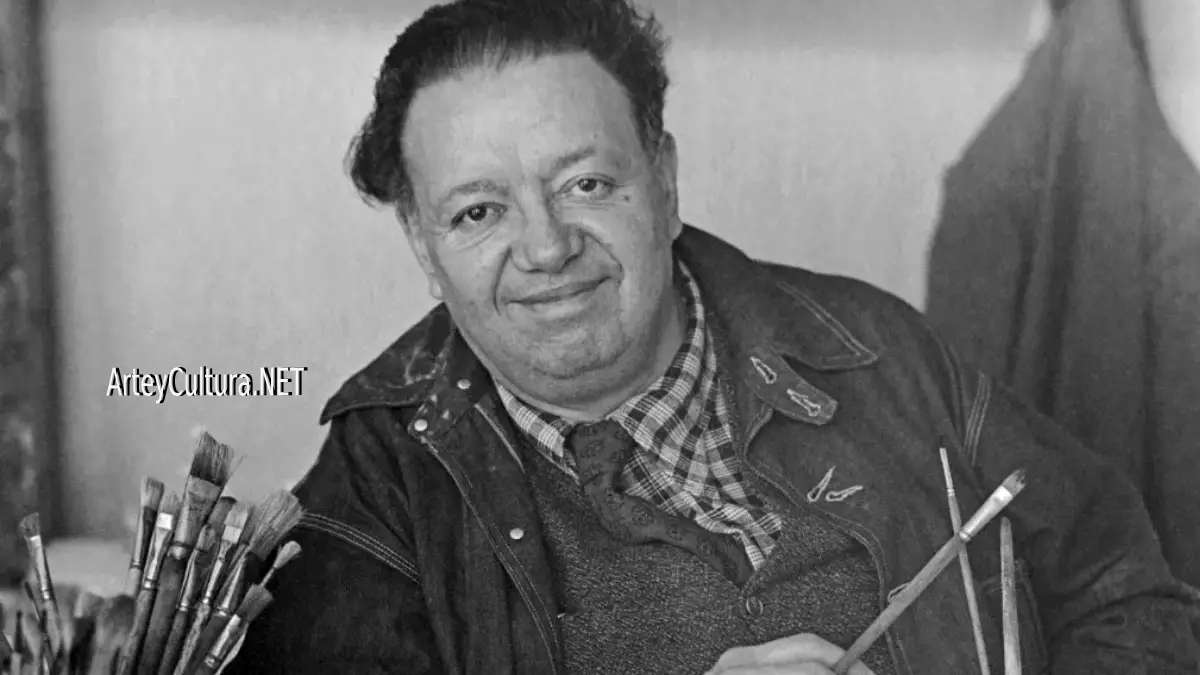
Diego Rivera was born in Guanajuato on December 8, 1886, and died in Mexico City on November 24, 1957. Painter and muralist, he turned walls into large public arguments about conquest, labour, technology and revolutionary history.
Mexico, Europe and Cubism
Rivera studied at the Academy of San Carlos and spent years in Europe. In Paris he participated in Cubism before moving toward forms influenced by Italian fresco and Renaissance mural cycles.
Returning to Mexico in 1921, he entered a country constructing institutions and identities after revolution. Public commissions offered architecture as a medium for historical education.
Painting history for a mass audience
Rivera organised workers, rulers, indigenous cultures, machines and conflict across walls that viewers encounter by walking. Strong outlines and legible groups make complex narratives accessible without eliminating ideological argument.
His version of national history is powerful but selective. Murals should be read as interpretations shaped by communist politics, patronage and the state’s own cultural programme.
Reading the Mexico City murals
This English Smarthistory discussion examines Man, Controller of the Universe in Mexico City’s Palace of Fine Arts. It explains how public mural painting, modern technology and political conflict meet in Rivera’s reconstruction of the destroyed Rockefeller Center composition.
The United States and Rockefeller Center
Rivera painted in San Francisco, Detroit and New York. His Detroit murals celebrate industrial production while also revealing bodies absorbed into enormous technological systems.
At Rockefeller Center, the inclusion of Lenin in Man at the Crossroads produced conflict with patrons. The unfinished mural was destroyed; Rivera recreated the composition in Mexico as Man, Controller of the Universe.
Rivera speaking for himself
This Spanish original-audio interview preserves Rivera’s public voice. His statements help contextualise intention but do not close interpretation of the works.
Frida Kahlo and contradiction
Rivera’s relationship with Frida Kahlo joined artistic exchange, marriage, separation and infidelity. Her career must not be treated as an appendix to his, nor his solely as background to hers.
Legacy
Rivera consolidated Mexican muralism and influenced public art across the Americas. His legacy remains politically charged because he made visibility itself a question: whose labour and history deserve the wall?