Art Clokey: The Stop-Motion Pioneer Who Created Gumby
The life, experimental films, clay-animation technique and legacy of Art Clokey, creator of Gumby, Pokey and the television series Davey and Goliath.
- Art Clokey
- Gumby
- clay animation
- stop motion
- Davey and Goliath
- television animation
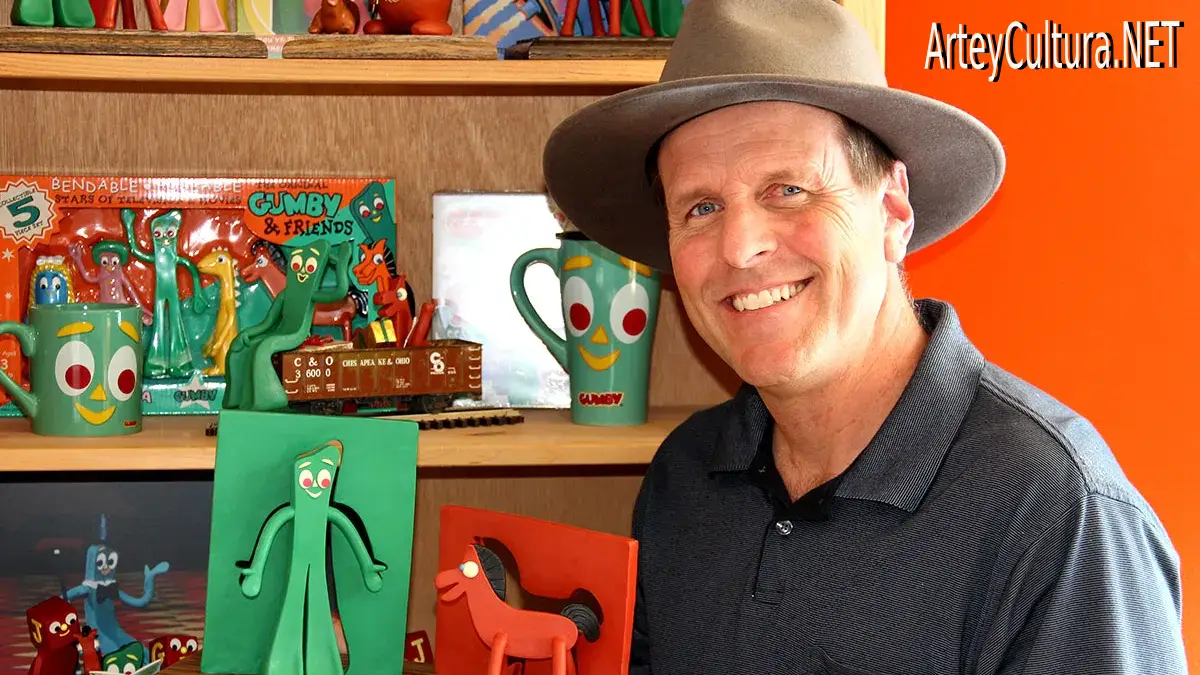
Arthur Clokey was born in Detroit on October 12, 1921, and died in Los Osos, California, on January 8, 2010. His elastic green character Gumby introduced generations of television viewers to the expressive possibilities of stop-motion clay animation.
Childhood and education
Clokey experienced a difficult childhood and was later adopted by composer and educator Joseph Waddell Clokey, whose encouragement expanded his interest in art and culture. He eventually studied film at the University of Southern California.
There he worked with filmmaker Slavko Vorkapich, whose experiments in montage and visual rhythm shaped Clokey’s understanding of motion as an abstract language.
Gumbasia and transformation
Clokey’s 1955 student film Gumbasia animates coloured clay forms to music. Shapes stretch, divide and reform without conventional characters or dialogue.
The experiment established a principle that remained central to Gumby: clay can transform visibly rather than merely imitate the rigid body of a puppet. Material change becomes part of the story.
Art Clokey in an English documentary
This English KQED documentary connects Clokey’s personal and spiritual interests with his animation. It shows that the apparent innocence of Gumby’s world emerged from sustained thought about creativity, flexibility and ethical action.
Gumby, Pokey and television
Gumby’s first television appearances in the 1950s led to a continuing series. The character’s simple shape, with a slanted head derived in part from Clokey’s memories of his adoptive father’s hairstyle, was highly readable in silhouette.
With the orange horse Pokey, Gumby could enter books, historical settings and imaginative worlds. Stop motion made physical objects seem capable of thought while preserving traces of the animator’s touch.
Davey and Goliath
Clokey also created Davey and Goliath for the Lutheran Church in America. The series used a boy and his talking dog to explore ordinary moral questions, responsibility and community.
Although more didactic than Gumby, it demonstrated that clay animation could carry sustained character narratives and serious themes for young audiences.
Clokey remembers the process
In this English archival interview, Clokey discusses his career and creative decisions. First-person testimony is especially valuable because stop-motion production usually hides the long labour behind a few seconds of movement.
Achievements and legacy
- He helped establish clay animation as a durable form of American television entertainment.
- He connected experimental abstraction with accessible character storytelling.
- Gumby became a cultural icon revived across several decades.
- His work influenced independent animators who value tactile materials and visible transformation.
Art Clokey’s legacy is the life he discovered inside a malleable substance. Frame by frame, a hand-shaped object became capable of curiosity, friendship and change.