Henri Matisse: Colour as a Form of Freedom
The life, Fauvist revolution, paintings, paper cut-outs and legacy of Henri Matisse, one of the artists who made colour an independent force in modern art.
- Henri Matisse
- Fauvism
- French art
- modern painting
- paper cut-outs
- colour
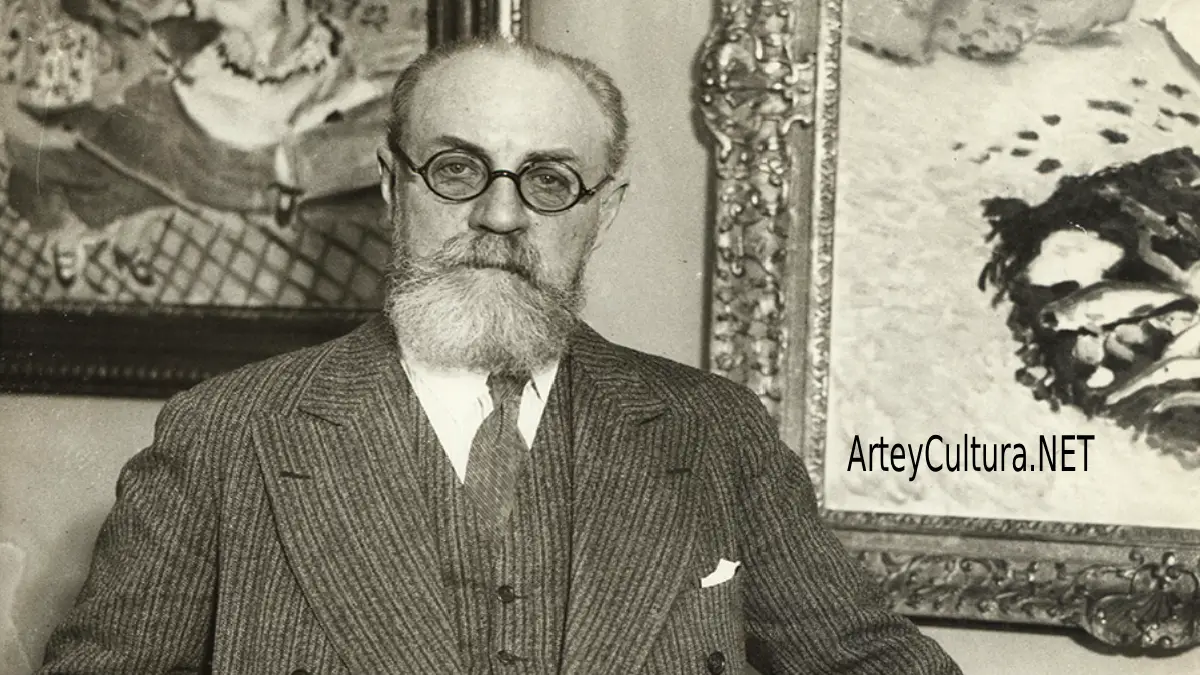
Henri Émile Benoît Matisse was born in Le Cateau-Cambrésis, France, on December 31, 1869, and died in Nice on November 3, 1954. Painter, sculptor, draughtsman and printmaker, he made colour an active structure rather than a decorative addition to modern art.
An unexpected vocation
Matisse initially studied law. During a long convalescence after illness, he began painting and decided to change professions. In Paris he studied with Gustave Moreau, copied works in the Louvre and absorbed lessons from Cézanne, Gauguin, Van Gogh and non-European art.
His early development was exploratory rather than linear. Academic drawing, Impressionist light, Divisionist colour and simplified form each contributed to a language that became unmistakably his own.
The Fauvist breakthrough
At the Salon d’Automne of 1905, works by Matisse, André Derain and Maurice de Vlaminck shocked viewers with intense, non-naturalistic colour. A critic’s reference to fauves, or wild beasts, gave the short-lived movement its name.
Fauvism freed colour from the obligation to describe local appearance. A face could contain green, a landscape could burn red, and the relationship between areas of colour could organise the entire composition.
A visual journey through the paintings
This language-neutral survey set to music moves across several periods. Viewed in sequence, works such as The Joy of Life and The Red Studio reveal how flattened space, pattern and colour create visual rhythm.
Dialogue with Picasso
Matisse and Pablo Picasso watched one another closely. Their methods differed—Matisse often emphasised colour and arabesque, while Picasso pursued Cubist fragmentation—but their competitive friendship drove major experiments in twentieth-century art.
Neither artist can be understood simply as the opposite of the other. Both repeatedly reconsidered the figure, still life, sculpture and the relationship between European traditions and objects from other cultures.
Drawing with scissors
After major surgery in 1941 reduced his mobility, Matisse increasingly worked with assistants who painted sheets of paper in gouache. He cut these sheets into forms and arranged them on walls before fixing the final composition.
The papiers découpés were not a minor substitute for painting. Works such as The Snail and the book Jazz joined colour and contour in a new medium that could be intimate or architectural.
The cut-outs at Tate
This English museum video explains how the cut-outs were made and why their scale matters. The works surround the body differently from a small reproduction, turning the wall itself into a field of movement.
Achievements and legacy
- He became a leading figure of Fauvism and transformed modern uses of colour.
- He united painting, drawing, sculpture, printmaking, costume and interior design.
- His late cut-outs established a major independent body of work.
- His visual economy influenced abstraction, graphic design, illustration and later generations of painters.
Matisse pursued an art of clarity, but clarity never meant simplicity of effort. His freedom was earned through decades of revision, close looking and confidence in the emotional intelligence of colour.