



Brunelleschi's Dome: The Engineering That Transformed Florence
The design, construction and legacy of Filippo Brunelleschi's dome for Florence Cathedral, one of the defining achievements of Renaissance architecture.
- Filippo Brunelleschi
- Florence Cathedral
- Renaissance architecture
- dome engineering
- Santa Maria del Fiore
- Florence
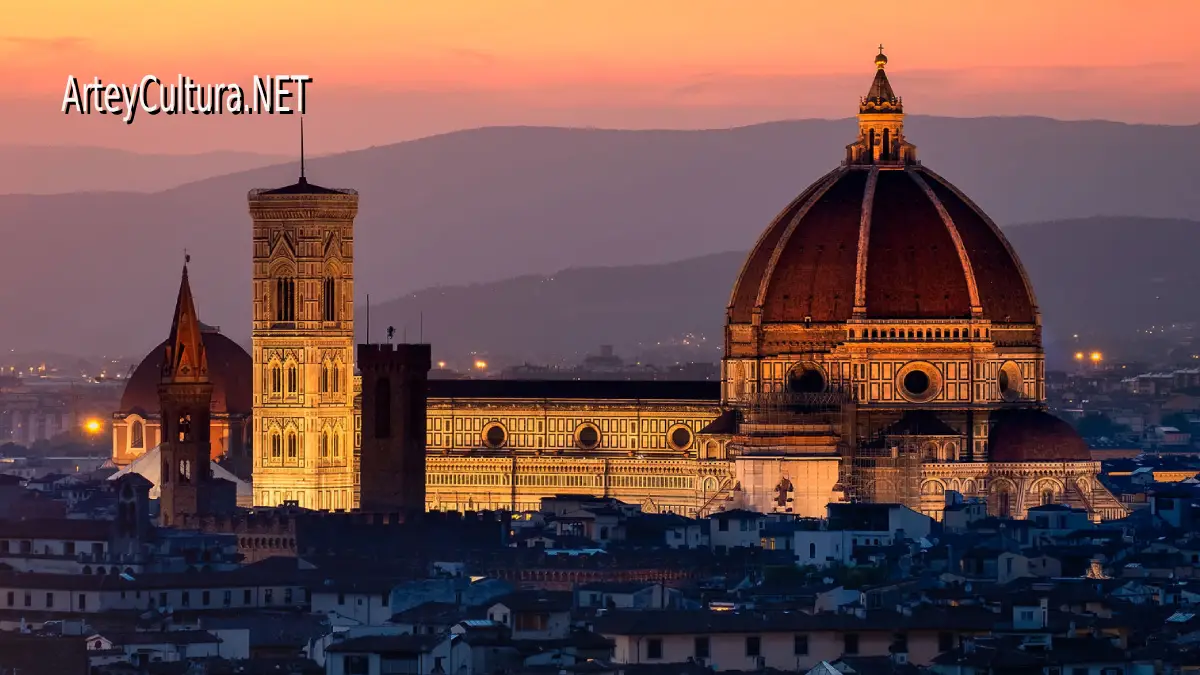
The dome of Santa Maria del Fiore, Florence Cathedral, was designed by Filippo Brunelleschi and constructed principally between 1420 and 1436. Its vast octagonal span, double shell and self-supporting method made it a landmark in both engineering and Renaissance culture.
A cathedral waiting for its crown
Florence began its new cathedral in the late thirteenth century. By the early fifteenth century, the enormous crossing still lacked a roof. The opening was too broad for familiar medieval solutions, while timber sufficient for a conventional centring structure would have been prohibitively costly and difficult to assemble.
The problem was architectural, economic and civic. Completing the dome would demonstrate the technical confidence and political ambition of the Florentine republic.
Brunelleschi’s construction strategy
Brunelleschi proposed an inner structural shell and a lighter outer shell joined by ribs and horizontal reinforcements. Rather than relying on full wooden centring from the ground, the masonry was organised so that the growing structure could progressively support itself.
The celebrated herringbone brick pattern helped interrupt continuous horizontal courses and stabilise sections during construction. Scholars still debate the exact geometrical procedures, but the building itself confirms an exceptionally controlled system.
Looking inside the dome
This English visual explanation reveals the spaces between the two shells and the structural elements invisible from the piazza. It helps viewers understand that the dome is not a single mass but a coordinated network of masonry, ribs, chains and passageways.
Machines made for the task
Brunelleschi designed hoists, cranes and reversible gearing to raise stone, timber and millions of bricks. One mechanism allowed the direction of lifting to change without unhitching and turning the animals that supplied power.
These machines were not secondary conveniences. They formed part of a total construction system that coordinated material supply, labour and work at extraordinary height.
How an apparent outsider solved the problem
This English National Geographic account reconstructs the practical challenge and Brunelleschi’s unconventional response. It also introduces the competitive culture of Florence, where artistic reputation and engineering risk were closely linked.
Architecture and authorship
Brunelleschi supervised design, machines, materials and daily decisions. This integration strengthened the emerging idea of the architect as an intellectual author and technical coordinator rather than only a master builder within an inherited craft tradition.
The lantern above the dome was based on his design and completed after his death. Together, dome and lantern created a form that still determines the skyline of Florence.
Achievements and legacy
- The inner span reaches roughly 45 metres, making it one of the great masonry domes in history.
- Its double-shell construction combined lower weight with access and weather protection.
- Purpose-built machinery transformed the logistics of high-level construction.
- The project became a model of Renaissance experimentation grounded in ancient knowledge and direct observation.
Brunelleschi’s achievement remains compelling because no single trick explains it. Geometry, material behaviour, tools, organisation and civic ambition had to work together for the dome to rise.