Lewis Carroll: Logic, Language and the Worlds of Alice
The life, mathematics, photography and literary legacy of Lewis Carroll, whose Alice books turned unstable rules and nonsense into lasting imaginative art.
- Lewis Carroll
- Alice in Wonderland
- Through the Looking-Glass
- Victorian literature
- nonsense
- logic
Charles Lutwidge Dodgson, known as Lewis Carroll, was born in Daresbury, England, on January 27, 1832, and died in Guildford on January 14, 1898. He was a writer, mathematician, photographer and Anglican deacon whose Alice books made unstable rules and logical paradox into imaginative literature.
Oxford and mathematics
Dodgson studied and taught mathematics at Christ Church, Oxford. He published work on geometry, symbolic logic, voting procedures and puzzles. His literary nonsense does not reject logic; it changes one premise and then follows the consequences with unsettling consistency.
He also photographed portraits during a period when the medium required technical preparation and long sittings. His photographic practice, especially images of children, has become the subject of extensive ethical and historical debate.
The river story that became a book
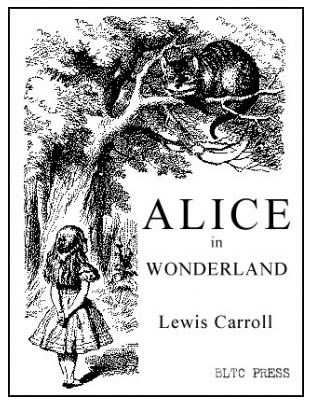
During a boating trip on July 4, 1862, Dodgson told a story to Alice Liddell and her sisters. He later developed it into a manuscript and then Alice’s Adventures in Wonderland, published in 1865 with influential illustrations by John Tenniel.
The fictional Alice is not a transparent portrait of one child. Memory, invention, editorial revision and Tenniel’s images all shaped the character readers know.
A critical documentary biography
This English BBC documentary investigates Carroll’s life and controversies. Its interpretations should be weighed carefully because gaps in evidence do not justify certainty, but it usefully shows why biography cannot be separated from questions about Victorian childhood and power.
Language without stable ground
Wonderland turns grammar, etiquette, size, time and identity into shifting systems. Alice repeatedly asks what words and rules mean, only to meet authorities who change definitions to protect their position.
The apparent fantasy therefore contains a serious experience of growing up: adults claim order while behaving irrationally, and the child must learn when a rule deserves obedience.
An English biographical introduction
This English mini-biography connects the Alice books with mathematics, Oxford and photography. It gives a concise factual map before readers enter the denser historical and ethical debates.
Through the Looking-Glass
The 1871 sequel uses a chess game as structural framework. Jabberwocky demonstrates that invented vocabulary can generate meaning through grammar, sound and context, while Humpty Dumpty turns definition into a struggle over authority.
Achievements and legacy
- Carroll created literary nonsense governed by rigorous internal logic.
- The Alice books respect a child’s intelligence while questioning adult institutions.
- Tenniel’s illustrations formed a durable collaboration between text and image.
- The works influenced fantasy, Surrealism, philosophy, theatre, film and digital culture.
Lewis Carroll’s legacy is a world where nonsense becomes a method of inquiry. By removing the apparent stability of language, the Alice books teach readers to notice who makes rules—and who benefits when words change meaning.