Oscar Hahn: Love, Death and Poetic Imagination
The life, books and legacy of Chilean poet Oscar Hahn, whose writing connects inherited forms, everyday language, desire, ghosts and dark humour.
- Oscar Hahn
- Chilean poetry
- Arte de morir
- Mal de amor
- Latin American literature
- poetic tradition
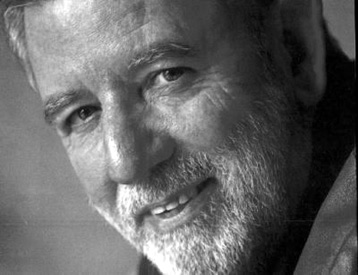
Óscar Arturo Hahn Garcés was born in Iquique, Chile, on July 5, 1938. Poet, essayist and scholar, he belongs to Chile’s literary generation of 1960 and has developed a distinctive body of work in which sonnet, popular speech, cinema and the uncanny share one language.
Formation, teaching and displacement
Hahn studied at the University of Chile and the University of Iowa. He taught in Arica and built a parallel career as a critic of Latin American literature.
After the military coup of September 1973, he was detained for a period. He later settled in the United States and taught for many years at the University of Iowa. Political rupture entered his biography, but his poetry cannot be reduced to direct testimony alone.
Tradition without nostalgia
Hahn uses sonnets, ballad rhythms and inherited images while introducing telephones, films, ordinary conversation and sudden surreal transformation. Traditional form becomes a living pressure rather than a museum object.
This temporal mixture allows medieval ghosts and modern lovers to inhabit the same poem. Irony prevents death from becoming permanent solemnity, while humour often makes anxiety more—not less—intense.
The poet reads Mal de amor
This Spanish reading is retained because no English substitute can reproduce Hahn’s timing. Pauses, changes of register and vocal understatement reveal structures that silent reading may initially miss.
Love, mortality and apparitions
Arte de morir, Mal de amor and Apariciones profanas repeatedly approach desire as an encounter with absence. Bodies age, the dead return and private emotion is interrupted by cultural memory.
The poems often begin with familiar lyric situations before one impossible image changes the rules. The supernatural is not escape from everyday life; it makes hidden fears and desires briefly visible.
A conversation about the poetic life
This Spanish Casa de América portrait presents Hahn discussing his work and historical experience. It adds reflection to performance and shows how revision, reading and cultural memory shape poems that can appear immediately spontaneous.
Books, awards and achievement
Other important collections include Esta rosa negra, Estrellas fijas en un cielo blanco and La primera oscuridad. Hahn also published influential scholarship on fantastic literature.
- He received the Pablo Neruda Ibero-American Poetry Prize in 2011.
- Chile awarded him its National Literature Prize in 2012.
- He renewed classical forms through contemporary language and media.
- His poems made love and death accessible without simplifying either.
Hahn’s legacy is a poetry in which different centuries remain available to one another. A sonnet can hold a telephone, a ghost can speak casually, and inherited form becomes the instrument of a distinctly modern uncertainty.