Molière: Comedy, Hypocrisy and the Human Condition
The life, theatre and legacy of Molière, whose comedies Tartuffe, The Misanthrope and The Imaginary Invalid turned social vice into enduring drama.
- Molière
- French theatre
- Tartuffe
- The Misanthrope
- The Miser
- comedy
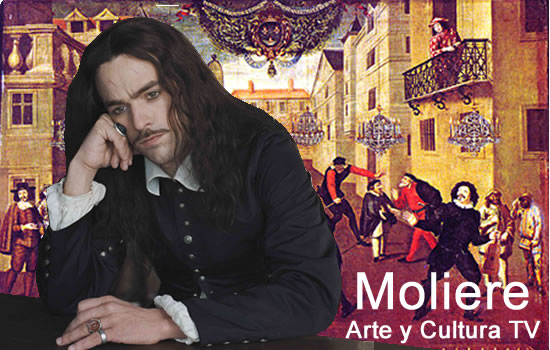
Jean-Baptiste Poquelin, known as Molière, was born in Paris on January 15, 1622, and died there on February 17, 1673. Actor, company leader and playwright, he made comedy a precise instrument for exposing vanity, greed, hypocrisy and the compromises required by social life.
Choosing the theatre
Poquelin was expected to inherit his father’s position as an upholsterer attached to the royal household. Instead, in 1643 he helped establish L’Illustre Théâtre and adopted the stage name Molière. The company failed financially, and debt briefly led to imprisonment.
Years touring the French provinces proved decisive. Molière learned how an ensemble survives, how different audiences respond and how farce, gesture, music and character can be organised into theatrical rhythm.
A life in seventeenth-century theatre
This English documentary follows Molière from family background through touring, court success and final performances. It makes clear that the plays were created for particular actors and practical stages, not as literature detached from performance.
Paris, patronage and censorship
The company returned to Paris in 1658 and won support from the court of Louis XIV. Royal patronage offered protection and resources, but it did not eliminate controversy. Tartuffe, which exposes a religious impostor exploiting a credulous household, faced years of prohibition after objections from influential devotional groups.
Molière did not attack faith itself so much as the use of piety for power. The distinction remains important because Tartuffe’s effectiveness depends on his ability to imitate virtue convincingly.
A gallery of social obsessions
The Miser turns hoarding into a force that deforms family relations. The Misanthrope asks whether uncompromising honesty can coexist with society. The School for Wives examines male control disguised as education, while Don Juan connects desire, status and evasion of responsibility.
These characters are types, but not simple cartoons. Harpagon, Alceste and Arnolphe remain recognisable because each turns a partly reasonable concern into an absolute obsession.
Moliere introduced in English
This English biographical introduction summarises the principal plays and historical setting. It helps new audiences approach the repertory before encountering the faster and more ambiguous experience of live performance.
The Imaginary Invalid and death
Molière suffered chronic illness while playing Argan in The Imaginary Invalid. He became gravely unwell during a performance and died later that evening. Later legend embellished the episode, but the documented event still captures the inseparability of his life from the stage.
Achievements and legacy
- He joined popular farce with sustained moral and social observation.
- He wrote roles around the strengths of a permanent acting ensemble.
- His comedies helped define French theatrical language and repertory.
- His characters continue to expose recognisable forms of self-deception.
Molière’s legacy survives because laughter never stands outside the problem. Audiences recognise hypocrisy onstage, then must ask how much of the same performance exists in their own conduct.