

Whitney Houston: Voice, Stardom and Musical Legacy
The life, recordings and legacy of Whitney Houston, whose gospel formation, technical control and emotional power reshaped modern popular singing.
- Whitney Houston
- American popular music
- gospel singing
- The Bodyguard
- I Will Always Love You
- vocal technique
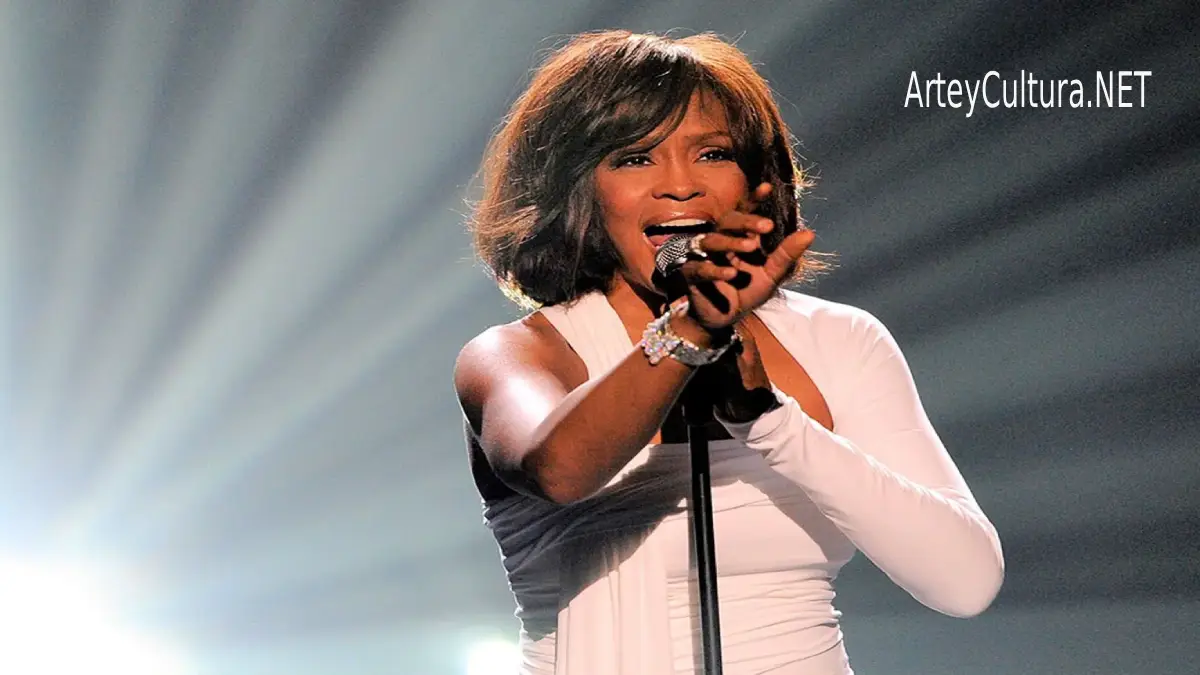
Whitney Elizabeth Houston was born in Newark, New Jersey, on August 9, 1963, and died in Beverly Hills on February 11, 2012. Singer, actor and producer, she joined gospel formation, exceptional breath control and mass-media reach to become one of popular music’s most influential voices.
Family, church and professional beginnings
Houston was the daughter of gospel singer Cissy Houston and grew up around musicians including Dionne Warwick. Singing in church taught her to shape long phrases, vary timbre and transform a melody through improvised runs without losing its emotional direction.
She worked as a model and background singer before signing with Arista Records under Clive Davis. The label introduced her across pop, R&B and adult contemporary audiences, a strategy that expanded opportunity while sometimes smoothing the Black musical traditions underlying her technique.
International ascent
Her first two albums produced major hits including Saving All My Love for You, How Will I Know, Greatest Love of All and I Wanna Dance with Somebody. Houston’s clarity made technically difficult singing sound inevitable.
Her success helped widen mainstream television and radio space for Black women artists. At the same time, criticism about crossover identity placed an unfair burden on one performer to represent competing ideas of authenticity.
I Will Always Love You
Houston’s English-language recording of Dolly Parton’s song begins without instrumental support and grows toward a powerful modulation. Silence, restraint and delayed climax are as important as volume. The performance became one of the best-selling singles in recording history.
Film and The Bodyguard
Houston starred opposite Kevin Costner in The Bodyguard (1992). Its soundtrack achieved extraordinary global sales and joined acting, music video and recording into one cultural event. She later appeared in Waiting to Exhale, The Preacher’s Wife and Sparkle.
Fame, scrutiny and decline
Houston’s marriage to Bobby Brown, intense tabloid attention and substance dependence became public spectacle. Her voice and health deteriorated during some periods, but accounts that turn suffering into sensational entertainment repeat the very pressures that surrounded her.
She died by accidental drowning; heart disease and cocaine use were listed as contributing factors. Accurate narration must acknowledge addiction while preserving the full person and musical worker beyond the circumstances of death.
The life behind the voice
This English documentary examines Houston’s rise, family life, industry pressures and final years. It provides biographical context while the article maintains focus on documented achievement rather than tragedy as spectacle.
Achievements and legacy
- She earned six Grammy Awards and numerous other honours.
- Her recordings set major commercial records across albums, singles and soundtrack music.
- Her breath control, placement and dynamic architecture influenced generations of singers.
- She expanded the possibilities available to Black women in global pop and screen performance.
Houston’s legacy lives most fully in the act of listening. Beneath every celebrated high note lies discipline: control of breath, timing, language and emotional proportion that turned virtuosity into communication.