
J. M. W. Turner: Light, Storm and the Experience of Modernity
The life, watercolours and paintings of J. M. W. Turner, who transformed landscape by making weather, light, industry and perception its central subjects.
- J. M. W. Turner
- British art
- landscape painting
- watercolour
- Rain Steam and Speed
- Romanticism
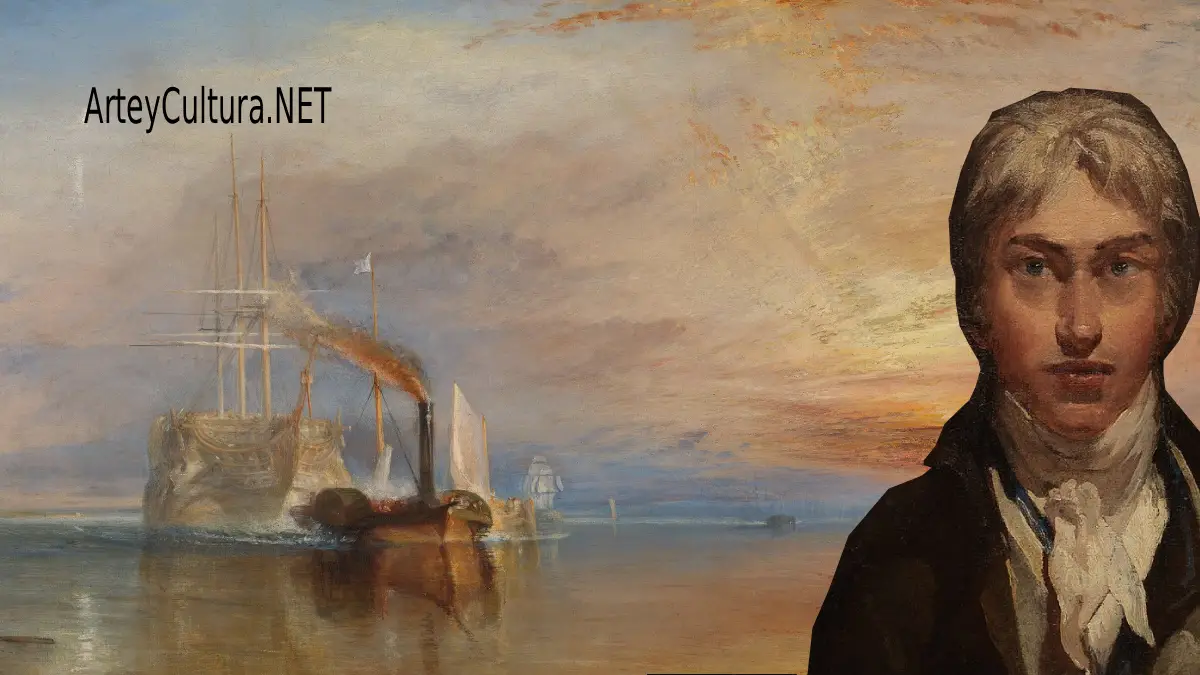
Joseph Mallord William Turner was born in London on April 23, 1775, and died in Chelsea on December 19, 1851. Painter, printmaker and watercolourist, he made weather and light active protagonists of landscape while confronting war, empire, industry and modern speed.
Precocious training
Turner entered the Royal Academy Schools at fourteen and exhibited soon afterwards. He travelled extensively through Britain and continental Europe, filling sketchbooks with architecture, coastlines, mountains and atmospheric effects.
These studies were not spontaneous finished pictures. Back in the studio he reorganised observation through memory, historical association and demanding processes of layering, washing, scraping and glazing.
Landscape as history
Early paintings competed with the classical authority of Claude Lorrain and the dramatic sublime. Turner gradually inserted contemporary ships, fires, railways and political events, demonstrating that landscape could carry historical argument.
The Slave Ship links a violent sea to the murder of enslaved people thrown overboard for financial gain. Its beauty is ethically unstable: colour attracts the viewer toward evidence of atrocity.
The man who painted Britain
This English BBC documentary connects journeys and locations with particular works. It reveals the extensive observation and commercial publication behind atmospheres that can appear to dissolve conventional drawing.
Steam, rain and industrial time
In Rain, Steam and Speed, a locomotive emerges through golden weather as technology and atmosphere occupy the same field. The Fighting Temeraire shows an old warship pulled toward dismantling by a steam tug, turning sunset into a meditation on historical transition.
Turner did not simply celebrate or condemn modernity. His images make technological power exhilarating, vulnerable and difficult to see clearly.
What makes Turner a master?
This English visual analysis demonstrates the strong compositional structure beneath Turner’s apparently free surfaces. Light, horizon and concentrated detail direct perception even when individual objects become uncertain.
The Turner Bequest and influence
Turner left a vast body of finished and unfinished work to the British nation. Disputes over the bequest shaped its later care and display. His paintings influenced Impressionist and abstract artists, although he belonged to a distinct Romantic and nineteenth-century context.
Achievements and legacy
- He expanded watercolour into a major medium of ambitious landscape art.
- He made weather and unstable perception central pictorial subjects.
- He connected landscape with industry, violence, empire and historical change.
- His material experiments opened new possibilities for colour and abstraction.
Turner’s legacy lies not in painting light as decoration but in showing that vision itself is historical. Fog, flame and speed change what can be seen—and therefore what a modern viewer can know.