George Harrison: Guitar, Spiritual Search and Songwriting
The life, compositions and legacy of George Harrison, the Beatles guitarist whose solo work joined melodic restraint, Indian music and spiritual inquiry.
- George Harrison
- The Beatles
- British rock
- All Things Must Pass
- Concert for Bangladesh
- Indian music
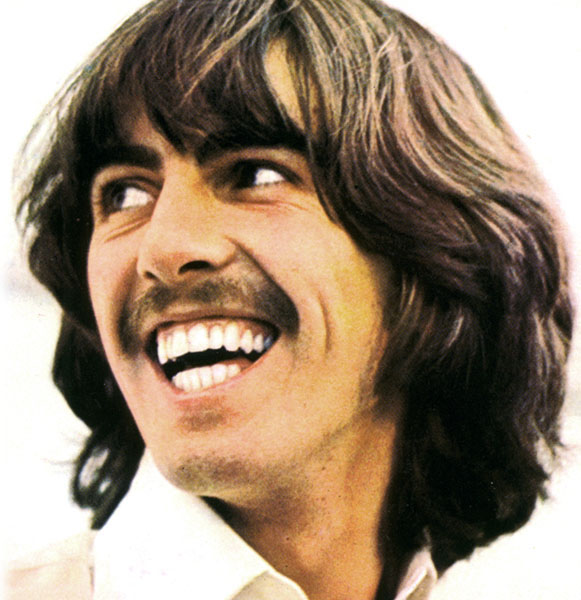
George Harrison was born in Liverpool on February 25, 1943, and died in Los Angeles on November 29, 2001. Guitarist, singer, songwriter and producer, he found an individual voice within the Beatles and later created a solo career shaped by friendship, film, Indian music and spiritual inquiry.
The youngest Beatle
Harrison met Paul McCartney as a teenager and joined the group that became the Beatles. Early audiences focused on Lennon and McCartney, but Harrison’s concise guitar parts were essential to the band’s sound. He selected notes for melodic identity rather than constant display.
As studio methods expanded, he explored twelve-string guitar, slide, volume-pedal effects and new recording textures. His playing in songs written by others demonstrates how arrangement can become a form of authorship.
A songwriter emerges
Harrison’s catalogue within the Beatles grew from early experiments to Taxman, While My Guitar Gently Weeps, Something and Here Comes the Sun. These works earned their place beside the dominant Lennon–McCartney partnership through harmonic character and emotional economy.
Something became one of the Beatles’ most widely covered songs. Its carefully rising melody demonstrates Harrison’s ability to express devotion without lyrical excess.
A life in the material world
This English trailer for Martin Scorsese’s documentary introduces archival images and testimony from family and collaborators. It frames the central tension of Harrison’s life: participation in extraordinary fame alongside an effort to loosen its hold on identity.
India and spiritual practice
Harrison studied sitar with Ravi Shankar and helped bring Indian classical music to a mass Western audience. The encounter was not only a fashionable sound. Hindu thought, meditation and devotional practice changed his understanding of music and celebrity.
The exchange also requires nuance. Harrison acted as an enthusiastic bridge, but Western popular culture sometimes compressed diverse Indian traditions into one exotic symbol. Ravi Shankar’s guidance and agency are essential to the history.
Solo work and humanitarian production
After the Beatles separated, the triple album All Things Must Pass (1970) revealed the depth of material accumulated while his songs had limited space in the group. In 1971, Harrison and Shankar organised the Concert for Bangladesh, an important model for later benefit concerts despite complications in distributing funds.
My Sweet Lord
This official English-language music video accompanies Harrison’s best-known solo song. Gospel structure and repeated Hindu devotional phrases create an inclusive longing for direct spiritual experience. A court later found that its melody had subconsciously copied the Chiffons’ He’s So Fine, a landmark copyright case.
Film, friendship and legacy
Harrison founded HandMade Films, enabling British projects including Monty Python’s Life of Brian. He later joined Bob Dylan, Roy Orbison, Tom Petty and Jeff Lynne in the Traveling Wilburys.
- His guitar lines made restraint and melodic service central to rock arrangement.
- His Beatles songs became standards independent of the Lennon–McCartney catalogue.
- He encouraged sustained exchange between Western popular and Indian classical music.
- The Concert for Bangladesh changed the scale of musician-led humanitarian events.
Harrison’s legacy rests on a productive contradiction. He used the reach of global fame to seek values beyond fame, leaving music whose quiet precision often carries its deepest force.