Richard Dadd: Fantasy, Precision and Victorian Tragedy
The life, crime and extraordinary paintings of Richard Dadd, the Victorian artist who created intricate imaginary worlds during decades of confinement.
- Richard Dadd
- Victorian art
- The Fairy Feller's Master-Stroke
- fairy painting
- Bethlem Hospital
- British art
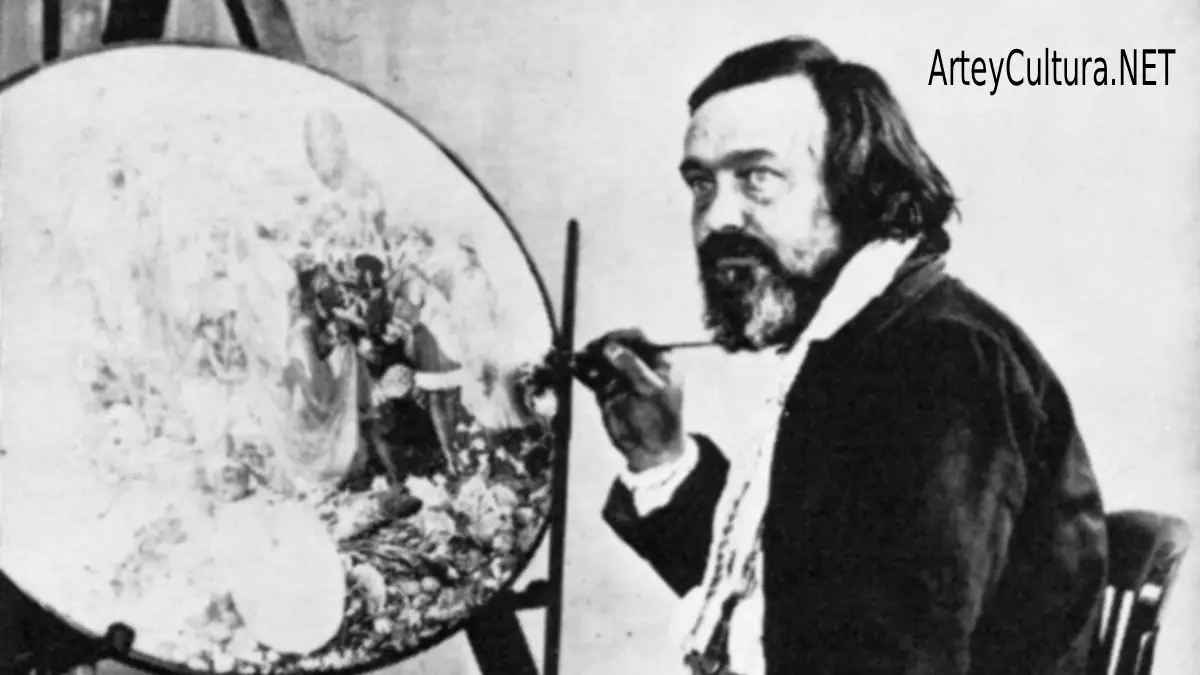
Richard Dadd was born in Chatham, England, on August 1, 1817, and died at Broadmoor on January 7, 1886. A highly trained Victorian painter, he created literary, landscape and fairy subjects of extraordinary precision. His career was also marked by severe mental illness, the murder of his father and more than four decades of institutional confinement.
Training and The Clique
Dadd entered the Royal Academy Schools in 1837 and became associated with The Clique, a group of young artists who opposed what they regarded as rigid academic conventions. His early work earned recognition for confident drawing, narrative complexity and imaginative detail.
In 1842 he joined a patron on a journey through Europe and the eastern Mediterranean. During the trip his behaviour became increasingly disturbed. Historical descriptions suggest psychosis, but retrospective diagnosis is uncertain and should not replace the documented facts.
Crime and confinement
After returning to England, Dadd killed his father in 1843 under a persecutory delusion and fled to France. He was arrested after attacking another traveller. British authorities confined him first at Bethlem Hospital and later at Broadmoor, where he remained until his death.
The killing must not be turned into a picturesque prelude to artistic genius. Mental illness does not inherently produce violence, and Dadd’s case cannot stand as a general explanation for either creativity or psychiatric experience.
A Victorian life reconstructed
This English biographical documentary reconstructs the journey, crime and hospital years from historical evidence. Its value lies in distinguishing documented chronology from the sensational legends that accumulated around the artist.
Art under institutional care
Dadd continued painting during confinement with support from physicians who supplied materials and commissioned work. He made portraits, watercolours, landscapes and intensely detailed imaginative scenes. Discipline, training and prolonged labour—not illness alone—made this production possible.
The Fairy Feller’s Master-Stroke
Created between approximately 1855 and 1864, the painting assembles a miniature crowd around a woodcutter poised to split a hazelnut. Layered paint, compressed scale and suspended action turn a tiny event into an enclosed dramatic universe.
The fairy world examined
This English visual essay places the masterpiece within the Victorian fascination with fairies and literary fantasy. Close viewing reveals how hierarchy, costume and gaze organise what first appears to be uncontrolled abundance.
Achievements and legacy
- He developed a distinctive form of intricate Victorian fantasy painting.
- His hospital work demonstrates sustained craft under extreme restriction.
- The Fairy Feller’s Master-Stroke became a landmark of British imaginative art.
- His history encourages more careful discussion of art, responsibility and mental illness.
Dadd’s legacy is strongest when neither romanticised nor reduced to crime. The paintings deserve attention as deliberate constructions made by a skilled artist whose tragic history requires accuracy and ethical restraint.