Wifredo Lam: Caribbean Modernism, Exile and Resistance
The life and legacy of Wifredo Lam, the Cuban painter who joined international modernism with Afro-Cuban history, ritual and anticolonial resistance.
- Wifredo Lam
- Cuban art
- The Jungle
- Afro-Cuban culture
- modernism
- Surrealism
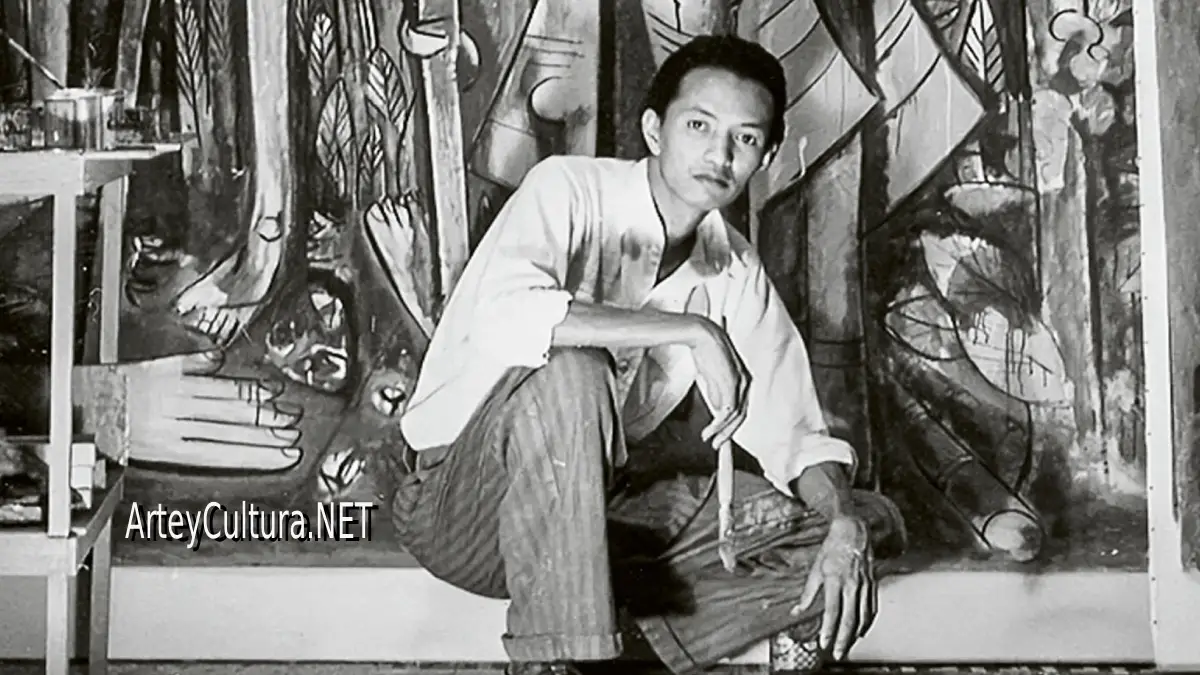
Wifredo Óscar de la Concepción Lam y Castilla was born in Sagua la Grande, Cuba, on December 8, 1902, and died in Paris on September 11, 1982. Of Chinese, Spanish and African ancestry, he developed a visual language in which European modernism encountered Afro-Cuban history and anticolonial resistance.
Cuba, Spain and political awakening
Lam studied at the San Alejandro Academy in Havana before travelling to Spain in 1923. Academic training, modern painting and personal loss shaped his early years. During the Spanish Civil War he supported the Republican cause; the conflict strengthened the political dimension of his work.
In Paris he met Pablo Picasso, André Breton and artists associated with Surrealism. Cubist fragmentation and Surrealist metamorphosis offered useful tools, but Lam refused to remain an imitator or an exotic representative within a European movement.
Exile and transformation
This English Museum of Modern Art film follows Lam through war, exile and return. It explains how movement across countries transformed his art while Cuba remained a critical intellectual and emotional centre.
Return to a colonial Caribbean
Lam returned to Cuba in 1941 after nearly two decades in Europe. He encountered racial inequality, poverty and the tourist exploitation of Afro-Cuban culture. His hybrid figures combine human bodies, plants, masks and animal attributes, but they are not illustrations of ritual. They confront viewers with a world that resists easy possession.
The Jungle
Created in 1942–43, The Jungle compresses monumental body-cane figures into a dense nocturnal field. Sugar cane evokes the plantation economy and the history of enslaved labour. The scene appears ritualised, yet also claustrophobic and threatening: a Caribbean answer to modernity rather than folklore supplied for European consumption.
The artist in his own context
This English Tate film considers the cultural sources and political force of Lam’s imagery. It helps show why comparisons with Picasso are insufficient: Lam redirected modernist form through histories that European modernism had often appropriated.
Later work and international reach
Lam continued painting, drawing, printmaking and ceramics while living between Europe and the Americas. Repeated signs—horns, blades, hooves and elongated faces—formed an adaptable vocabulary rather than a single fixed code.
Achievements and legacy
- He established a distinctive Caribbean modernism with international reach.
- He challenged colonial stereotypes rather than presenting Afro-Cuban culture as decoration.
- The Jungle became a landmark of twentieth-century painting.
- His work opened paths for later artists negotiating diaspora, hybridity and cultural memory.
Lam’s legacy lies in transformation without submission. He absorbed the international avant-garde, then made its forms answer to histories and spiritual worlds that it had too often treated as raw material.