Kukuli Velarde: Identity, Ceramics and Critical Memory
The career of Kukuli Velarde, a Peruvian artist whose ceramics, painting and performance confront identity, gender and colonial representation.
- Kukuli Velarde
- Peruvian contemporary art
- ceramics
- Latin American art
- colonial memory
- identity
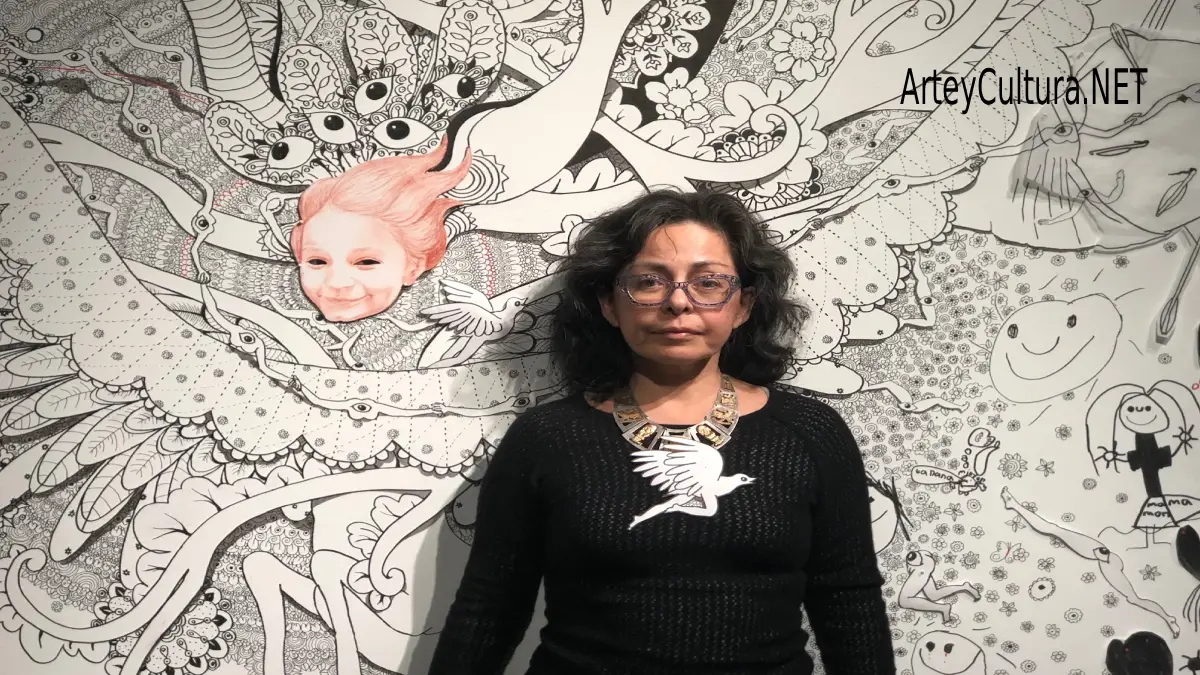
Kukuli Velarde Barrionuevo, born in Cusco, Peru, on November 29, 1962, is a Peruvian artist based in the United States. Her ceramics, painting, drawing and performance examine mestiza identity, gender, desire and the colonial systems that have classified Indigenous and Latin American bodies.
Formation and an expanding self-portrait
Velarde studied at Hunter College in New York after moving to the United States. Technical precision and disquieting humour became central to her work. Her own face appears repeatedly, not as conventional autobiography but as a flexible instrument for inhabiting multiple historical and social identities.
By exaggerating gesture, expression and bodily form, she refuses the passive, idealised image often assigned to women in art. The viewer meets figures that look back, accuse, perform and sometimes mock the desire to categorise them.
An English artist talk
In this English presentation for the Halsey Institute of Contemporary Art, Velarde explains the ideas and processes behind her work. Hearing the artist frame her own images is especially valuable because her practice disputes traditions in which institutions speak for the people they represent.
Ceramics and pre-Columbian memory
Series including Plunder Me, Baby engage with pre-Columbian vessels and museum taxonomies. Velarde does not reproduce archaeological objects as decorative quotations. She gives them contemporary faces and unstable emotions, challenging the long history through which looted or displaced objects were displayed as anonymous evidence of vanished cultures.
In Isichapuitu, ceramic figures also converse with colonial religious imagery. Sacred pose, bodily vulnerability and theatrical expression expose the uneasy meeting of Indigenous histories and imposed Christian iconography.
Art, teaching and community
This English interview at Fleisher Art Memorial explores Velarde’s work as a teacher of ceramics. Her reflections show that clay can carry personal memory and community knowledge as well as formal experimentation.
Material intelligence
The labour of modelling, glazing and firing is crucial. Clay can crack, shrink and transform unpredictably; its physical resistance prevents the figure from becoming only an illustration of theory. Surface beauty draws viewers close before the work unsettles inherited assumptions.
Achievements and continuing legacy
- She has built an influential practice across ceramics, painting and performance.
- Her work centres Latin American women as makers and critical subjects rather than ethnographic objects.
- She has received support from organisations including the Pollock-Krasner Foundation, Joan Mitchell Foundation, United States Artists and Pew Center for Arts and Heritage.
- Her exhibitions contribute to international debates about museums, restitution and colonial memory.
Velarde’s legacy remains active because her work does not offer identity as a fixed answer. It turns technical beauty into a difficult question: who has the authority to name, possess and represent another person’s history?