

Edward Hopper: Light, Architecture and Modern Solitude
The life, paintings and legacy of Edward Hopper, whose silent interiors and urban scenes made solitude visible in modern American art.
- Edward Hopper
- American art
- Nighthawks
- realism
- modern solitude
- urban painting
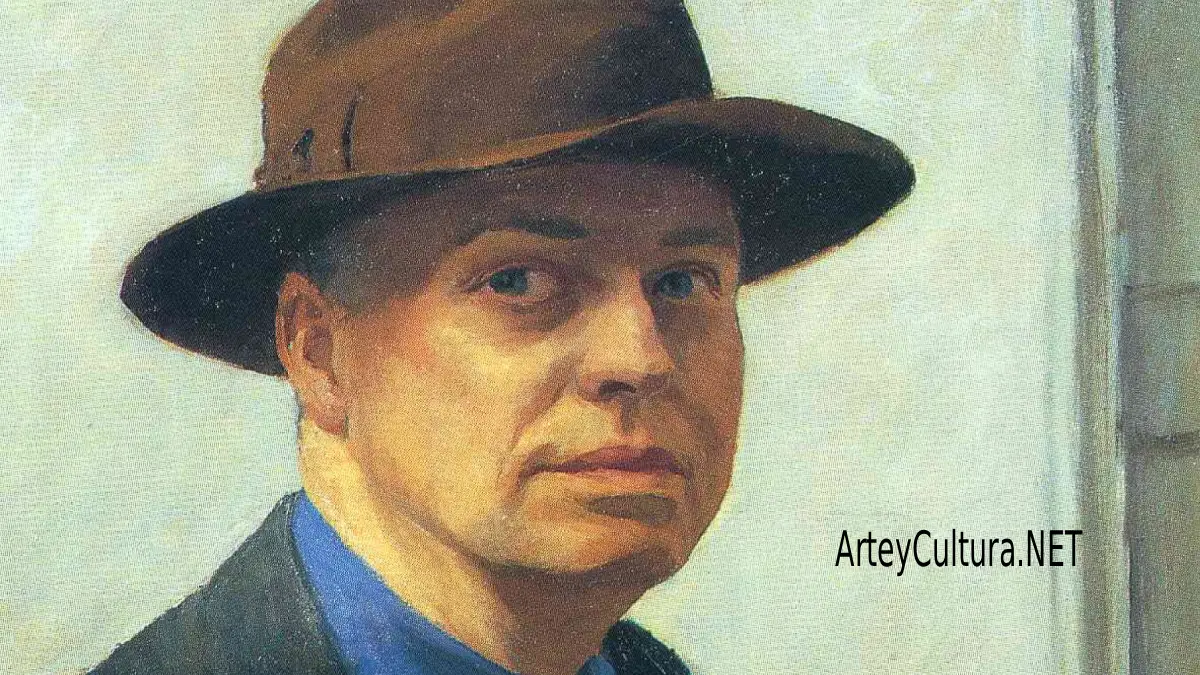
Edward Hopper was born in Nyack, New York, on July 22, 1882, and died in Manhattan on May 15, 1967. His paintings of rooms, theatres, petrol stations, railways and city streets made modern American life appear at once familiar and psychologically remote.
Training and early career
Hopper studied illustration and painting at the New York School of Art, where Robert Henri encouraged close observation of contemporary life. Several journeys to Paris exposed him to European painting, yet he did not join the experimental avant-garde. For many years he earned his living as a commercial illustrator while developing his own work slowly.
His first major recognition came through etching and watercolour. These media sharpened his control of strong tonal contrasts and architectural structure before his mature oil paintings gained a broad audience.
Light as dramatic structure
Hopper’s light does more than describe time of day. A bright window may divide a room, isolate a figure or suggest a world beyond reach. Walls, doorways and streets become stage-like spaces in which very little happens, but emotional tension remains intense.
An English documentary portrait
This BBC documentary examines Hopper’s life, working methods and recurring subjects. Archival material and views of American locations show how observation was transformed into carefully simplified compositions rather than copied literally.
Nighthawks and the modern city
Painted in 1942, Nighthawks presents four figures inside a brightly illuminated late-night diner. The curved glass offers visibility but no obvious entrance, making spectators close to the scene yet unable to enter it. The painting has become an emblem of urban loneliness, although its figures may also be read as sharing a temporary refuge.
Other key works include House by the Railroad, Automat, Early Sunday Morning and Morning Sun. Each reduces narrative detail so that posture, light and distance carry the emotional weight.
Painter of alienation
This English analysis considers why Hopper’s quiet scenes are associated with alienation. It helps distinguish solitude from simple sadness and shows how empty intervals allow viewers to imagine stories that the artist deliberately withheld.
Jo Nivison Hopper
The painter Josephine Nivison Hopper, his wife, was his principal model and kept detailed records of his work. Her documentation was essential to the later study of his career, while renewed scholarship also examines how her own artistic ambitions were constrained within their difficult partnership.
Achievements and legacy
- He gave architectural space a central psychological role in American realism.
- His manipulation of light influenced photography, cinema and visual storytelling.
- Nighthawks became one of the most recognised paintings of twentieth-century America.
- His restrained scenes invite interpretation without fixing a single narrative.
Hopper’s legacy lies in the eloquence of what remains unsaid. His rooms and streets continue to feel contemporary because they make looking itself an experience of distance, desire and uncertainty.