Quino: Humour, Humanity and the Gaze of Mafalda
The life and legacy of Quino, the Argentine cartoonist who created Mafalda and transformed everyday contradictions into universal graphic humour.
- Quino
- Mafalda
- Argentine comics
- graphic humour
- cartoonist
- Latin American culture
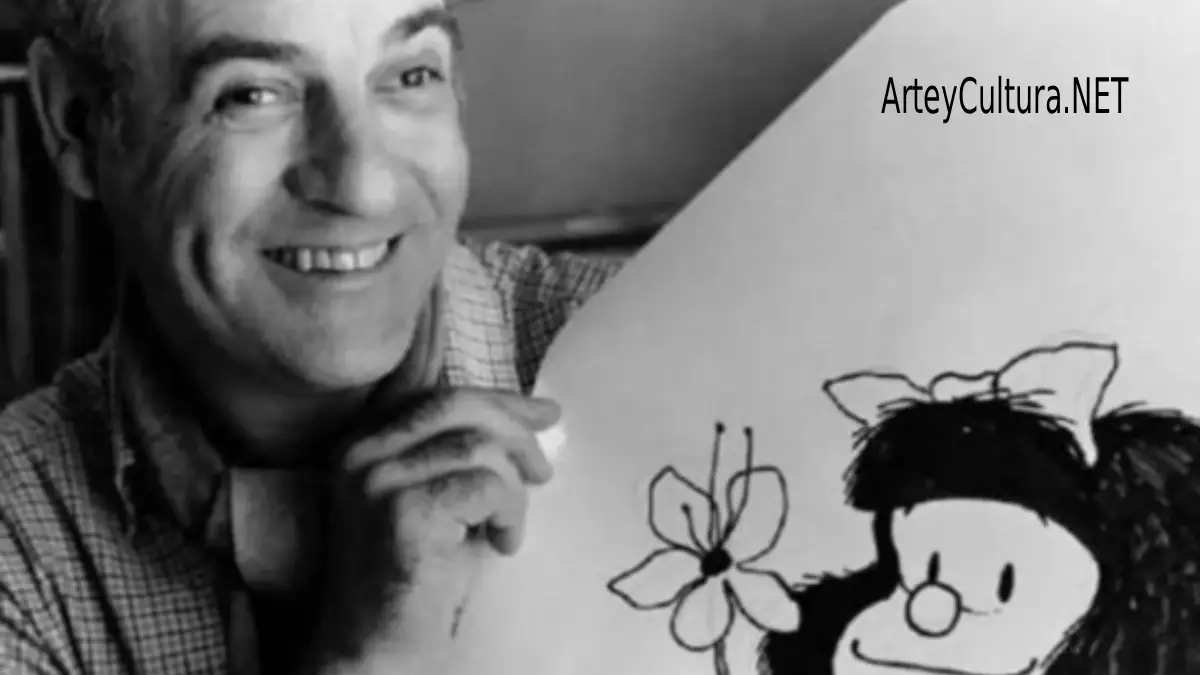
Joaquin Salvador Lavado Tejon, known as Quino, was born in Mendoza, Argentina, on July 17, 1932, and died there on September 30, 2020. Through Mafalda and thousands of independent cartoons, he became one of the most influential graphic humourists in the Spanish-speaking world.
A vocation discovered early
Quino adopted his nickname to distinguish himself from an uncle who shared his name and worked as an illustrator. He studied at the School of Fine Arts in Mendoza but left formal education to pursue cartooning. After repeated editorial rejections, his drawings began appearing in Argentine magazines during the 1950s.
His line looks economical, yet every gesture and object contributes to the joke. Facial expressions, pauses and the arrangement of a room often carry as much meaning as dialogue.
Mafalda and her world
Mafalda emerged in the 1960s from an advertising project that was never used. Quino transformed the character into a newspaper strip about a questioning child, her family and friends. Between 1964 and 1973, the series examined war, authoritarianism, social inequality, education and the anxieties of the middle class.
The children are not miniature political lecturers. Each has a distinct temperament: Mafalda’s ethical impatience, Manolito’s commercial pragmatism, Susanita’s conventional dreams and Felipe’s imagination create a small society in permanent debate.
The creator and his world
This Spanish-language documentary situates Mafalda within Quino’s biography and the turbulent history of Argentina. It is retained because his own language, timing and cultural references are central evidence for understanding the work.
Beyond Mafalda
Quino ended the strip while it remained popular, but continued producing single-panel cartoons and longer wordless sequences. These works address bureaucracy, censorship, labour, power, old age and loneliness. Without recurring characters, he could vary settings while returning to the unequal relationship between institutions and ordinary people.
Quinography: an audiovisual portrait
The official Spanish trailer for Quinography introduces an archival portrait of the artist. Photographs, drawings and testimony reveal the quiet observer behind a body of work whose humour can be both tender and devastating.
Achievements and legacy
- Mafalda became a lasting symbol of critical curiosity across generations.
- His books circulated internationally through numerous translations.
- He received the Prince of Asturias Award for Communication and Humanities in 2014.
- His wordless cartoons demonstrated that graphic satire can cross linguistic borders.
Quino’s legacy is a way of looking. He asked readers to laugh, then left them facing the social mechanism that made the joke necessary.