The Ecce Homo of Borja: The Intervention That Changed a Town
The 2012 intervention by Cecilia Giménez on the Ecce Homo of Borja and the lessons it created about conservation, viral culture and community heritage.
- Ecce Homo of Borja
- Cecilia Giménez
- art conservation
- viral culture
- community heritage
- Elías García Martínez
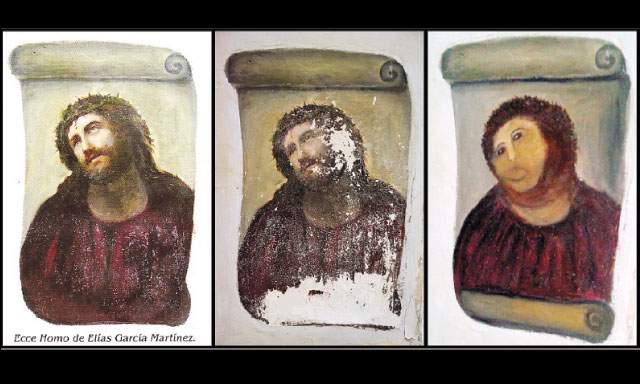
In August 2012, an intervention by Cecilia Giménez on a deteriorating Ecce Homo in the Sanctuary of Mercy at Borja, Spain, became a worldwide phenomenon. The original image had been painted around 1930 by Elías García Martínez. A local action undertaken without professional supervision transformed the painting, the town’s tourism economy and the public identity of everyone involved.
A modest and vulnerable mural
The work was a wall painting executed on a prepared surface rather than a true fresco. Moisture and loss of material had already damaged it. Giménez, an amateur painter connected with the parish, had attempted small retouching before. In 2012 the intervention remained visibly incomplete and radically altered the face.
Why good intention is not conservation
Professional treatment begins with diagnosis, documentation and material tests. Conservators identify the support, paint and causes of deterioration before deciding whether intervention is safe. The principle of minimum action protects what survives and makes later correction possible.
Care and local attachment matter, but they cannot replace technical knowledge. A fragile surface may react unpredictably to water, binders, paint or mechanical contact.
The fresco fiasco in context
This English documentary examines the intervention, media reaction and consequences for Borja. Its extended format moves beyond one comic photograph. The film allows Cecilia, local residents and cultural workers to become people within a social event rather than characters in a global joke.
From damaged painting to popular icon
Online users renamed the image “Ecce Mono” and produced countless parodies. Visitors began arriving in Borja. The work ceased to be known mainly through García Martínez and acquired a second history based on transformation, circulation and humour.
Viral fame created real economic value while emerging from material loss. That contradiction makes the case more complex than either “restoration disaster” or “tourism success.”
An English explanation of the failure
This English video gives a concise account of what occurred and why the result cannot be described as professional restoration. Used critically, the familiar before-and-after images can introduce the importance of training, authorization and documentation rather than simply inviting ridicule.
Should the original be recovered?
Removing the intervention could destroy remaining original paint. The altered image has also acquired historical and community significance of its own. Any future decision would require technical study, institutional agreement and consideration of the artist’s descendants, Cecilia Giménez, the parish and the town.
Tourism, rights and responsibility
The influx of visitors raised questions about admission income and fair recognition of those affected. Cultural value generated by a viral event does not distribute itself automatically. Transparent arrangements are necessary when one person’s action and image become a community resource.
Lessons from Borja
- Deteriorated works require assessment by trained conservators.
- Every intervention should be authorized and documented.
- Community attachment needs institutional support rather than informal repair.
- Viral culture can create new value without reversing physical loss.
- Public mockery can obscure the human cost borne by an individual.
The Ecce Homo of Borja is both warning and paradox. An incorrect intervention damaged an existing painting, yet created another image whose cultural history can no longer be separated from the town that houses it.