Miguel de Unamuno: Reason, Faith and the Conflict of Spain
The life and work of Miguel de Unamuno, philosopher and writer of the Generation of 1898, author of Mist and The Tragic Sense of Life.
- Miguel de Unamuno
- Spanish philosophy
- Generation of 1898
- Mist
- The Tragic Sense of Life
- Spanish literature
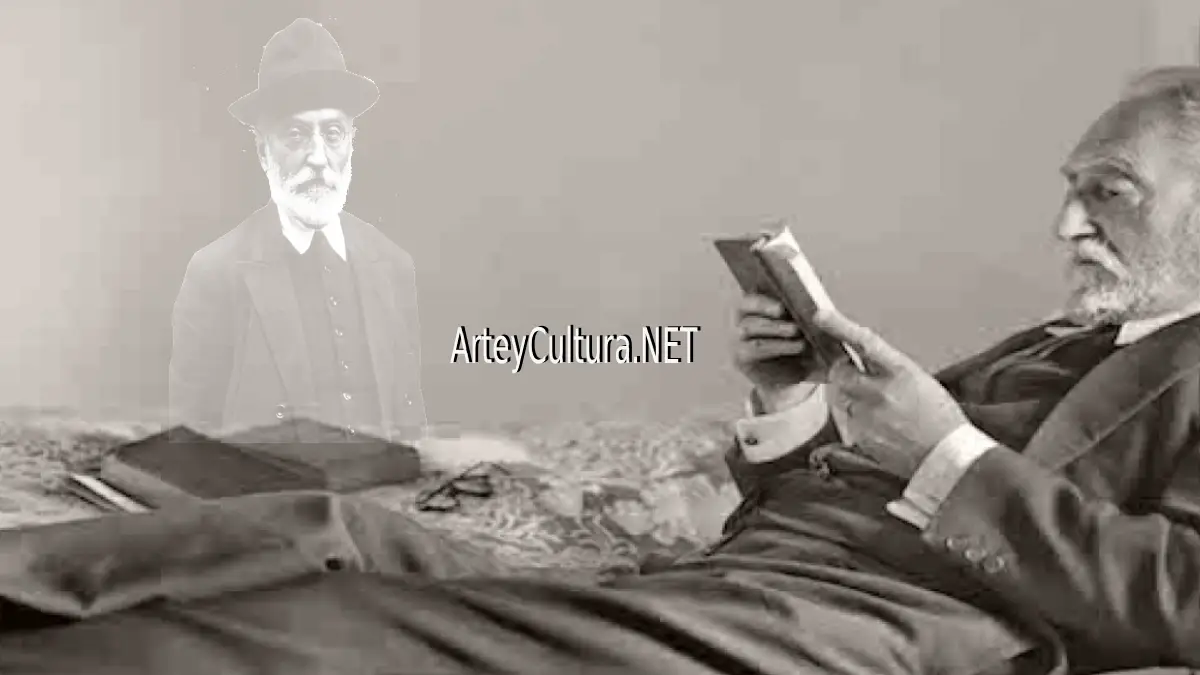
Miguel de Unamuno y Jugo was born in Bilbao on September 29, 1864, and died in Salamanca on December 31, 1936. A writer, philosopher, poet, dramatist and university rector, he made the unresolved conflict between faith and reason the driving force of a profoundly personal body of work.
Education and the University of Salamanca
Unamuno studied philosophy and literature in Madrid and obtained a chair in Greek at the University of Salamanca. He served several terms as rector. The university was never only employment: it became a setting for teaching, public controversy and repeated confrontation with political power.
The Generation of 1898
After Spain’s imperial crisis of 1898, Unamuno reflected on national identity, landscape and renewal. He shared no single program with all writers grouped under the label, but his arguments about Spain’s history and possible future made him one of the generation’s defining public voices.
Mist and the “nivola”
In Mist, Augusto Pérez eventually confronts his own author. Unamuno called the form a “nivola,” a playful term that rejects conventional expectations of the novel. Character freedom, identity and the authority of the creator become events within the plot.
An English biographical introduction
This English overview connects major works with the public conflicts of Unamuno’s life. It helps readers see that literary experiment and political experience were not separate careers. Both asked what an individual conscience can do against inherited certainty.
The tragic sense of life
Unamuno desired personal immortality, yet reason could not prove it. Instead of resolving the contradiction, he treated the struggle itself as a way of living. His essays do not deliver a stable doctrine. They preserve longing, doubt and the refusal to let abstract logic silence emotional truth.
Why live if death is certain?
This English philosophical essay introduces the central conflict in accessible language. Its value lies in showing that Unamuno’s question is not a demand for despair. Awareness of death intensifies responsibility, love and the desire to create meaning without final guarantees.
Exile and return
Opposition to Primo de Rivera’s dictatorship led to exile in 1924. Unamuno lived in Fuerteventura and France before returning. He initially welcomed the Second Republic but later criticized its development, as he criticized nearly every political camp that demanded unquestioning loyalty.
The rupture of 1936
He first supported the military uprising but soon denounced its violence. After the famous October 12 ceremony at the University of Salamanca, he was removed from public life and confined under house surveillance. The precise wording of the confrontation remains debated, but the political break is clear.
Death and contested memory
Unamuno died on the final day of 1936. Competing political traditions later attempted to claim or condemn him. His changes of position should not be flattened into one slogan; contradiction was both a weakness and the centre of his intellectual method.
Achievements and legacy
- He renewed the Spanish novel, essay, poetry and theatre.
- He made doubt and contradiction into philosophical method.
- He defended the public responsibility of intellectual conscience.
- He created lasting works including Mist and Saint Manuel Bueno, Martyr.
Unamuno remains unsettling because he refused to offer tranquillity. His writing asks readers to inhabit questions that no political or religious formula can finally close.