The Brothers Grimm: Fairy Tales, Language and Popular Memory
The lives and legacy of Jacob and Wilhelm Grimm, German philologists who collected traditional stories and transformed the historical study of language.
- Brothers Grimm
- Jacob Grimm
- Wilhelm Grimm
- fairy tales
- German literature
- folklore
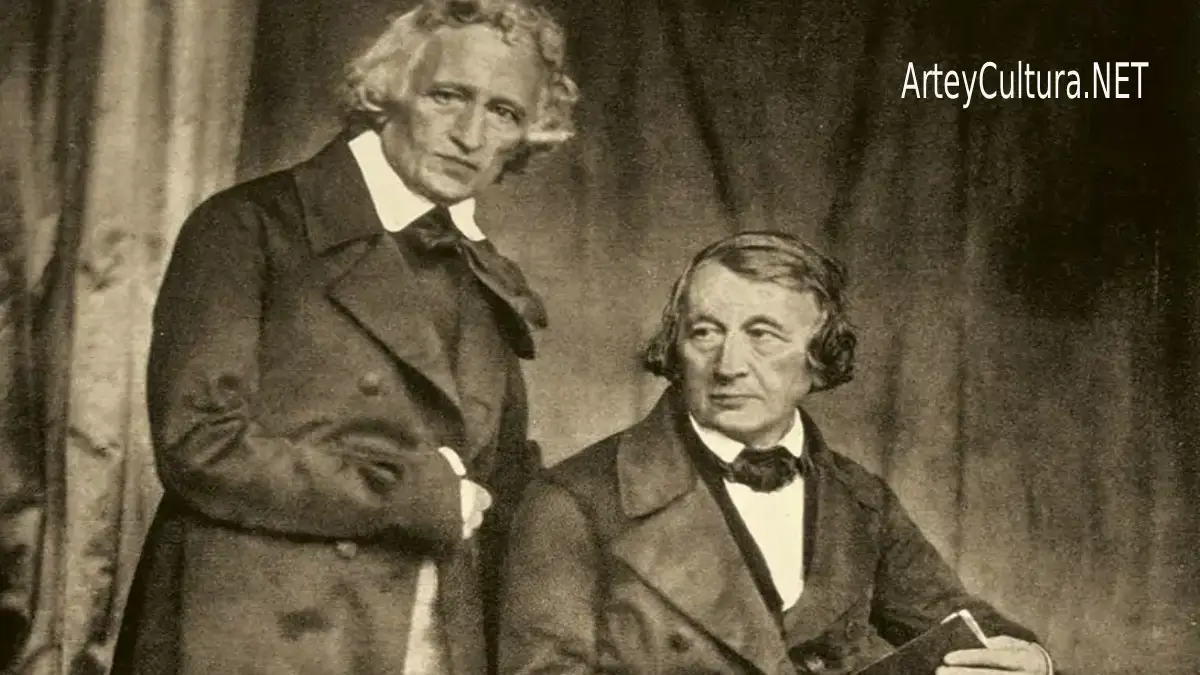
Jacob Grimm was born on January 4, 1785, and died on September 20, 1863. Wilhelm Grimm was born on February 24, 1786, and died on December 16, 1859. Both were born in Hanau, in present-day Germany. They were philologists, researchers and editors whose work changed both the study of language and the circulation of popular narrative.
A family facing adversity
Their father’s early death left the family in financial difficulty. The brothers studied law at Marburg, where Friedrich Carl von Savigny encouraged their interest in old documents, traditions and the historical development of institutions. What began in jurisprudence widened into language, literature and cultural memory.
Gathering oral and written tales
The Grimms collected stories through a network of friends and collaborators, many from educated families familiar with both oral tradition and French literary tales. The familiar image of two brothers travelling only among remote peasants is incomplete. Their collection emerged from conversation, manuscripts, previous publications and editorial comparison.
Children’s and Household Tales
The first volume appeared in 1812 and a second followed in 1815. The collection included versions of “Hansel and Gretel,” “Rapunzel,” “Cinderella” and “The Bremen Town Musicians.” Successive editions changed language, violence, morality and narrative structure as the intended audience became increasingly familial.
Darker than later memory
This English documentary explains the brothers’ lives and why early versions can feel harsher than modern adaptations. Hunger, abandonment, punishment and dangerous forests symbolized real anxieties. Historical reading avoids treating their darkness only as sensational content.
Editing is part of tradition
There is no untouched “pure” version behind every fairy tale. Each narrator selects details; transcription fixes one performance; editing changes style; translation creates new associations; film alters pacing and imagery. The Grimms preserved stories while also transforming them.
A forest of fairy tales
This full English documentary explores landscapes, symbols and the continuing cultural life of the tales. It is useful for seeing the forest as more than scenery: it marks uncertainty, exclusion and transformation, a place where social rules weaken and identities can change.
Philology and Grimm law
Jacob described systematic consonant changes across Germanic languages, later known as Grimm law. Both brothers worked on grammar, mythology and legal antiquities. Their scholarly contribution is as important as their story collection because it helped establish language as a historical process governed by patterns rather than decline from a perfect form.
The great German dictionary
In 1838 they began the Deutsches Wörterbuch, an ambitious historical dictionary. The project documented meanings and usage across centuries. Neither brother lived to finish it; generations of scholars continued the work into the twentieth century.
Politics and academic integrity
The brothers were among the Göttingen Seven, professors dismissed after protesting the king of Hanover’s violation of the constitution. The episode linked scholarship with public responsibility and forced another period of professional uncertainty.
Achievements and legacy
- They preserved and reshaped hundreds of European traditional narratives.
- They helped establish methods of historical philology.
- They began a monumental dictionary of the German language.
- Their tales inspired countless books, films, operas and reinterpretations.
The Grimms did not invent alone the stories bearing their name. Their legacy arises from the meeting of many tellers, literary editing and a profound investigation into how language carries memory.