Carlos Baca-Flor: Peru's International Master of Portraiture
The life, training and legacy of Carlos Baca-Flor, the Peruvian painter who earned recognition in Europe and the United States through portraiture.
- Carlos Baca-Flor
- Peruvian painting
- portraiture
- academic art
- J. P. Morgan
- Éamon de Valera
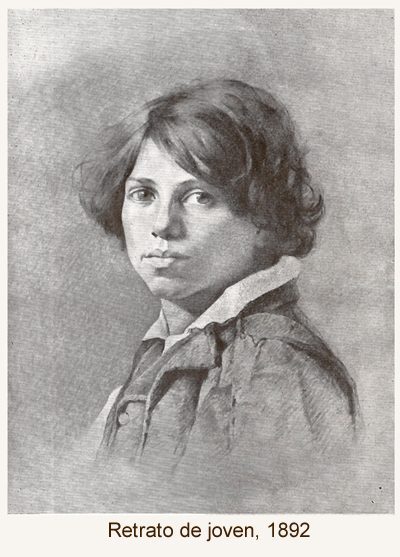
Carlos Baca-Flor Falcón was born on June 11, 1869, in Islay, Arequipa, and died on February 20, 1941, in Neuilly-sur-Seine, France. A Peruvian painter and draughtsman, he built an international career across Chile, Europe and the United States. His portraits combine solid construction, psychological precision and an exceptional command of volume.
Childhood and education in Chile
Baca-Flor moved with his family to Santiago while still a child. He entered the Academy of Fine Arts and received a rigorous education in drawing, anatomy and painting. Competitions and exhibitions recognized his ability early, placing him on a path toward European study.
A scholarship and a decision about nationality
He won Chile’s principal academic prize, associated with a scholarship in Europe. The award required him to adopt Chilean citizenship, a condition he refused. The Peruvian government later supported his studies abroad. The episode became part of his public biography because artistic identity, nationality and patronage were inseparable in the cultural institutions of the period.
Paris and academic discipline
In Europe he studied and worked within circles connected with institutions such as the Académie Julian. Copying old masters, studying anatomy and drawing from life strengthened his technique. Yet his best portraits move beyond academic correctness: posture, gaze and atmosphere allow the sitter’s character to complicate social status.
A visual introduction to the painter
This language-neutral presentation introduces Baca-Flor through examples of painting and drawing. Without depending on narration, it allows viewers to compare the firmness of his modelling, the transition between light and shadow and the varied degrees of finish within a face or garment.
Portraiture as negotiation
A commissioned portrait exists between resemblance, the sitter’s expectations and the artist’s interpretation. Baca-Flor represented people of power without reducing them to official symbols. Hands, posture, furniture and empty space communicate authority, age, tension or reserve.
J. P. Morgan and the United States
The portrait of financier J. P. Morgan broadened Baca-Flor’s reputation in the United States. Such a commission placed him within international networks where portraiture still served memory, prestige and institutional representation even as modernist movements challenged academic conventions.
Éamon de Valera and the art of drawing
Studies and portraits associated with Irish statesman Éamon de Valera demonstrate Baca-Flor’s command of pencil. In black and white, skin, fabric and volume must emerge through pressure, edge and tonal value. The result can feel tactile while preserving the sensitivity of an unhidden line.
A biography preserved by Peruvian television
This TV Perú documentary is in Spanish; it is retained as a documented language exception because no English production offers comparable archival and biographical depth. English readers can still use its paintings, photographs and chronology as visual evidence while the surrounding article supplies the interpretive context.
The film also asks why a Peruvian artist celebrated abroad can become partially absent from public memory at home. Migration disperses not only artworks but the documents needed to tell a coherent life.
A dispersed archive
Baca-Flor’s works remain in collections across several countries. Dispersal makes a complete survey difficult while confirming the geographic reach of his commissions. Catalogues, provenance research and conservation are essential for locating, attributing and understanding his production.
Achievements and legacy
- He achieved international recognition as a Peruvian portrait painter.
- He mastered painting, drawing and watercolor through rigorous academic training.
- He portrayed major political and financial figures without sacrificing psychological nuance.
- He built a transatlantic career linking South America, Europe and the United States.
Carlos Baca-Flor made portraiture an encounter between precision and character. His works do not simply preserve a face; they organize how a person hoped—and sometimes hesitated—to remain in memory.