Ramiro Llona: Painting, Matter and Visual Thought
The career and work of Ramiro Llona, the Peruvian artist whose layered abstract paintings investigate space, memory, architecture and creative uncertainty.
- Ramiro Llona
- Peruvian art
- abstract painting
- printmaking
- ceramics
- Lima
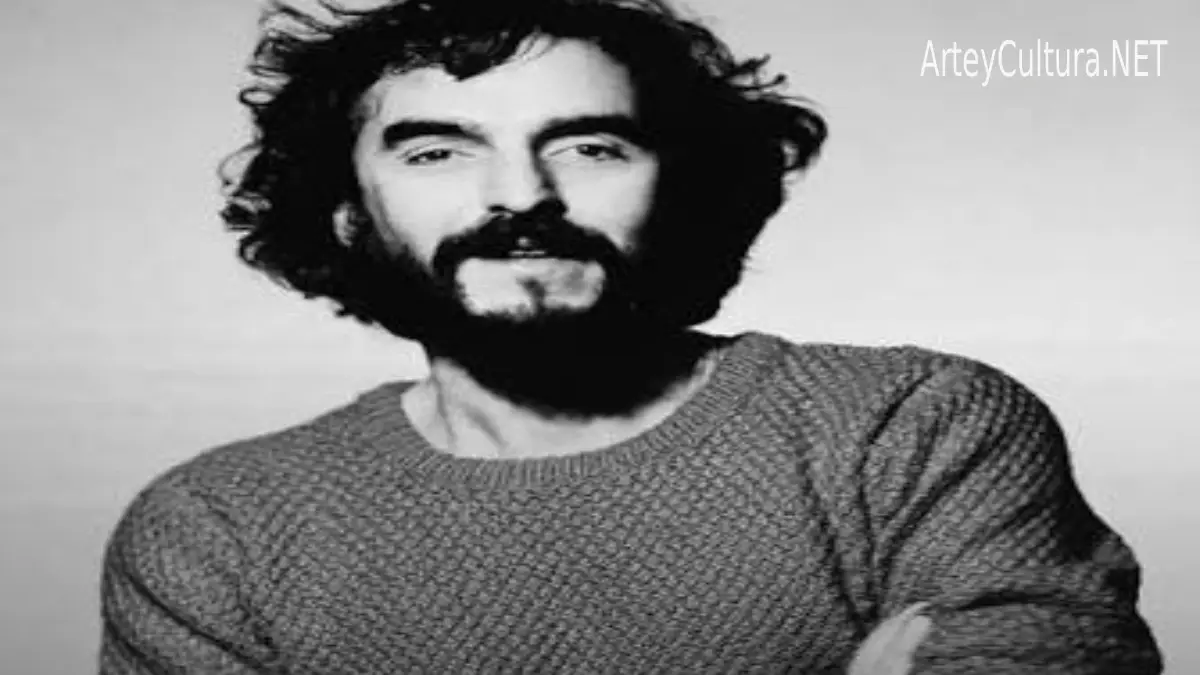
Ramiro Llona, born in Lima in 1947, is a painter, printmaker and ceramic artist and a major figure in contemporary Peruvian art. His work joins structure, gesture, colour and material in compositions poised between architecture, mental landscape and the visible trace of making.
Llona treats painting as thought conducted through matter. An image is not an illustration of a conclusion reached beforehand; it is the place where uncertainty becomes productive.
From architecture to visual art
He studied architecture at Peru’s National University of Engineering and visual arts at the Pontifical Catholic University of Peru. Architectural formation left a sensitivity to scale, balance and spatial organisation that remains visible even in his most gestural works.
Planes, thresholds and internal frameworks give paintings a constructed tension. They can feel like rooms or maps without describing a literal building.
New York and international formation
Llona continued at Pratt Institute in New York with scholarship support. The city brought him into contact with debates around abstraction, expressionism and contemporary art.
His career has remained connected to both Lima and New York. The two settings are not simply stylistic influences; they represent different rhythms of work, exhibition and cultural belonging.
Painting built through layers
Llona works by superimposing, correcting, scraping and erasing. Geometric forms coexist with stains, lines and worn-looking fields. Previous decisions remain partly visible.
The canvas becomes an archive of its own development. What has been covered still affects the surface, just as memory shapes a present image without remaining completely accessible.
The artist before the blank canvas
In this substantial Spanish conversation with Salvador del Solar, Llona reflects on beginning a work and accepting uncertainty. No English interview of comparable depth was found. His comments explain why abstraction cannot be reduced to the application of a recognisable formula.
Between figure and abstraction
Although his language is predominantly abstract, forms can suggest bodies, doors, maps or architectural fragments. Llona does not require the viewer to choose one identification.
Ambiguity keeps perception active. A shape becomes meaningful through relation to surrounding colour and scale rather than through a fixed label.
Printmaking and ceramics
His investigation extends beyond canvas. Printmaking introduces matrix, pressure and repetition; ceramics introduces volume, fire and material accident. Each medium changes the way he understands form and surface.
Moving among them prevents painting from becoming a closed habit. A ceramic edge may alter how a painted plane is imagined, while the reversals of printmaking sharpen attention to sequence.
A long conversation about art
This extended Spanish interview follows Llona through artistic formation, influences and current practice. Its conversational pace preserves the hesitations and revisions of an artist who understands thought as a process rather than a polished declaration.
Exhibitions and recognition
Llona has exhibited in museums and galleries across the Americas and Europe. Early recognition included a painting prize from the Municipality of Miraflores, a Fulbright scholarship and a Ford Studio scholarship at Pratt Institute.
Awards opened opportunities, but sustained work established his position. The evolution across decades demonstrates refusal to repeat a successful surface indefinitely.
Achievements and legacy
- He established a distinctive voice within Peruvian abstraction.
- He integrated experience from Lima and New York without losing local identity.
- He extended his investigation into printmaking and ceramics.
- He made process visible through layers, corrections and traces.
Ramiro Llona understands painting as material thought. His works allow us to see an idea appear, change and sometimes remain partially buried within the image.