Hernán Miranda: Realism, Light and Double Perception
The life and work of Hernán Miranda, the Paraguayan painter whose still lifes join precise chiaroscuro with uncertainty between painted image and material object.
- Hernán Miranda
- Paraguayan art
- contemporary realism
- still life
- chiaroscuro
- self-taught artist
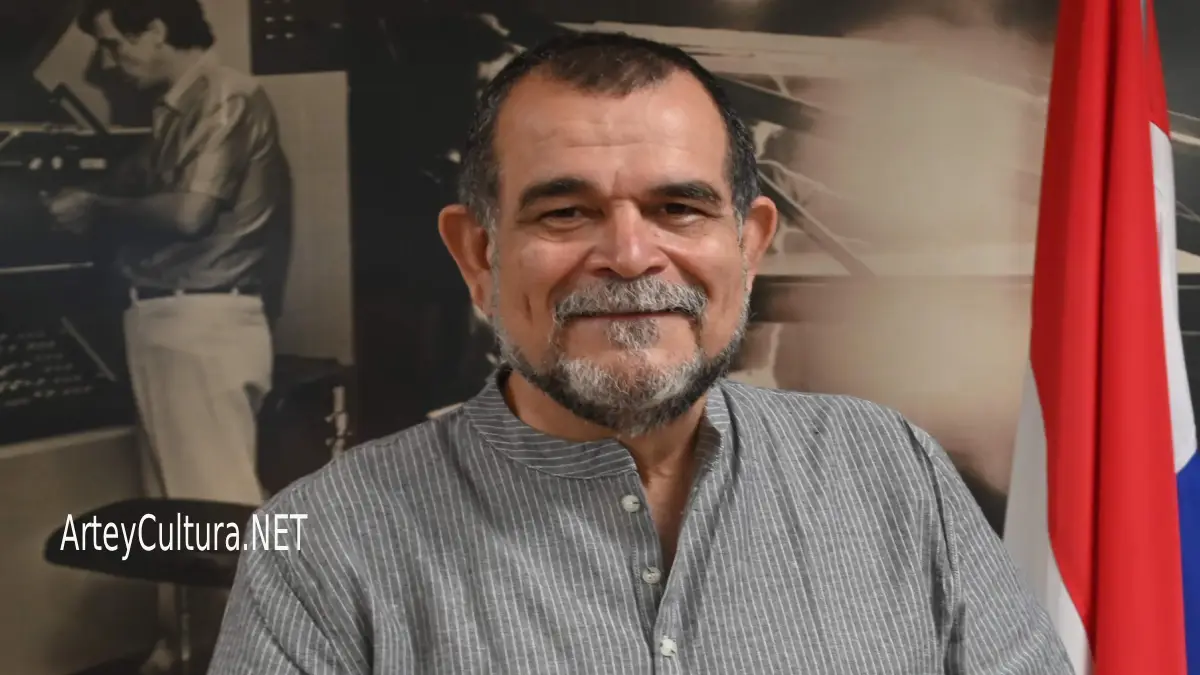
Hernán Miranda was born in Concepción, Paraguay, on 2 February 1960. A largely self-taught painter, he has developed a realist practice centred on light, everyday objects and the tension between painted surface and material reality. Since 2006, he has lived and worked in Florida in the United States.
Miranda’s accuracy is not an endpoint. It attracts confidence in what the eye sees, then introduces uncertainty about which elements belong to representation and which belong to the physical world.
Learning outside an academy
His family moved first to Asunción and later to San Lorenzo. Miranda attended drawing workshops during adolescence but did not follow a conventional academic career. He studied major artists independently and made sustained observation his principal school.
Self-education required structure. Repeated exercises in proportion, tonal value and edge control built a foundation that could later support complex illusion.
Drawing as the foundation
Miranda’s early practice concentrated on drawing. Control of proportion and chiaroscuro prepared his move into painting. In 1987, he held his first exhibition and received a drawing prize, beginning a career with increasing international visibility.
Drawing remains visible beneath the colour. Objects feel stable because their volumes have been considered through light rather than merely outlined.
Masters of light and still life
Miranda has acknowledged Caravaggio, Rembrandt and Vermeer as important examples in the organisation of illumination. He also studied Sánchez Cotán’s suspended still lifes, Morandi’s quiet arrangements and Antonio López’s contemporary realism.
Influence here means learning how another artist defined a problem. Miranda does not copy a solution; he asks how silence, space and exact description can operate in a different time.
A survey of contemporary realism
This language-neutral visual presentation concentrates on Miranda’s finished paintings. Without depending on narration, it allows an international audience to compare textures, tonal modelling and the deliberate emptiness surrounding objects.
What is birrealism?
Miranda uses the term birrealism for work that integrates two orders: painted representation and real elements or conditions of the support. The viewer must negotiate between them.
An object may appear to leave the canvas, or part of the physical surface may become an active element in the fiction. Trompe-l’œil is involved, but the purpose is not simply to boast that the eye has been deceived. The uncertainty itself becomes the subject.
Everyday objects and silence
Fruit, containers, cloth and simple structures acquire unusual presence. By reducing explicit narrative, Miranda allows weight, distance and illumination to speak.
Still life becomes an arena for attention. Familiar objects no longer disappear into use; they ask the viewer to inspect how recognition is constructed.
Paintings and drawings together
This second language-neutral portfolio places drawings beside paintings. The comparison reveals how tonal study supports later colour and why realism depends on analysis, patience and selection rather than mechanical copying.
International circulation and teaching
Miranda has exhibited in Paraguay, elsewhere in the Americas, Europe and Asia. Relocation to the United States expanded these circuits. He has also taught methods of drawing and painting.
Teaching makes process visible. Realism can then be understood as a sequence of decisions about composition, value, temperature and edge—not simply innate manual skill.
Achievements and legacy
- He built an international career through primarily self-directed formation.
- He developed the concept of birrealism within his practice.
- He renewed still life through tension between object and representation.
- He connected the chiaroscuro tradition with contemporary perception.
Hernán Miranda reminds us that seeing is not automatic. His precision produces doubt and asks us to examine how an image becomes believable.