José Sabogal: Art, Identity and Peruvian Indigenism
The life, work and legacy of José Sabogal, the painter and teacher who placed Andean people and Peruvian popular arts at the centre of national debate.
- José Sabogal
- Peruvian art
- Indigenism
- Andean identity
- popular arts
- Peruvian painting
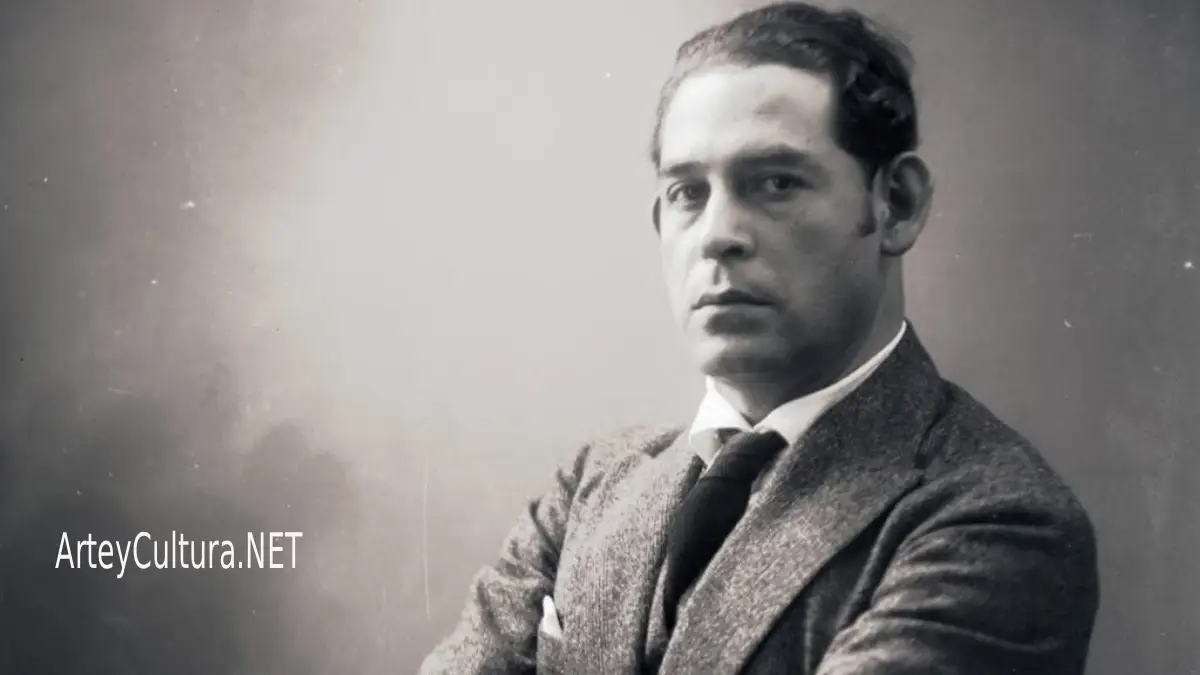
José Arnaldo Sabogal Diéguez was born in Cajabamba, Peru, on 19 March 1888 and died in Lima on 15 December 1956. Painter, printmaker, writer and teacher, he became the leading figure of Peruvian artistic Indigenism, a movement that placed Andean faces, landscapes and traditions at the centre of national cultural debate.
Sabogal changed which subjects could occupy monumental space in Peruvian painting. His contribution remains essential, but so do the questions his movement opened: who represents Indigenous communities, from what position and for which public?
Travel and artistic formation
Between 1908 and 1913, Sabogal travelled through Europe and North Africa. He later studied at the National Academy of Fine Arts in Buenos Aires. International formation did not lead him to reproduce European models mechanically. It sharpened the problem that would define his career: how could modern Peruvian art respond to the country’s own historical and cultural realities?
Travel gave him comparative distance. He returned with techniques and references, but also with a stronger determination to look closely at Peru.
The decisive encounter with Cusco
After returning, Sabogal spent several months in Cusco studying architecture, textiles, ceramics, festivals and people. The experience convinced him that artistic modernity in Peru could emerge through active engagement with Indigenous heritage and popular art.
This was not a simple discovery of untouched tradition. Cusco was a contemporary city marked by colonial history, social hierarchy and living Indigenous culture. Sabogal’s response combined admiration, interpretation and a national project.
The 1919 exhibition
His exhibition at Lima’s Casa Brandes in 1919 presented an Andean world far removed from decorative costumbrismo. It is often treated as a founding moment of visual Indigenism. The works asserted that Indigenous Peru was not a secondary theme or remnant of the past, but a fundamental part of the modern nation.
Firm contours, compressed space and earthy colour gave the figures physical authority. They did not enter the canvas as exotic detail; they occupied it.
A visual survey of Sabogal’s painting
This Spanish-language video gathers portraits and paintings in a sustained visual sequence. No comparable English survey was available. It allows the viewer to recognise monumental figures, strong silhouettes and the relationship among body, clothing and landscape.
Teacher and director at the School of Fine Arts
Sabogal taught at Peru’s National School of Fine Arts and directed it from 1932 to 1943. Artists including Julia Codesido, Camilo Blas, Enrique Camino Brent, Teresa Carvallo and Pedro Azabache worked within his sphere of influence.
They did not form a single identical style. What united them was the conviction that Peruvian subjects, forms and visual histories deserved sustained artistic investigation. His institutional role amplified that programme beyond his own studio.
Art, Amauta and intellectual debate
Sabogal maintained dialogue with José Carlos Mariátegui and participated in the cultural world around the magazine Amauta. Art, nation and social transformation were intensely debated. His woodcuts and illustrations circulated in printed culture as well as galleries.
Later criticism has examined Indigenism’s limits, especially the distance between urban artists and the people they represented. That critique does not erase the movement’s achievements; it makes its history more precise.
An autobiographical journey
This substantial Spanish biography reconstructs Sabogal’s travel, education and professional stages. It shows that his artistic programme grew from repeated encounters and institutional work rather than appearing as a ready-made formula.
Research into popular arts
Sabogal studied engraved gourds, bulls, painted wooden keros and the watercolours of Pancho Fierro. Books such as El toro en las artes populares del Perú helped establish these objects as subjects of serious art-historical attention.
His legacy therefore extends beyond easel painting. He contributed to a broader recognition of popular and pre-Hispanic heritage as active sources of knowledge and creation.
Achievements and legacy
- He led the Indigenist movement in Peruvian visual art.
- He trained a decisive generation of painters.
- He directed the National School of Fine Arts.
- He researched and promoted popular arts and pre-Hispanic heritage.
- He transformed debate about a specifically Peruvian artistic identity.
José Sabogal changed the centre of the gaze. His work remains indispensable both for what it affirmed and for the unresolved questions it poses about representation, nation and cultural diversity.