Giuseppe Cassioli: Art, Sculpture and Olympic Medals
The life and work of Giuseppe Cassioli, the Italian painter and sculptor whose Olympic medal design shaped the visual memory of the Summer Games for decades.
- Giuseppe Cassioli
- Olympic medals
- Italian sculptor
- medal design
- Amsterdam 1928
- religious art
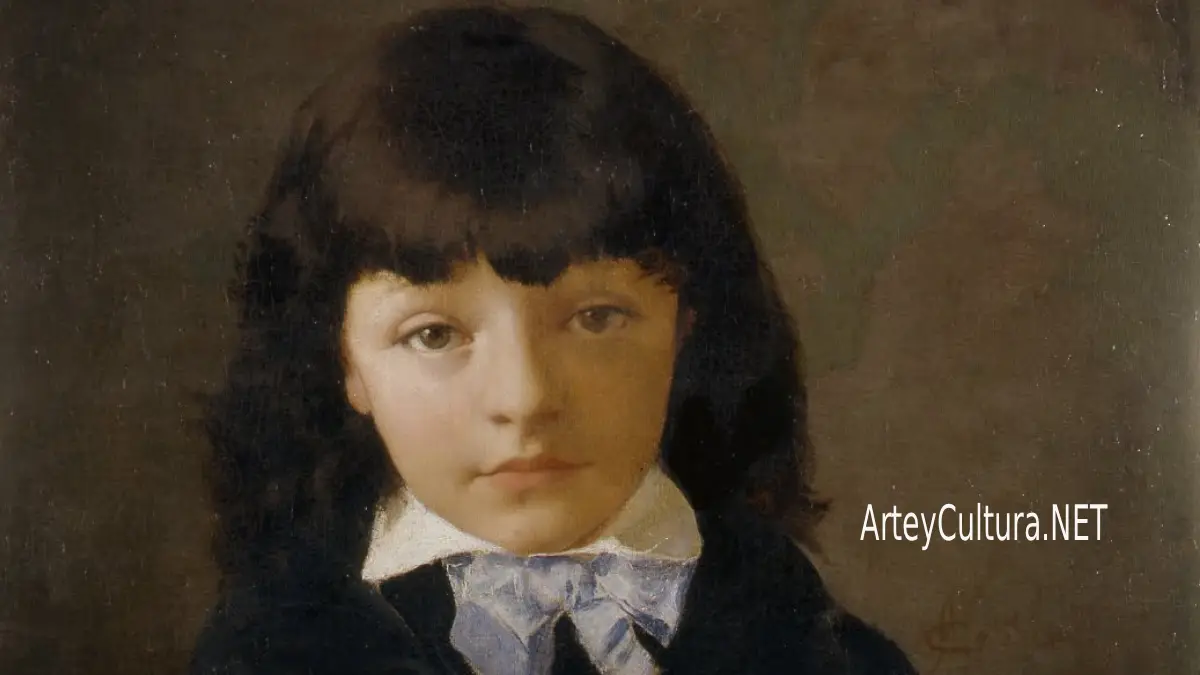
Giuseppe Cassioli was born in Florence on 22 October 1865 and died there on 5 October 1942. An Italian painter, sculptor and designer, he achieved worldwide influence through the medal created for the 1928 Amsterdam Olympic Games.
Variants of his design remained standard for Summer Olympic medals through Sydney 2000. Millions of people therefore encountered Cassioli’s art in ceremonies and photographs without necessarily learning the name of the artist behind the symbol.
A family of artists
Cassioli was the son of painter Amos Cassioli, who guided his early formation. He studied painting and learned sculpture with Tito Sarrocchi. This double education allowed him to understand the human figure through colour and surface as well as relief and volume.
The family connection gave him access to an academic tradition, but sustained training was required to move among canvas, architectural decoration, monument and medal.
Early exhibitions and academic culture
In 1885, Cassioli exhibited at the Academy of Fine Arts in Siena with a work inspired by Victor Hugo’s Toilers of the Sea. His production belonged to an academic culture that valued historical, literary, religious and allegorical subjects.
Such categories can appear distant from modern design, yet they provided the symbolic vocabulary later condensed into the Olympic medal.
Painting, monument and architecture
Cassioli contributed to public and religious projects, including work for Siena’s Palazzo Pubblico and a monument to composer Gioachino Rossini in the Basilica of Santa Croce in Florence. His career reflects an era when painting and sculpture operated closely with architecture, commemoration and civic ceremony.
The artist needed to consider not only an isolated object, but how figures would be seen at a distance and how material would communicate institutional meaning.
The 1923 Olympic competition
The International Olympic Committee held a competition for a new medal design. Cassioli won with a composition showing Nike, goddess of victory, and a victorious athlete carried by a crowd. The design connected modern sport to an idealised classical past.
It debuted at Amsterdam in 1928. Later organising committees changed inscriptions and details while preserving the core composition for more than seventy years.
A changing century of Olympic medals
This concise English overview introduces the medal as an evolving object rather than a piece of metal with a fixed appearance. It helps locate Cassioli’s long-lived design within the larger visual history of Olympic awards and encourages attention to figure, inscription and symbolism.
Meaning on a small surface
A medal must condense an institutional story into a hand-sized object. Relief creates hierarchy through depth; inscriptions establish event and authority; classical figures claim continuity with antiquity. Cassioli organised these elements for immediate recognition during a modern mass ceremony.
The result demonstrates how applied design can achieve cultural reach equal to a monument. Repetition across successive Games made the image part of global visual memory.
Cassioli’s paintings in Lima
The artist also produced eighteen canvases for the Basilica of María Auxiliadora in Lima. These works form a little-known connection between Italian academic art and Peruvian religious heritage.
Created for a particular building, the paintings must be understood through their scale, devotional function and relation to surrounding architecture. Age and environmental conditions eventually made specialised conservation necessary.
Conservation at María Auxiliadora
This Spanish-language film documents community support for restoring the basilica and its artworks. No comparable English record of Cassioli’s Lima paintings was available. The views of works inside the church reveal why conservation must address an entire architectural setting rather than an isolated canvas.
Protecting shared heritage
Responsible restoration begins with analysis of support, pigments, varnish and damage. Each intervention must be documented and limited so future specialists can understand what has changed.
In Cassioli’s case, conserving the canvases protects artistic heritage, Salesian memory and an episode of cultural exchange between Italy and Peru.
Achievements and legacy
- He designed the twentieth century’s most enduring Olympic medal model.
- He integrated painting, sculpture and design through academic training.
- He produced monumental and religious work in Italy and Peru.
- He created an image recognised by generations of athletes and spectators.
Giuseppe Cassioli demonstrates the immense reach of applied design. Recovering his story makes the artist visible behind a symbol that the world learned to recognise.