Conny Méndez: Music, Theatre and Venezuelan Thought
The life and varied work of Conny Méndez, the Venezuelan composer, performer, caricaturist and writer who joined popular culture with spiritual teaching.
- Conny Méndez
- Venezuelan music
- composer
- caricature
- theatre
- Venezuelan culture
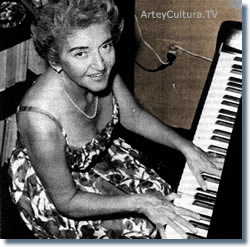
Juana María de la Concepción Méndez Guzmán, known as Conny Méndez, was born in Caracas on 11 April 1898 and died in Miami on 26 November 1979. She was a composer, singer, actor, theatre director, caricaturist and writer whose career resisted every narrow professional label.
Méndez moved between Venezuelan popular culture and spiritual reflection with the same desire to communicate directly. Her versatility was not a collection of disconnected hobbies; music, drawing, performance and teaching were different expressions of one independent creative life.
A cosmopolitan education
The daughter of writer Eugenio Méndez y Mendoza and Lastenia Guzmán, she studied in Caracas and New York. Exposure to different cultural environments expanded her artistic vocabulary. From a young age she wrote, drew, acted and composed at a time when women faced severe limits on professional autonomy.
Travel later remained central to her career. It allowed her to perform and teach internationally while maintaining a strong connection to Venezuelan imagery, speech and musical forms.
Caricature as critical observation
During the 1920s, Méndez published articles and caricatures in the Caracas press. In 1931 she collected part of this work in Bistury: álbum de caricaturas. The title—“scalpel”—captures its purpose: to reveal character and social behaviour through graphic economy, humour and irony.
Caricature requires quick recognition but also precise selection. A few lines must distinguish a face and communicate a judgement. That discipline in compression reappears in her songwriting.
Theatre and performance
Méndez worked as both actor and director. Theatre brought together language, gesture, music and collective organisation. It also gave her experience in shaping an audience’s attention across time, a skill evident in songs that establish characters and small dramatic situations.
Her performance practice challenged the expectation that a woman might participate in culture only as an interpreter. She wrote, organised and directed as well as appearing onstage.
A life across many arts
This Spanish-language biography traces the first part of Méndez’s life through photographs, testimony and archival information. No comparable English documentary was available. Its importance lies in showing that caricature, theatre, writing and composition developed as an interconnected public practice.
Composer of Venezuelan identity
Her catalogue includes popular, romantic and more formally ambitious works. She wrote words and music, sang and accompanied herself on guitar. Venezuelan landscapes, humour, customs and affections enter the songs without becoming static folklore.
Music allowed regional references to travel. A memorable melody could carry place names, speech rhythms and national images to audiences who had never encountered them directly.
“Venezuela Speaks Through Song”
This Spanish performance of “Venezuela habla cantando” presents one of the works most closely associated with Méndez. The song gathers images of territory and converts regional diversity into a shared musical voice. Preserving the original language is essential to its rhythm and cultural meaning.
Writing and Christian metaphysics
Outside Venezuela, Méndez achieved wide circulation as a teacher of the movement known in Spanish as Metafísica Cristiana. From the 1940s onward, she organised study groups and wrote practical spiritual texts.
The books use direct, accessible language consistent with her experience in popular communication. Whatever a reader’s beliefs, their influence forms an important part of her transnational cultural history and explains why her name remains familiar beyond music.
A woman ahead of convention
Méndez’s professional autonomy was itself an achievement. She travelled, published, performed and directed projects in settings where such a varied female career was exceptional. Instead of separating art from life, she used each discipline to entertain, teach and express conviction.
Her example offers a model of creative independence that later artists could recognise even when they did not share all her spiritual ideas.
Achievements and legacy
- She sustained significant work in music, theatre, caricature and literature.
- She collected her press caricatures in the pioneering volume Bistury.
- She carried songs of Venezuelan identity to international audiences.
- She established an influential Spanish-speaking metaphysical study movement.
- She demonstrated unusual creative autonomy across several professions.
Conny Méndez left an inheritance that cannot be enclosed within one category. Her importance lies precisely in turning curiosity and versatility into a complete way of creating and communicating.