Agustín Lara: The Musical Poet of the Bolero
The life, songs and legacy of Agustín Lara, the Mexican pianist and composer who gave the bolero an enduring language of romance, memory and dramatic confession.
- Agustín Lara
- Mexican composer
- bolero
- Solamente una vez
- María bonita
- Noche de ronda
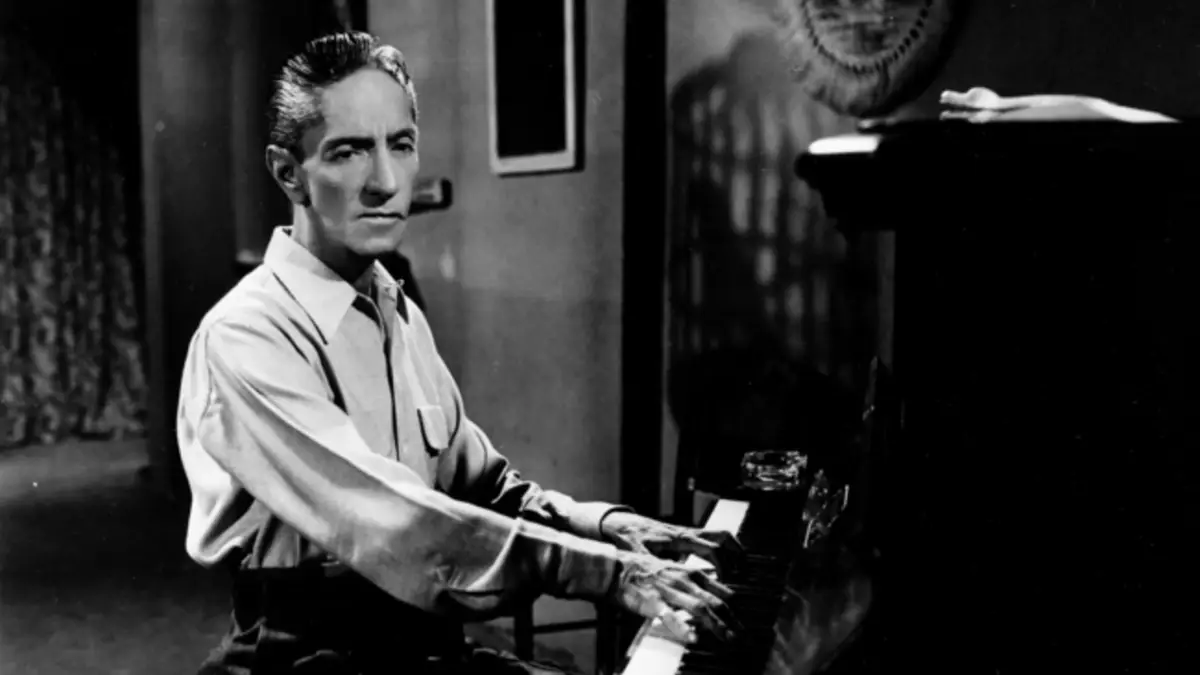
Agustín Lara, known as El Flaco de Oro and El Músico Poeta, was born on 30 October 1897—although competing accounts of his birthplace and date circulated for decades—and died in Mexico City on 6 November 1970. He was a composer, pianist and performer whose songs helped define the bolero and Spanish-language romantic music.
Lara created miniature dramas. In a few minutes, a piano introduction, rising melody and memorable phrase could stage desire, pride, abandonment or reconciliation. That concentration allowed singers of very different styles to inhabit his music.
A biography surrounded by legend
The composer actively shaped his public mythology. Tlacotalpan, Veracruz, became permanently associated with his birth, even as documents and biographical studies raised questions. The uncertainty is not incidental to his fame: Lara understood how memory, persona and fiction could intensify an artist’s presence.
His songs often perform a similar transformation. Real cities and private relationships become emotionally charged places that belong as much to collective imagination as to geography or biography.
Piano, theatre and the urban night
Lara developed in a world where cabaret, theatre, radio, cinema and popular song continually exchanged performers and audiences. His piano playing was recognisable for flexible timing and an accompaniment that responded dramatically to the voice.
He did not pursue academic virtuosity as an end. A pause could create suspense; a chord could turn confession into reproach. The piano established an intimate stage on which the lyric appeared to be spoken to one particular listener.
Bolero as compressed theatre
Love in Lara’s work is rarely peaceful. It appears as longing, memory, possession, hurt and theatrical self-awareness. His melodies are accessible, but harmony and phrasing prevent them from becoming emotionally simple.
This balance explains why the songs survived changes in fashion. They provide a clear dramatic situation while leaving enough room for each performer to alter emphasis and character.
“Aventurera” in the composer’s voice
This Spanish-language recording preserves Lara at the piano singing one of his best-known pieces. Its value lies not in conventional vocal perfection but in hearing the author shape time around each word. Because no comparable English documentary exists, the original performance offers the most direct evidence of his art.
Songs that crossed borders
His catalogue includes Noche de ronda, María bonita, Solamente una vez, Farolito, Aventurera and Granada. Through records, cinema and radio, these songs travelled across the Americas and Europe. Lara’s imagined Spain became so persuasive that many listeners assumed some works were traditional Spanish songs.
Pedro Vargas, Toña la Negra and numerous later performers expanded the repertoire’s reach. Each brought different combinations of elegance, sensuality, restraint and drama. The song remained stable enough to recognise and open enough to renew.
“Solamente una vez” and cultural memory
This 1942 film performance shows how cinema enlarged the audience for Latin American song. The Spanish lyric presents love as an exceptional event, while the apparently simple melody carries a ceremonial sense of promise. The record also captures the alliance among music, acting and popular memory.
María Félix and “María bonita”
Lara’s relationship with actor María Félix fed both journalism and legend. He wrote María bonita for her, transforming private admiration into one of the great public declarations of romantic song. The episode demonstrates his gift for making an individual name resonate as a universal image.
Biography and performance became inseparable, but the song outlived the relationship that inspired it. Each new voice makes the declaration personal again.
Final years and national recognition
Lara received major honours during his lifetime and was recognised as a central figure in Mexican culture. After his death, a large crowd joined the farewell, and his remains were placed in the Rotunda of Illustrious Persons.
That national recognition confirmed the artistic importance of a composer who emerged from popular entertainment rather than the concert establishment.
Achievements and legacy
- He gave the bolero a distinctive poetic and theatrical language.
- He created a catalogue performed internationally and across generations.
- He united radio, cinema, cabaret and recital culture.
- He transformed cities, romances and farewells into lasting musical images.
Agustín Lara endures because his songs do not describe love from a safe distance. They place it onstage at the instant of conflict, allowing every interpreter and listener to enter the drama anew.