Fyodor Dostoevsky: Guilt, Freedom and Redemption
The life, major novels and legacy of Fyodor Dostoevsky, the Russian writer who transformed moral conflict and psychological contradiction into modern fiction.
- Fyodor Dostoevsky
- Russian literature
- Crime and Punishment
- The Brothers Karamazov
- The Idiot
- psychological novel
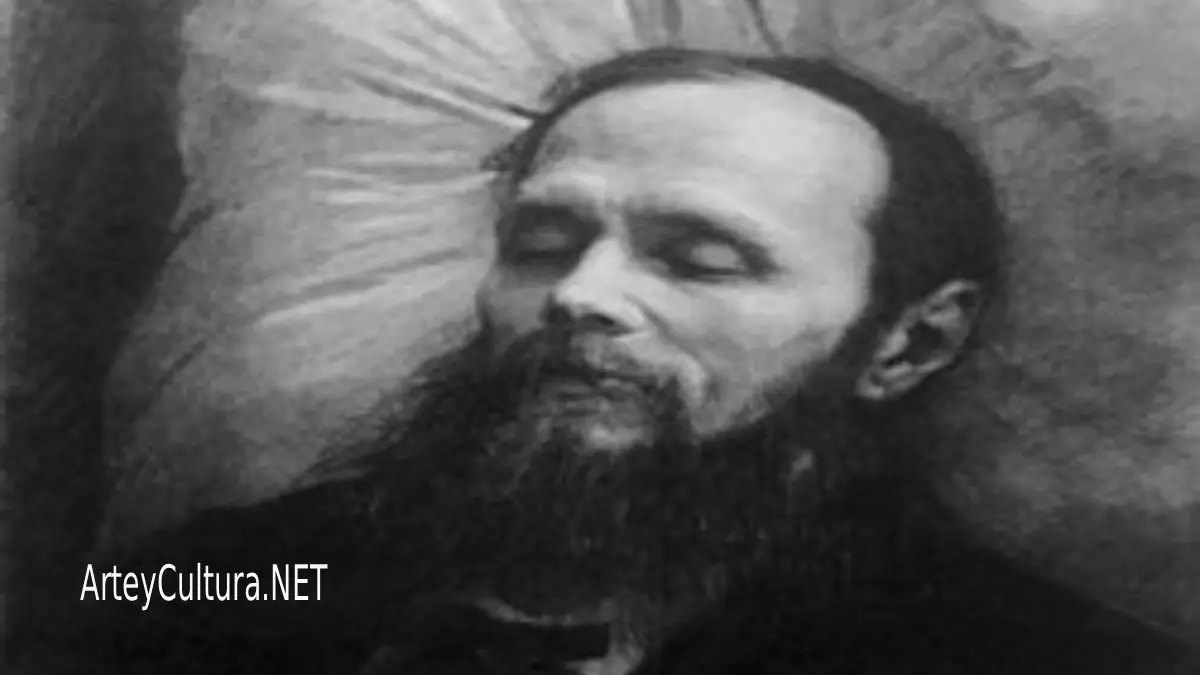
Fyodor Mikhailovich Dostoevsky was born in Moscow on 11 November 1821 and died in Saint Petersburg on 9 February 1881. Novelist, journalist and thinker, he made conflicts of conscience central to fiction. His characters debate faith, freedom, poverty, guilt and responsibility with an intensity that transformed the modern novel.
Childhood and education
Dostoevsky grew up near the Mariinsky Hospital for the Poor, where his father worked as a doctor. Proximity to illness and inequality left an early impression. He trained as a military engineer in Saint Petersburg, but literature gradually displaced that career. After translating Balzac’s Eugénie Grandet, he left military service to write.
This technical education was not wasted. His novels display an architect’s sense of pressure: characters, ideas and deadlines are placed in structures designed to force confrontation.
First success and literary uncertainty
His debut novel, Poor Folk, appeared in 1846 and received enthusiastic attention. Told through letters exchanged by impoverished characters, it treated poverty as both material deprivation and moral wound. The success made him a young figure of importance, although subsequent books received a more uneven response.
That early instability anticipated a career in which public recognition, financial anxiety and formal experimentation continually interacted.
Arrest and the mock execution
In 1849 Dostoevsky was arrested for participating in the Petrashevsky Circle, where members discussed political ideas and prohibited texts. Sentenced to death, he was brought before a firing squad. At the last moment, the sentence was commuted. He spent four years in a Siberian prison camp and then served in the army.
The ordeal changed his understanding of suffering, faith and the value of time. It did not produce a simple doctrine; instead, it gave later novels their terrifying awareness that ideas become real through human choices.
A life tested by extremity
This substantial English biography follows Dostoevsky from his early ambition through imprisonment, exile and literary return. It is useful because it connects the novels’ moral urgency with lived experience without treating fiction as disguised autobiography.
The major novels
In Crime and Punishment, Raskolnikov attempts to justify murder through a theory of exceptional individuals. The Idiot places Prince Myshkin’s radical goodness in a society governed by desire and pride. Demons examines political fanaticism, while The Brothers Karamazov turns a family crisis into an inquiry into God, freedom and collective responsibility.
These books do not merely illustrate ideas. Beliefs alter relationships, drive action and expose contradictions. The reader experiences philosophy as dramatic risk.
Polyphony and consciousness
Dostoevsky’s characters are not passive mouthpieces for a single authorial thesis. Each voice possesses arguments, blind spots and partial truths. Conversations become intellectual battles in which no position remains untouched. This quality, later described as polyphony, profoundly influenced literary theory.
His narratives also capture the unstable movement of thought: pride becomes shame, generosity becomes control and certainty collapses under pressure. Psychology is shown as an event rather than a static description.
The man who faced a firing squad
This English documentary gives particular attention to the mock execution, Siberian imprisonment, epilepsy, gambling and financial pressure. These experiences provide context for the discipline required to produce monumental novels under severe deadlines, but they should not be mistaken for complete explanations of his imagination.
Final years and public stature
In his final period, Dostoevsky achieved enormous public recognition. His 1880 address commemorating Alexander Pushkin presented literature as a national and universal force. He died at 59 after a pulmonary haemorrhage, and thousands joined his funeral procession.
The size of that farewell demonstrated how far he had travelled from the condemned prisoner of 1849 to a writer regarded as a cultural conscience.
Achievements and legacy
- He expanded the possibilities of the psychological novel.
- He created characters whose ideas possess genuine dramatic independence.
- He anticipated central questions of existentialism and modern psychology.
- He influenced novelists, philosophers, playwrights and filmmakers across the world.
Dostoevsky offers no comfortable moral distance. He draws readers into contradiction and asks what freedom costs when it refuses every limit. His legacy endures because the human conscience remains, in his pages, both a courtroom and a possible path toward change.