Máximo Damián: The Andean Violin and the Memory of Ayacucho
The life and legacy of Máximo Damián Huamaní, the Peruvian violinist who carried Ayacucho musical traditions from communal celebrations to world stages.
- Máximo Damián
- Andean violin
- Ayacucho
- José María Arguedas
- Quechua culture
- Peruvian music
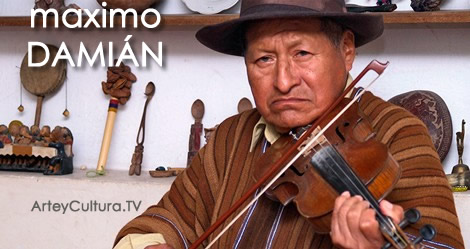
Máximo Damián Huamaní was born on 20 December 1936 in San Diego de Ishua, Ayacucho, and died on 12 February 2015 in Lima. He became one of Peru’s most important interpreters of the Andean violin. His work preserved communal repertories while carrying them to national and international audiences without separating them from their cultural origins.
Learning by listening to the landscape
As a child, Damián watched his father play at festivals and celebrations. He learned by ear, imitating finger positions and melodies before he was allowed to handle the instrument. In his memories, streams, birds, wind and rain belonged to the same education. Music was not isolated from ordinary life; it accompanied agricultural cycles, ritual, work and collective celebration.
This way of learning shaped his musical authority. Repertoire was transmitted through relationships and repeated participation, not only through written notation. Every piece carried knowledge about when, where and why it should be played.
The violin in the Peruvian Andes
Introduced during the colonial period, the violin was adopted and transformed by many Andean communities. In Ayacucho it developed distinctive tunings, ornaments, rhythmic impulses and ceremonial functions. Damián mastered that language from within.
He did not perform a decorative version of folklore for distant audiences. His playing remained connected to dance, Quechua song and social memory. This distinction is essential: tradition was a practice sustained by communities, not a costume placed around concert music.
From Ishua to Lima
Like many twentieth-century Andean migrants, Damián moved to Lima and combined several kinds of work with music. The capital offered opportunities but also exposed him to prejudice against Indigenous languages and regional forms of expression. His persistence helped make a marginalised musical tradition visible in national cultural life.
Migration did not erase his place of origin. Instead, he became an intermediary who could explain the context of Ayacucho music while defending its right to be heard on its own terms.
Friendship with José María Arguedas
Damián’s bond with writer and anthropologist José María Arguedas was both personal and artistic. Arguedas recognised him as a bearer of Quechua culture and dedicated the posthumously published novel The Fox from Up Above and the Fox from Down Below to him, among others.
Arguedas also asked that the violinist perform at his funeral. That farewell transformed music into testimony and continuity: the sound did not illustrate the writer’s ideas but enacted the cultural world both men had defended.
“Coca Quintucha”: violin, voice and memory
This Spanish- and Quechua-language record reveals the narrative character of Damián’s violin. The instrument answers the voice, supports it and opens space for dance. No English substitute offers the same direct access to his performance and its cultural setting.
An interpreter and cultural transmitter
Damián performed in the Americas, Europe and Asia. Every appearance also had an educational dimension: he explained the origins of pieces and defended the dignity of their creators. His presence helped younger Peruvians recognise the Ayacucho violin as an essential part of the country’s musical diversity.
His style combined rhythmic drive, shifts of intensity and ornamentation that seemed to extend the human voice. The bow could sound festive or mournful while maintaining the clarity needed for dance. That balance gives his recordings force even when heard far from their original setting.
A portrait and farewell
This Spanish-language remembrance traces his career and gathers responses after his death. More than a short biography, it reveals the network of musicians, researchers and communities through which his art continues to live.
Achievements and legacy
- He shared the traditional Ayacucho violin with audiences around the world.
- He preserved repertories learned through oral and communal transmission.
- He deepened public understanding of the cultural world associated with José María Arguedas.
- He inspired younger musicians to value Peru’s regional traditions.
- He made performance an act of memory and cultural affirmation.
Máximo Damián showed that tradition does not mean immobility. Inherited music can travel and converse with new audiences while still belonging to the community that created it. His violin remains a voice of Ayacucho and a lesson in Peru’s cultural plurality.