Paco de Lucía: Tradition and Revolution in Flamenco Guitar
The life, recordings and legacy of Paco de Lucía, the guitarist who transformed flamenco through technique, collaboration and fearless musical exchange.
- Paco de Lucía
- flamenco guitar
- Camarón de la Isla
- Entre dos aguas
- Spanish music
- guitar
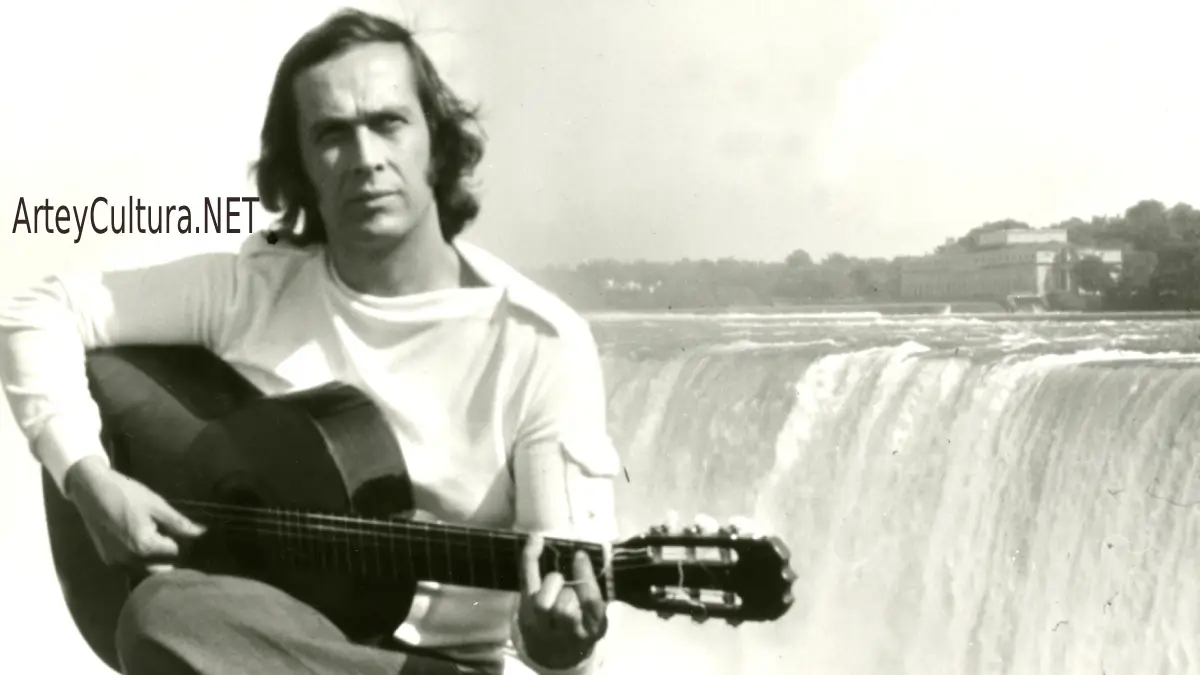
Francisco Sánchez Gómez, known as Paco de Lucía, was born in Algeciras, Spain, on 21 December 1947 and died in Playa del Carmen, Mexico, on 25 February 2014. He transformed flamenco guitar through rhythmic command, tonal clarity and dialogue with other traditions while remaining grounded in the form’s demanding compás.
A family of musicians
His father Antonio Sánchez taught guitar and understood music as both heritage and livelihood. Brothers Ramón de Algeciras and Pepe de Lucía also became professional musicians. Paco practised intensely from childhood in an environment where flamenco was lived knowledge, not an academic category.
First stages
He performed young, toured with José Greco’s company and recorded with Ricardo Modrego. Travel exposed him to audiences and musicians beyond Andalusia. Technical facility became meaningful because it developed under the pressure of accompanying singers and dancers.
Camarón de la Isla
Paco’s recordings with singer Camarón de la Isla changed modern flamenco. Guitar and voice do not merely alternate; they breathe together. Their albums renewed traditional forms from within and established an artistic partnership of exceptional influence.
“Entre dos aguas”
The instrumental rumba “Entre dos aguas,” recorded in 1973, became an unexpected popular success. Its pulse, improvisation and memorable guitar lines introduced many listeners to Paco without representing the full complexity of his work.
The sextet and new sounds
The Paco de Lucía Sextet added bass, flute and percussion to a flamenco ensemble. The cajón, encountered through Peruvian musician Caitro Soto, became especially influential in modern flamenco. Innovation worked because Paco understood the rhythmic structure deeply enough to expand it.
Collaborations with John McLaughlin, Al Di Meola and Chick Corea encouraged jazz-like improvisation. Exchange produced creative tension but never turned his playing into generic fusion.
Technique serving emotion
Picado runs, rasgueado, arpeggios and rhythmic accents reached extraordinary precision. Yet speed was not the goal. Silence, attack and harmonic colour supported cante and emotional direction.
Video: North Sea Jazz concert
This full instrumental concert is language-neutral and lets the music demonstrate ensemble communication directly. Watch how Paco moves between composed structure, improvisation and rhythmic cues.
Video: English interview with John McLaughlin
This English archive interview with Paco and John McLaughlin documents musical exchange in their own words. It provides rare English-language access to the guitarist’s collaborative thinking.
Achievements and legacy
Paco renewed accompaniment with Camarón, brought flamenco guitar to international concert stages, established an influential sextet, helped integrate the Peruvian cajón and received honours including Spain’s Prince of Asturias Award for the Arts.
His legacy proves that tradition survives through knowledge and risk. He changed flamenco because he had listened deeply enough to understand what could move without breaking its pulse.