Mocedades: Vocal Harmony and Songs That Endure
The history, voices and legacy of Mocedades, the Basque vocal group that carried Eres tú from Eurovision to audiences around the world.
- Mocedades
- Eres tú
- Amaya Uranga
- Spanish vocal group
- Eurovision
- Juan Carlos Calderón
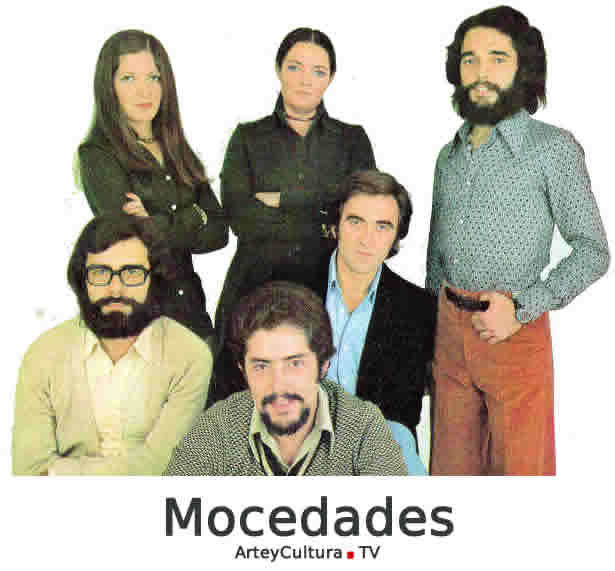
Mocedades emerged in Bilbao in the late 1960s and became one of the most recognisable vocal groups in Spanish-language music. Its history includes many personnel changes, but the essential identity lies in blended voices, carefully shaped arrangements and songs that move between folk roots and sophisticated pop.
From Voces y Guitarras to Mocedades
The group’s origin was Voces y Guitarras, formed by young singers from Bilbao, including members of the Uranga family. Producer Juan Carlos Calderón helped develop a professional repertoire, and the name Mocedades marked the transition to a recording career.
The architecture of voices
Mocedades does not rely only on a lead singer with background support. Arrangements distribute melody, response and harmony across the ensemble. Contrasting timbres create movement, while disciplined balance keeps multiple voices intelligible.
Amaya Uranga became the most famous lead voice of the classic period, but the collective sound is equally important. Choral precision gives emotional breadth to songs that might otherwise remain private ballads.
Juan Carlos Calderón
Composer and arranger Calderón was decisive. He understood how to write memorable melodies while preserving harmonic complexity. Piano, orchestral colour and vocal layers support the lyric rather than competing with it.
“Eres tú” and Eurovision
Mocedades represented Spain at the 1973 Eurovision Song Contest with “Eres tú” and finished second. The song became an international success, including unusual popularity in the United States despite being sung in Spanish.
Its strength lies in a melody that rises naturally through the vocal range and in comparisons that make affection tangible. The arrangement grows without losing clarity.
Beyond one song
The repertoire includes “Tómame o déjame,” “El vendedor,” “La otra España” and many other songs. Love, separation, migration and belonging receive different vocal colours. Reducing the group to “Eres tú” overlooks decades of recordings and performance.
Changes and continuity
Members entered and left, and more than one ensemble later carried branches of the name and repertoire. These changes can complicate the history, but they also show that vocal identity is transmitted through arrangement, rehearsal and collective memory.
Video: “Eres tú”
This official remastered Spanish performance is retained as the artwork itself. The interaction between language, melody and ensemble cannot be replaced by an English explanation; international success originally occurred without translation.
Video: “Tómame o déjame”
This Spanish television performance reveals the group’s controlled dynamics and Amaya Uranga’s lead phrasing. It is a justified original-language exception because the musical performance, not narration, is the subject.
Achievements and legacy
Mocedades brought ensemble singing into mainstream Spanish pop, achieved global success through Eurovision, maintained an extensive repertoire and demonstrated that a Spanish-language song could cross markets through melody and vocal identity.
Its legacy lives in harmony: individual voices gain force by listening to one another. That principle keeps the recordings fresh long after the fashions surrounding them have changed.