Murals and Graffiti: Art That Transforms Walls
A guide to the history, techniques and public debates surrounding murals and graffiti, from commissioned painting to contemporary urban intervention.
- murals
- graffiti
- street art
- Diego Rivera
- David Alfaro Siqueiros
- public art
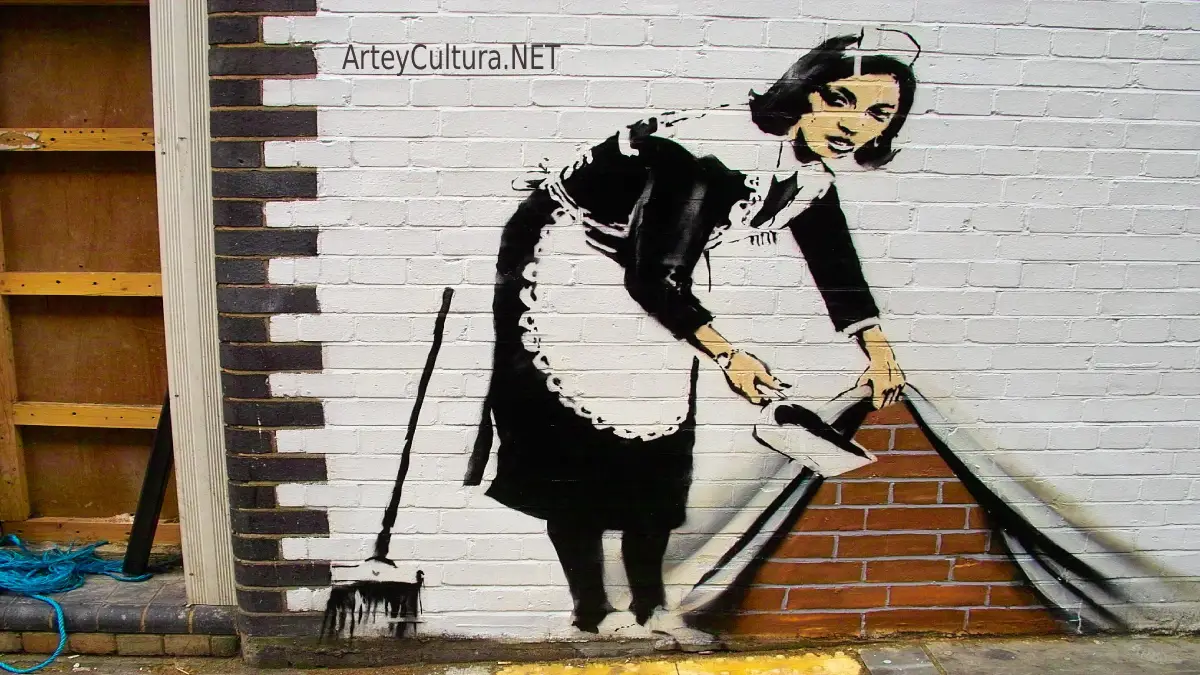
A wall can support architecture, mark property, carry memory or become a field of dispute. Murals and graffiti both transform walls, but they arise from different histories of permission, technique, audience and power. Understanding them requires more than deciding whether an image is beautiful.
Painting on architecture
A mural is conceived in relation to a building or public surface. Scale, viewing distance, weather and circulation shape composition. Fresco joins pigment to wet plaster, while modern artists use acrylic, silicate paint, mosaic, spray and digital planning.
Because a mural belongs to a site, moving or destroying the building can change or eliminate the work. Conservation therefore involves architecture, community and political decisions.
Commission and public message
Many murals are commissioned by governments, religious institutions, businesses or neighbourhood groups. Permission does not make them neutral. Patrons select subjects and locations, while artists may negotiate, challenge or exceed the intended message.
Mexican muralism
After the Mexican Revolution, Diego Rivera, José Clemente Orozco and David Alfaro Siqueiros developed monumental programmes addressing history, labour and social conflict. Public buildings became classrooms, though the movement contained strong disagreements about style and politics.
Muralism in Peru
Peruvian murals range from archaeological and colonial traditions to modern civic projects and contemporary neighbourhood painting. They represent Indigenous history, migration, political memory and local identity. Their value depends on community relationship as much as individual authorship.
Modern graffiti
Modern graffiti writing developed strongly in late-1960s and 1970s New York through names repeated on streets and trains. Tags evolved into larger pieces, complex lettering and crews. Visibility was a form of presence for young people excluded from official cultural spaces.
Graffiti, street art and ownership
Graffiti usually emphasises writing and may be unauthorised. Street art includes stencils, paste-ups, images and installations, sometimes commissioned. The categories overlap, and legal status alone does not determine artistic or social value.
Property owners have legitimate interests, while cities also regulate whose messages receive space. Erasure can protect a surface or silence a community. Responsible discussion must consider consent, heritage, safety and unequal access to public visibility.
Video: América Tropical and censorship
This English PBS documentary examines Siqueiros’s Los Angeles mural, whose anti-imperialist image was whitewashed. Its recovery shows that conservation can also recover a censored political argument.
Video: Rivera’s destroyed Rockefeller mural
This English Smarthistory lesson considers Man at the Crossroads, destroyed after conflict over its political imagery and later recreated in Mexico. Commission, ownership and artistic autonomy collide in one famous case.
How to look at a wall
Ask who made the work, who authorised or opposed it, which community sees it daily, how the surface changes meaning and what will happen as the wall ages. Technique and image matter, but so do location and power.
The legacy of mural and graffiti culture remains open. Walls are never merely backgrounds: they reveal who is allowed to speak, what a city remembers and how public space can be imagined differently.