Günter Grass: Literature, Memory and Responsibility
The life, books, public interventions and controversies of Günter Grass, Nobel laureate and author of The Tin Drum.
- Günter Grass
- The Tin Drum
- German literature
- Nobel Prize
- Danzig Trilogy
- historical memory
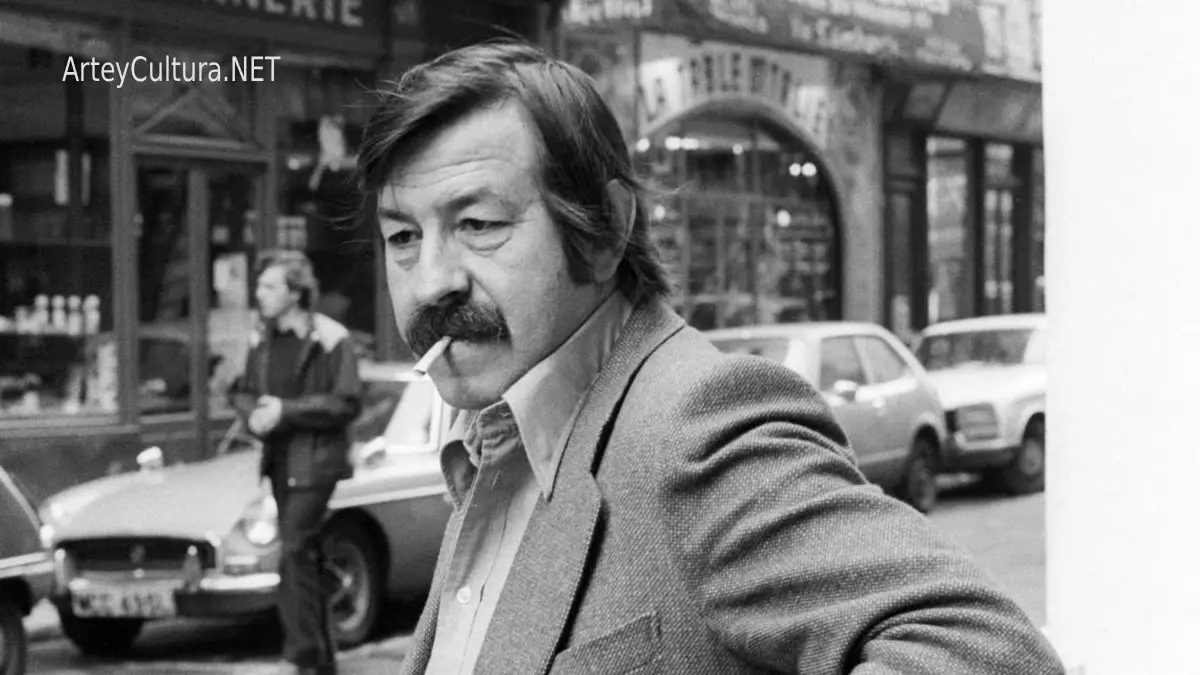
Günter Grass was born in the Free City of Danzig, now Gdańsk, on 16 October 1927 and died in Lübeck, Germany, on 13 April 2015. Novelist, poet, playwright, essayist, sculptor and graphic artist, he made the suppressed memory of Nazism and war central to post-war German literature. He received the 1999 Nobel Prize in Literature.
Danzig as a lost and imagined world
Grass grew up in a German-speaking Catholic family in a city of mixed German, Polish and Kashubian histories. War destroyed the political world of his childhood and displaced his family. Danzig later became more than a setting: it was a laboratory for examining memory, nationalism and the stories communities tell about guilt.
From stone carving to literature
After the war Grass trained as a stonemason and studied sculpture and graphic art in Düsseldorf and Berlin. Drawing, modelling and writing remained connected throughout his career. His visual imagination appears in the physical abundance of his prose—objects, smells and bodies carry historical meaning.
The Tin Drum
Published in 1959, The Tin Drum is narrated by Oskar Matzerath, who refuses to grow after the age of three and uses a piercing voice and toy drum to disrupt adult reality. The unreliable narrator turns grotesque fantasy into a way of confronting complicity that conventional realism could not contain.
The novel’s humour is not escape. It denies respectable society the comfort of presenting fascism as the work of distant monsters. Private ambition, cowardice and self-deception are entangled with public catastrophe.
The Danzig Trilogy
Cat and Mouse and Dog Years extended this fictional territory. Together with The Tin Drum, they follow young people, neighbours and compromised institutions before, during and after Nazism. Changing narrators reveal that memory is never innocent.
A public intellectual
Grass campaigned for Social Democratic politics, argued for gradual reform and intervened repeatedly in debates about German reunification, war and asylum. His visibility made him influential and divisive. He treated citizenship as a practice of speaking publicly, even at the risk of error.
The Waffen-SS revelation
In 2006 Grass disclosed that, at seventeen, he had served briefly in a Waffen-SS unit. The admission contradicted the moral authority with which he had urged others to confront their past. Critics rightly asked why he had remained silent for six decades.
The revelation does not erase his books, but it changes their reading. Responsibility must include the writer himself. His case demonstrates that public memory is damaged when confession is delayed and that major artistic achievement does not place a person beyond scrutiny.
Video: writing against the wall
In this English-language Louisiana Channel interview, Grass discusses the wall—political, historical and imaginative—as something writing must resist. His reflections connect craft with the responsibility to challenge comfortable narratives.
Video: confronting the hidden past
This English Charlie Rose interview addresses the Waffen-SS disclosure directly. It is valuable because the author must answer questions rather than control the issue solely through autobiography.
Achievements and legacy
Grass renewed the historical novel through grotesque fantasy, made Danzig a central landscape of European memory, worked across literature and visual art, and forced post-war readers to consider everyday complicity. His Nobel Prize recognised a body of work that recovered the forgotten face of history.
His legacy remains deliberately uncomfortable. The books demand memory; the concealed biography warns that demanding truth from society is insufficient without applying it to oneself.