Jorge Basadre: Historian of the Peruvian Republic
The life and legacy of Jorge Basadre, the historian who interpreted republican Peru and rebuilt its National Library after the catastrophic fire of 1943.
- Jorge Basadre
- Peruvian history
- History of the Republic of Peru
- National Library of Peru
- Tacna
- public education
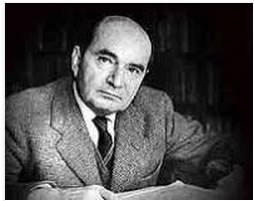
Jorge Basadre Grohmann was born in Tacna on 12 February 1903 and died in Lima on 29 June 1980. Historian, jurist, professor, librarian and minister of education, he devoted his life to understanding republican Peru. His history was not a storehouse of dates: it examined problems, possibilities and collective responsibilities.
Childhood in occupied Tacna
Basadre was born while Tacna was under Chilean administration after the War of the Pacific. National identity was therefore an immediate and contested experience. It shaped his interest in the state, citizenship and integration without becoming a simple politics of resentment.
After moving to Lima he attended the German School and Nuestra Señora de Guadalupe. The memory of Tacna continued to inform a central question: how does a republic rebuild community after war?
San Marcos and university reform
He entered the National University of San Marcos in 1919, amid intense student mobilisation. He studied humanities and law, participated in university reform and joined a generation determined to modernise education and public debate.
Work with documents and catalogues shaped his method. Historical interpretation required evidence, but also a comprehensible vision of the whole.
A vocation for libraries
Basadre worked from a young age with collections at San Marcos and the National Library. A fellowship allowed him to study library organisation in the United States and continue research in Europe. He understood a library as public service rather than a closed repository.
Rebuilding after the 1943 fire
A catastrophic fire devastated the National Library of Peru in May 1943. Basadre became director and led physical, organisational and professional reconstruction. He established the National School of Librarians in 1944, recognising that a building without trained people and systems could not protect memory.
History of the Republic of Peru
His monumental history expanded through successive editions. It organised republican life through periods and examined institutions, economic forces, political conflict, social movements and regional differences. The work remains a fundamental point of reference even as later historians revise its interpretations.
Peru as problem and possibility
Basadre refused both patriotic complacency and hopelessness. His famous formulation presents Peru as a problem that must be studied and a possibility that demands action. The republic is unfinished, and citizenship carries responsibility for completing it.
Public service and education
He served twice as minister of education, in 1945 and from 1956 to 1958. Across academic and state roles he defended research, education and access to heritage as public obligations.
Video: a life devoted to history
This Spanish-language Sucedió en el Perú documentary situates Basadre within Tacna, San Marcos and national institutions. No English documentary of comparable depth was located, making the original an essential contextual record.
Video: audiovisual portrait from 1982
This archival Spanish portrait preserves testimony close to Basadre’s lifetime. It is retained as a justified exception because its historical voices cannot be recreated by an unrelated English survey of Peru.
Achievements and legacy
Basadre wrote the broadest reference history of republican Peru, rebuilt and modernised the National Library, founded the National School of Librarians, taught generations of students and served in government.
His institutional legacy equals his written one. Rebuilding a library meant rebuilding shared memory. That union of research, education and citizenship explains why he remains indispensable to thinking about Peru.