Amrita Sher-Gil: A Founder of Indian Modern Art
The brief, transformative life of Amrita Sher-Gil, whose paintings joined European training and Indian experience in a radically independent modern vision.
- Amrita Sher-Gil
- Indian modern art
- women artists
- Indian painter
- self-portrait
- Paris art
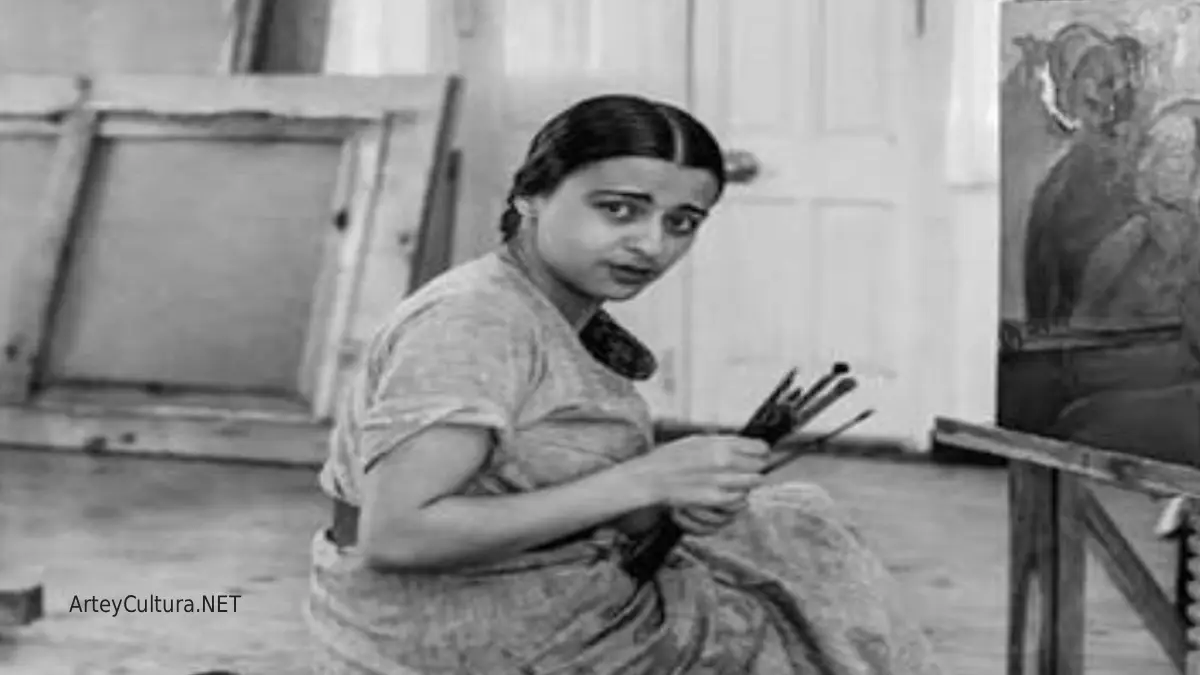
Amrita Sher-Gil was born in Budapest on 30 January 1913 and died in Lahore on 5 December 1941, aged 28. The daughter of an Indian Sikh father and Hungarian mother, she transformed experience between Europe and India into painting that was modern, intimate and socially attentive. Her short career changed the history of South Asian art.
Between Hungary and India
Her father, Umrao Singh Sher-Gil, was a scholar and photographer; her mother, Marie Antoinette Gottesmann, was an opera singer. Amrita grew up among music, literature, photography and several languages. The family settled in Shimla in 1921, where Indian landscapes and communities became part of her visual memory.
Her identity was not divided into two neat halves. It became a position from which she could question both European visions of India and the conventions of Indian elites.
Training in Paris
In 1929 Sher-Gil studied at the Grande Chaumière and then the École des Beaux-Arts. Academic drawing, composition and oil painting gave her formidable control. Cézanne, Modigliani and Gauguin mattered, but she did not remain anyone’s disciple.
In 1933, Young Girls received recognition at the Grand Salon, which elected her an associate. At twenty she had mastered the codes of Parisian art, yet understood that her central project lay elsewhere.
Returning as an artistic decision
She returned to India in 1934. Palette, subject and scale changed: colour became earthier, and figures acquired a grave monumentality. The return was neither rejection of Europe nor a search for an untouched tradition. She used what she had learned to see Indian life with greater independence.
Women who do not pose to please
Sher-Gil’s women often sit together without offering themselves to the viewer. Their lowered eyes and contained gestures suggest interior lives and social limitations. Paintings such as Three Girls and Bride’s Toilet replace exotic spectacle with psychological and bodily presence.
Journeys through southern India
Travel in 1937 inspired works including Brahmacharis, South Indian Villagers Going to Market and Bride’s Toilet. Temple sculpture and murals influenced simplified mass and rhythm. Rural subjects receive dignity without being idealised; poverty remains visible but never decorative.
Self-portrait and independence
Her self-portraits examine identity, sexuality and artistic authority with remarkable directness. Sher-Gil controlled her own image at a time when women were more often represented as models than recognised as makers. Her correspondence and relationships also reveal a life resistant to conventional expectations.
Early death
She became gravely ill shortly before a major exhibition in Lahore and died in December 1941. The precise cause remains debated, and speculation should not displace the work. What matters historically is the coherence and range she achieved before turning 29.
Video: a life reconstructed through family archives
This English-language film by Navina Sundaram uses family photographs, documents and testimony to place Sher-Gil within a complex transnational household. It helps separate the artist from the romantic myth created after her death.
Video: paintings and biographical uncertainty
This English art-history presentation surveys important works and addresses questions surrounding her sudden death. The paintings remain central, preventing mystery from replacing artistic analysis.
Achievements and legacy
Sher-Gil gained recognition in Paris while very young, integrated European formation with Indian visual traditions, renewed representations of women and rural life, and produced an exceptionally coherent modern body of work.
Her legacy rejects the obligation to choose between East and West. Creation can arise from tension between cultural experiences. Her paintings continue to ask who represents whom, from what position, and how modern art can take root in a lived history of its own.