Umberto Eco: Signs, Books and the Pleasure of Interpretation
The life, ideas, novels and legacy of Umberto Eco, the semiotician who connected medieval manuscripts, popular culture and the modern art of interpretation.
- Umberto Eco
- semiotics
- The Name of the Rose
- Italian literature
- medieval studies
- open work
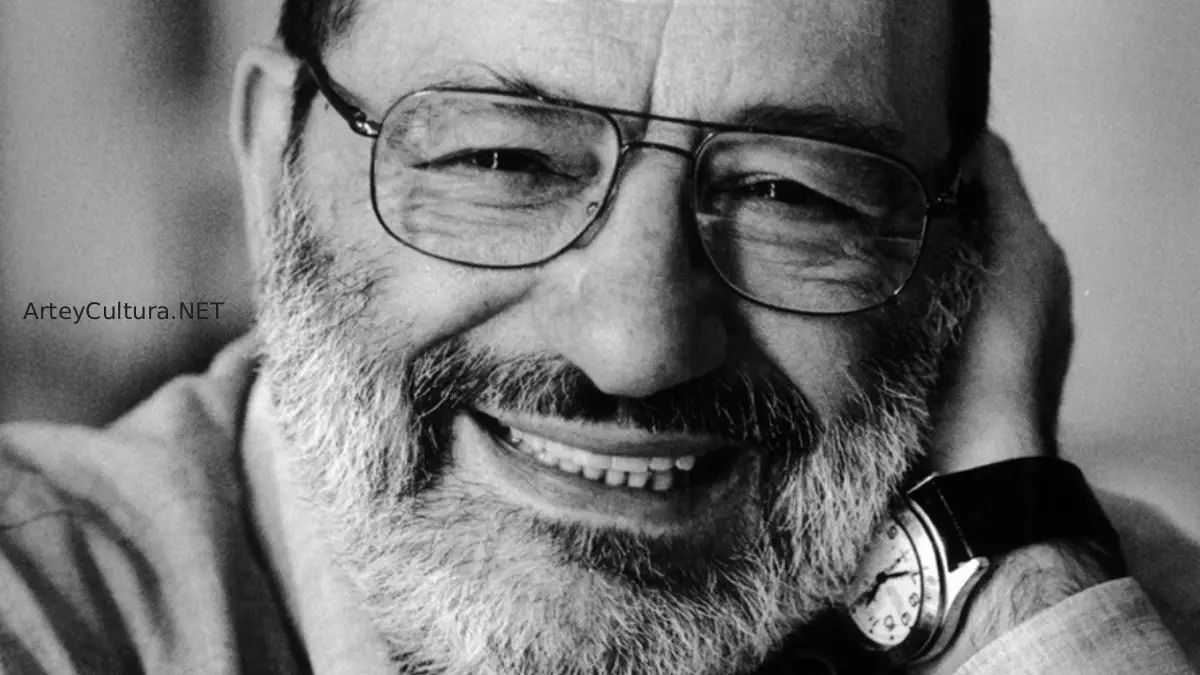
Umberto Eco was born in Alessandria, Italy, on 5 January 1932 and died in Milan on 19 February 2016. Semiotician, philosopher, medievalist, professor and novelist, he built bridges between scholarly and popular culture, theoretical analysis and narrative pleasure, medieval manuscripts and modern mass communication.
From Piedmont to medieval philosophy
Eco grew up under fascism and experienced the Second World War as a child. At the University of Turin he studied philosophy and completed a 1954 thesis on the aesthetics of Thomas Aquinas. The Middle Ages became for him not a dark interval but a laboratory of systems, interpretation and intellectual conflict.
Television and mass culture
After graduation he worked at the Italian broadcaster RAI. Observing television from within encouraged him to analyse popular media with the same seriousness applied to classical works. In Apocalypse Postponed, he challenged both those who condemned all mass culture and those who accepted it uncritically.
Audiences, he argued, do not receive messages as empty containers. They interpret through cultural codes, knowledge and expectation.
What semiotics studies
Semiotics examines signs and the processes through which something stands for something else. Words, images, clothes, buildings and gestures can all function within systems of meaning. Eco’s work showed that interpretation is active but not unlimited: a text may support several readings without supporting every imaginable claim.
The Open Work
In The Open Work, Eco explored art that requires the audience to complete relationships or choose paths. Openness does not mean chaos. The work establishes a field of possibilities, and the reader or viewer participates within its structure.
The Name of the Rose
His first novel, published in 1980, places a murder investigation inside a fourteenth-century monastery. William of Baskerville reads traces like a detective and semiotician, while a labyrinthine library becomes both setting and model of knowledge.
The novel combines mystery, theology, politics, humour and reflections on books. Its international success demonstrated that demanding ideas could reach a vast public without surrendering narrative excitement.
Novels as machines for interpretation
Later novels such as Foucault’s Pendulum, The Island of the Day Before, Baudolino and The Prague Cemetery investigate conspiracy, forgery and the human appetite for patterns. Eco understood that signs can clarify reality but can also be assembled into seductive false systems.
Teacher and institution builder
At the University of Bologna he trained generations of scholars and helped consolidate semiotics as an interdisciplinary field. His immense personal library embodied a method: books were not trophies but instruments connected through questions.
Video: advice to young people
In this English-language Louisiana Channel interview, Eco discusses memory, knowledge and the responsibilities of younger generations. His humour prevents intellectual seriousness from becoming solemnity.
Video: misreading and comic criticism
This English interview about Misreadings shows Eco using parody as critical method. Humour exposes the conventions governing apparently natural messages and demonstrates how changing a code can change meaning.
Achievements and legacy
Eco became an international figure in semiotics and communication studies, taught at Bologna, published foundational essays and joined detective fiction with medieval history in a globally successful novel. In 2000 he received Spain’s Prince of Asturias Award for Communication and Humanities.
His legacy is an invitation to distrust easy answers while preserving the pleasure of knowledge. In an age saturated with images, headlines and improvised theories, context and evidence remain essential. A library may be a labyrinth, but learning how to get productively lost is part of interpreting the world.