Gustave Caillebotte: A Modern Eye within Impressionism
The life, paintings and legacy of Gustave Caillebotte, whose radical views of work and modern Paris complemented his decisive support for Impressionism.
- Gustave Caillebotte
- French painter
- Impressionism
- Paris
- urban painting
- art collector
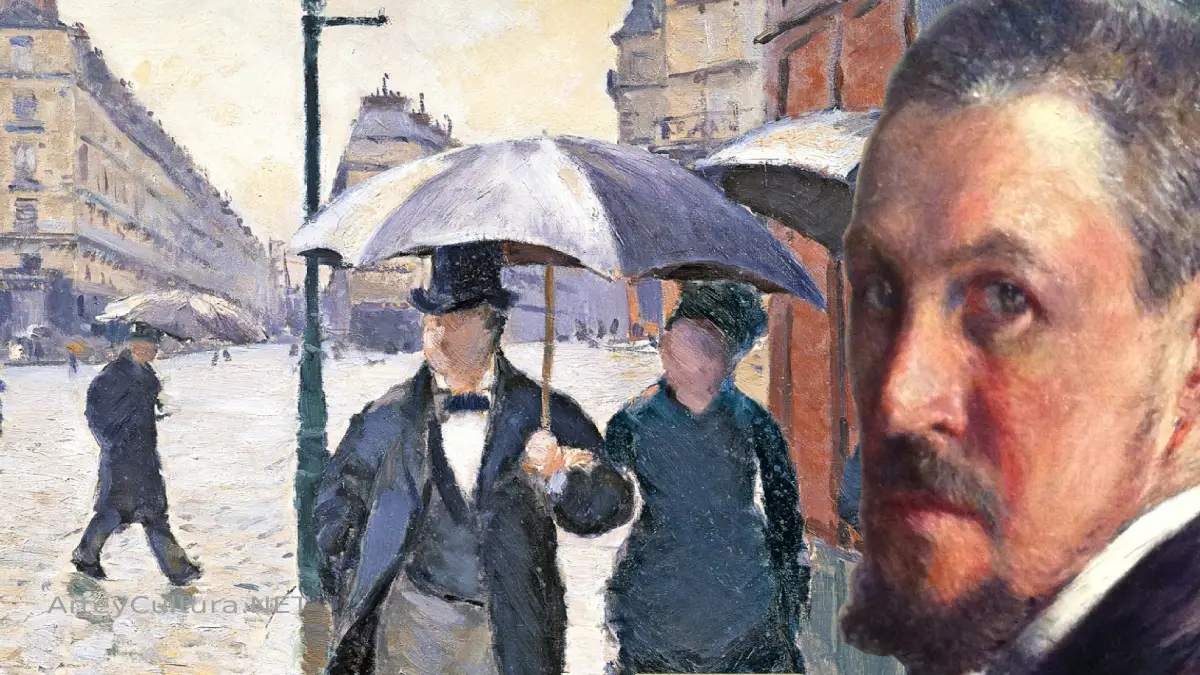
Gustave Caillebotte was born in Paris on 19 August 1848 and died at Gennevilliers on 21 February 1894. Painter, collector, exhibition organiser and patron, he played two exceptional roles in Impressionism. His financial support helped other artists survive, while his own pictures introduced some of the period’s most radical views of work and the modern city.
Privilege, law and artistic training
Caillebotte came from a prosperous family. He studied law, served during the Franco-Prussian War and then committed himself to art. Work in Léon Bonnat’s studio and brief attendance at the École des Beaux-Arts gave him unusually firm academic drawing.
Family wealth freed him from immediate dependence on sales. That privilege became collective action: he bought works by friends, funded exhibitions and assumed practical responsibilities while the market still distrusted Impressionism.
The rejected floor scrapers
In 1875 the official Salon rejected The Floor Scrapers, probably because it represented urban labourers on the large scale reserved for elevated subjects. Caillebotte joined the Impressionist circle and showed the painting at their second exhibition in 1876.
The steep perspective plunges towards the wooden floor as light moves across boards and bodies. The workers are neither idealised nor reduced to anecdote. Their repetitive labour receives monumental presence.
Paris as a modern stage
Paris Street; Rainy Day depicts the rebuilt neighbourhood around the Place de l’Europe. Broad avenues, umbrellas, bourgeois clothing and wet paving create an ordered yet emotionally distant city. The foreground couple is sharply present, but surrounding pedestrians appear separated even when sharing the same street.
Caillebotte used cropped figures, plunging viewpoints and off-centre compositions that recall photography. From balconies and bridges he transformed perspective into an experience of unstable modern vision.
Between realism and Impressionism
His crisp drawing and solid bodies distinguish him from the broken brushwork often associated with Impressionism. Yet he shared the group’s interest in contemporary life, changing light and unconventional subjects. Interiors, rowers, swimmers, gardens and suburban views all became laboratories of space.
Collector and organiser
Caillebotte collected Monet, Renoir, Degas, Pissarro, Sisley, Cézanne and others. He negotiated venues, paid expenses and helped organise several Impressionist exhibitions. His will offered this collection to the French state, which accepted only part after resistance. The resulting bequest nevertheless helped establish Impressionism in a national museum.
Gardens, boats and design
At Petit Gennevilliers he cultivated orchids, designed and raced sailing boats, and painted the Seine. Naval design and gardening reveal the same combination found in his pictures: close observation, geometry and practical experimentation.
Video: painting Caillebotte’s world
This English-language film from the Art Institute of Chicago follows curatorial work behind an exhibition and situates Caillebotte’s domestic, urban and social subjects within his time.
Video: a renewed view of the artist
This English CBS report explains why Caillebotte is now recognised as far more than the wealthy friend of famous painters. It connects his unusual perspectives and representations of men with recent reassessments of his work.
Achievements and legacy
Caillebotte renewed urban painting through surprising scale and viewpoint, made labour and ordinary life subjects for ambitious canvases, sustained Impressionist exhibitions and preserved a collection that changed public recognition of the movement.
His legacy joins creation and care. He made images ahead of their time while protecting those of his companions. Modern accounts of Impressionism would be poorer without his paintings, organisational work and extraordinary bequest.