Víctor Humareda: Expressionism from the Streets of Lima
The life, art and legacy of Víctor Humareda, the Peruvian painter who transformed migration, La Parada and imagined performers into a powerful urban expressionism.
- Víctor Humareda
- Peruvian painter
- expressionism
- La Parada
- Lampa
- Peruvian art
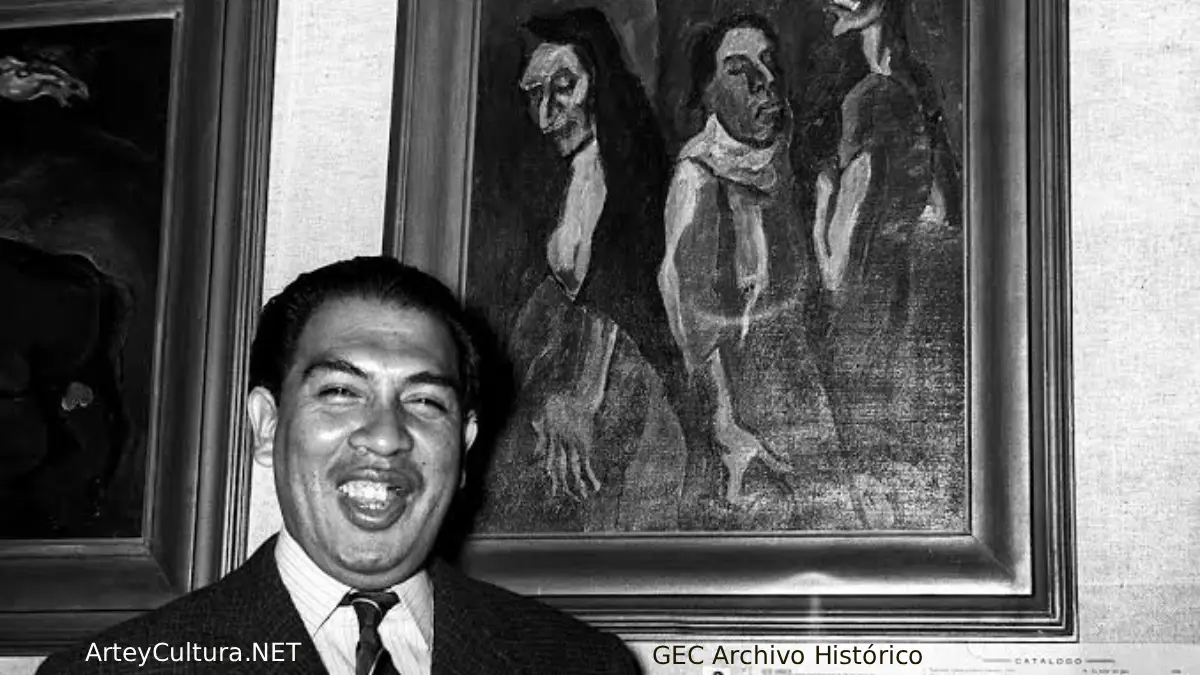
Víctor Humareda Gallegos was born in Lampa, Puno, on 6 March 1920 and died in Lima on 21 November 1986. He was one of the most distinctive Peruvian painters of the twentieth century. From a modest hotel room near the La Parada market, he developed an expressionist world of migrants, sex workers, clowns, bullfighters, processions and imaginary companions.
Humareda’s art resists a picturesque view of urban poverty. Colour, distorted anatomy and theatrical light turn the city into an emotional stage. His figures can be comic and tragic at once; behind exaggeration lies close attention to people commonly excluded from official representations of Lima.
Childhood in Lampa and an early vocation
Humareda grew up in the highland town of Lampa after losing his father at a young age. The architecture, religious processions and severe landscape of Puno remained part of his visual memory throughout his life. He drew persistently and eventually travelled to Lima to seek formal artistic training.
The distance between Lampa and the capital was more than geographic. Like thousands of Andean migrants, he entered a city being transformed by new neighbourhoods, markets and forms of labour. That experience gave him a perspective from which Lima could be observed as both promise and dislocation.
Fine Arts and Buenos Aires
He studied at Peru’s National School of Fine Arts, where disciplined drawing and painting provided the foundation for his later distortions. In the mid-1950s he continued his education at the Ernesto de la Cárcova School in Buenos Aires. Museums, theatre and modern painting expanded his references.
Humareda admired artists including Rembrandt, Goya, Toulouse-Lautrec and expressionist painters, but his mature language was rooted in Peru. European models offered methods of light, drama and deformation; La Parada supplied the human and social reality to which those methods had to answer.
Room 283 at the Hotel Lima
For decades, Humareda lived and worked in room 283 of the Hotel Lima on Avenida 28 de Julio. The room became home, studio, archive and a central part of his legend. It was small and crowded with paintings, reproductions, objects and the materials of daily work.
The modest setting should not be romanticised as proof that deprivation produces genius. What mattered was the discipline sustained there. Humareda walked through the surrounding streets, observed the market and returned to paint. His studio connected direct urban experience with a private theatre of memory and invention.
La Parada and the popular city
La Parada was Lima’s great wholesale market and a focal point for migration, transport, informal commerce and precarious labour. Humareda found there a city absent from official images. He painted workers, vendors, bars and transient lives without turning them into anonymous types.
His brushwork is urgent, and colour often rejects natural description. Reds, violets, greens and dense shadows organise emotional intensity. Bodies stretch or contract according to the pressure of the scene. This deformation is not lack of skill; it is the means by which visible reality becomes psychological experience.
Harlequins, bullfighters and imagined women
The painter repeatedly returned to theatrical characters. Harlequins and clowns embody the unstable boundary between comedy and sorrow. Bullfighters introduce ritual, danger and spectacle. Women drawn from observation coexist with figures shaped by cinema, literature and fantasy, including the recurring imagined presence of Marilyn Monroe.
These characters allowed Humareda to transform solitude into performance. Masks do not conceal a stable identity; they reveal how identity is assembled from desire, memory and the gaze of others.
Video: an extended view of his life and paintings
This Spanish-language documentary brings together Humareda’s biography, Puno origins and painted world. No substantial English documentary devoted to the artist could be located. The original is retained because its images, locations and testimony provide evidence that a generic English video about expressionism could not replace.
Video: the artist behind the legend
Produced by Peru’s School of Fine Arts, this Spanish-language micro-documentary separates the working artist from anecdotes that can overwhelm the paintings. It is a second justified exception: no comparable English institutional resource is available, while the visual record remains valuable to an international viewer.
Illness, achievements and legacy
Humareda developed cancer of the larynx and underwent surgery that affected his voice. He continued painting until shortly before his death in 1986. His persistence belongs to the biography, but the work should not be reduced to suffering or eccentricity.
His achievements include creating an unmistakable Peruvian expressionism, making the changing popular city a major artistic subject, joining Andean memory with metropolitan experience, and defending painting as an act of sustained observation. Humareda’s legacy lies in the dignity and imaginative force he granted to lives at the edge of official culture. His Lima is unstable, theatrical and unequal, yet intensely alive.